Exercise Is Good For Your Brain

Most everyone knows that exercise is good for your body and your cardiovascular system. Did you know that exercise is good for your brain, too? According to Professor Charles Hillman at the University of Illinois, 30 minutes of moderately strenuous exercise can increase your mental cognition by up to 10 percent. Professor Hillman measured the cognitive performance of volunteers before and after exercising. The volunteers performed better on the tests following exercise. Exercise helps you to perform better at cognitive tasks, because you think more clearly and your mood is improved. The brain functions better after exercise because  acetylcholine, a neurotransmitter, is released in the muscle tissues near nerve endings. Engage in some moderate exercise at least 30 minutes a day, 3 to 4 days a week to get a brain boost and a healthy body. 
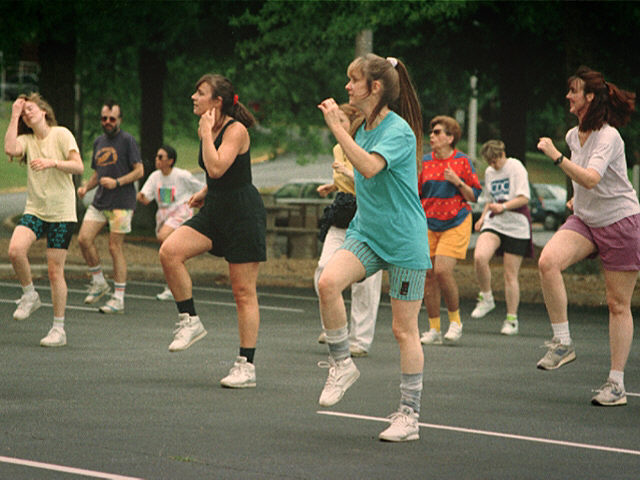
Photo Credit: PD-USGOV
Jump rope is an exercise that you can do at home, at the gym, on your lunch break at work, or just about anywhere there is room to swing a rope. Jumping rope is an excellent moderately strenuous exercise that involves most all of the major muscle groups and helps to improve your coordination and balance. Athletes, especially boxers, jump rope to get a good aerobic exercise and improve their coordination and stamina. Jump rope for about 10 to 15 minutes or until you begin to sweat. Gradually increase your time spent jumping rope until you can jump steadily for 30 minutes. 

Aerobic dance exercise is another way to get a really good workout and boost your brain power. Dance aerobics classes are popular and often available at local gyms and fitness clubs. The advantages of signing up for an aerobic dance exercise class are detailed instructions and personal assistance from trained fitness professionals. The more experienced aerobic dancers can also do aerobic dance exercises at home by following instructions on an aerobic exercise DVD. Try to do at least 15 to 20 minutes of aerobic dance exercise every other day as part of your overall fitness program. 
Swimming is an aerobic exercise that is very low impact, but involves all the major muscle groups for an intense aerobic workout. Local gyms, fitness clubs and the YMCA usually have a swimming pool available for public use or a low membership fee. Swimming is one of the best ways to work your whole body with minimum risk of injury. Swim for 30 minutes, three times each week. 

For more information about exercising to improve cognitive function, see: 

ABC News Good Morning America, Study: Exercise Can Make You Smarter, Claire Shipman, et al. 2009
Scientific American, Fit Body, Fit Mind? Your Workout Makes You Smarter, Christopher Hertzog et al., 2009
The Franklin Institute, Brain Training Games, Renew-Exercise, 2004

Exercise to Increase Lung Capacity


Photo Credit: Kristopher S. Wilson Public Domain

Exercise can help to increase our lung capacity, which means you can take in more oxygen with less effort and better efficiency. Greater lung capacity can improve your endurance, especially if you like to run, jog, swim or engage in strenuous exercise for 90 minutes or longer, 3 to 4 times each week. Long distance runners and marathon runners are among those who need maximum lung capacity. One of the benefits of aerobic exercise, like swimming and running, is an increase in lung capacity and improved cardiovascular function generally. Breathing exercises focus on improving lung capacity and efficiency. If you suffer from any kind of lung condition like asthma or cardiopulmonary obstructive disease (COPD), check with your doctor before trying lung exercises. 
Breathing by using the abdomen, or the diaphragm, can help you improve lung function. The muscle primarily responsible for breathing is the diaphragm. The diaphragm is located between your chest and your belly. When the diaphragm contracts, air is drawn into the lungs and the belly expands outward. The function of the diaphragm is unconscious, and we breathe without even thinking about breathing. You can take control of your breathing by taking slow, deep breaths using the diaphragm. In addition to improving your lung capacity and oxygen stores in the cells, breathing exercises can help you to relax and improve your overall sense of well-being. 
Become aware of your breathing by placing one hand on your belly and the other hand on your chest. Relax your abdominal muscles and breathe in deeply through your nose. The hand on your belly should move out farther than the hand on your chest. Pull down with your diaphragm to fill your lungs completely. It may take some practice, but after a few deep breaths, you should feel the air being pulled into your lungs as the diaphragm moves downward and the belly outward. Hold a deep inhale for about 5 to 7 seconds. Exhale by pushing all of the air out of your lungs through your mouth. Continue to exhale by pulling your diaphragm upward for about 5 to 7 seconds. Repeat this breathing exercise for a total of 5 deep inhalations and 5 deep exhalations. Sit on a chair to perform this breathing exercise the first few times you do it, in case you experience some mild dizziness. 
If you sit in a chair to do deep breathing exercises, sit up straight and look straight ahead. Drop your shoulders down and back to straighten your spine. Relax your hands, palms down on your thighs. Perform this exercise twice each day. When standing to do deep breathing exercises, stand up straight by dropping your shoulders down about one inch and push them slightly toward the middle of your back. Place your hands on  your hips with your elbows pointing out to each side. Relax and then begin your breathing exercise. 

Exercise to Fight Depression

Photo Credit: Public Domain
You know that exercise can help you get fit, improve cardiovascular health, strength, flexibility and help you lose weight. Did you know that exercise can also improve your self-esteem and improve your mood? Physical exertion causes your brain to release endorphins, which reduce the effectiveness of pain receptors in the brain. The result is a feeling of well-being. You feel physically energized and emotionally well when your brain releases this chemical. The feeling has been called “runner’s high” because of a euphoric feeling. The effects of regular exercise are stress reduction, less anxiety, improved self-esteem, more restful sleep and fewer feelings of depression. 
Any physical activity that you enjoy doing can  help ward off feelings of depression and improve your mood. You don’t have to run miles or lift weights at the gym to enjoy the benefits of regular exercise. Riding a bicycle, dancing, walking, playing golf and tennis, basketball, softball, even gardening, yard work and house work is exercise. Low-impact aerobic exercises like swimming, bicycling and walking will get your heart pumping, your muscles working and your brain busy making endorphins. Do what you like to do and involve a friend or group of friends and family. Make exercise a regular part of your family activities. Aim for about 30 minutes of moderate exercise every other day. Gradually increase the time you spend exercising or exercise more frequently. If you are having trouble getting started or motivated to exercise, a personal fitness trainer can help. Make exercise part of your regular daily routine for a healthy mind and a positive attitude.

Do not ignore depression. Sometimes even exercise and healthy diet cannot alleviate feelings of depression. Moderate to severe depression may require immediate medical intervention. If you or a loved one could be suffering from depression, seek  help.

For more information about depression and depression help resources, see:

WebMD, Depression: Support and Resources

Advantages of the Kettlebell Workout

Photo Credit: GiryaGirl  CC-BY-SA-3.0 2011

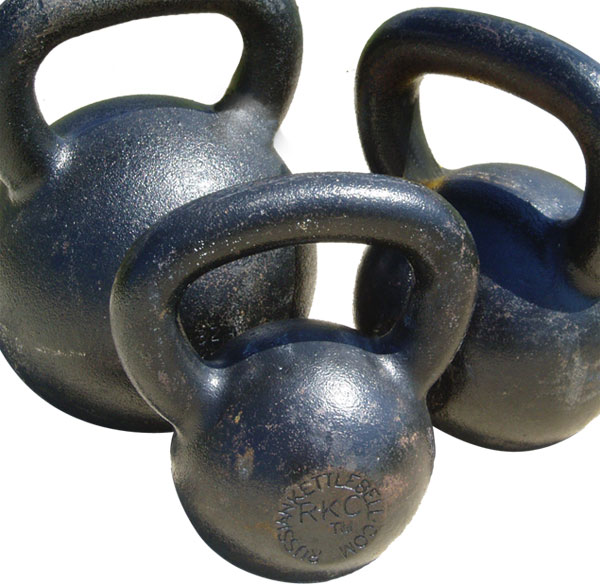
The American Council on Exercise (ACE) conducted a study in 2010 to measure the benefits of kettlebell workouts. Kettlebells are large iron balls with a handle. They vary in weight from a 2 pounds to more than 100 pounds. The kettlebells can be lifted, pressed and swung during an intense workout. The ACE study revealed that kettlebells produced a more intense workout than lifting weights alone. The participants in the study burned about 400 calories in a 20-minute workout, or about the same amount of calories as running a mile in 6 minutes. Beginners should work with a personal fitness trainer to learn to use kettlebells safely and effectively. Start with a light-weight, 2-pound, kettlebell and gradually work up to a heavier weight. Increase the amount of weight under the supervision and instruction of a fitness trainer. Some exercises using kettlebells includes the deadlift, the shoulder press and the arm swing.
Kettlebell deadlifts will primarily work your  glutes, quads, hamstrings and back muscles. Begin the exercise by standing with your feet flat on the floor with a kettlebell beside each foot. Spread your legs about hip-width apart and squeeze your abdominal muscles tight. Drop your shoulders slightly and squeeze your shoulder blades together. Breathe in deeply and lower your upper body straight down toward the floor. When your hands reach the kettlebells, grasp each handle overhand with your palms pointed toward your body. Keep your body straight and breathe out and then lift the kettlebells as you stand up straight in a smooth motion. Repeat the deadlift exercise 5 times and increase the repetitions as you get stronger. 
The arm swing will exercise your glutes, quads, hamstrings, core and back muscles. Stand with your feet apart about hip-width and put one kettlebell between your legs. Brace your upper body by squeezing your abdominal muscles, lowering your shoulders slightly and squeezing your shoulder blades together. Inhale, quat down and grasp the handle of the kettlebell in an overhand position with your palm down. Exhale and swing the kettlebell upward as you simultaneously return to a standing position. Swing the kettlebell until your arm is parallel with the floor, or straight out from your body. Keep your arm straight from your shoulder to your wrist. Do a 3 to 5 repetitions with each arm. 

The kettlebell shoulder press will work your shoulder and triceps muscles. Prepare for this exercise in the same position as before, standing, feet apart and shoulders back. Hold a kettlebell in one hand. Your palm facing  your body. Raise the kettlebell to your shoulder. The weight should be on the outside of your arm resting against your wrist and forearm. Push the kettlebell upward until your arm is extended straight up. Breathe out and return your arm to the start position. 

For more information and kettlebell exercises, see:

ACE Fitness, Kettlebells: Twice the Results in Half the Time?,Chad Schnettler, et al., 2010

Exercise For A Healthy Heart

Photo Credit: FEMA Public Domain

Most Americans do not get enough exercise. Inactivity and an unhealthy diet can lead to obesity, heart disease and diabetes. Exercise can help reduce weight and lessen the risk for heart disease and diabetes. You can lose weight by cutting back on calories, but to prevent regaining lost weight, exercise is essential. You don’t have to join a gym or buy expensive equipment to exercise and lose weight for a healthy heart. But if you have been inactive for years, or if you don’t know how to begin, see your doctor for a check-up and consider a personal trainer to help you develop an exercise program that will work for you.

You can get more exercise during the day than you realize. You can maximize the aerobic value of your everyday activities. People with babies and small children often take a stroller along when shopping or going to the park. Pushing your child in a stroller for 1/2 hour or about 1 1/2 miles is excellent aerobic exercise for you and fun for your baby. As you begin to lose weight and feel stronger, consider buying a jogging stroller for your child. You can push baby along while you jog through the park. Walk the dog for an extra 10 minutes each day. Your dog will love it and you will get more exercise. Mowing the lawn and raking leaves are common activities that are good exercise for weight loss and a healthy heart. Use a push mower to cut your grass. Shoveling snow is also good exercise, but be careful not to over-exert yourself during cold weather. Limit shoveling to no more than 15 minutes and then rest for 15 to 20 minutes. Park your car a few blocks from your workplace and walk when weather permits. Walking is one of the safest and easiest heart healthy exercises. Walk instead of driving when you can. Take the stairs instead of the elevator or escalator.

Set aside at least 30 minutes every other day just for exercise. If you don’t know how to begin, a fitness trainer can help you develop an exercise program that works with your schedule and your current level of fitness. You can break up your 30 minutes of exercise into 10 minute blocks of exercise spread throughout the day. Exercise is a critical part of a healthy life. Keep your heart strong and lose weight by eating a nutritious diet and exercising.

For more information about exercise and heart health, see:
National Institutes of Health, National Heart, Lung and Blood Institute, Physical Activity and Your Heart (PDF File)

How Much Exercise Is Enough?

Photo Credit: Beach Cruiser CC-BY-2.0 2009
According to the Centers for Disease Control and Prevention, adults between the ages of 18 and 64 need a minimum of 150 minutes of moderate aerobic exercise every week. Moderate exercise includes walking and strength training 2 or 3 days each week. Adults who enjoy vigorous exercise like jogging, aerobics and running should get about 75 minutes of this type of exercise every week in addition to a couple of days each week for strength training. You can mix up your exercise by alternating days of strength training with a day of moderate exercise and then a day of vigorous exercise. 
Most people will exercise in 30 minute segments every other day to allow their bodies to rest and repair between exercise exertion. It isn’t necessary that you exercise for a full 30 minutes at once. You can break up your daily 30 minutes of exercise into 10 or 15 minute increments and still enjoy the benefits of exercising. For example, if you walk for 10 minutes, 3 times each day Monday through Friday, you will achieve 150 minutes of moderate exercise for the week. As you grow stronger, fitter and your endurance improves, gradually increase the time you work out until you get at least 300 minutes of moderate exercise weekly. 
Aerobic exercise is important for heart and lung health. Exercises that increases your heart rate and breathing counts as aerobic exercise. A brisk walk, mowing the lawn with a push mower, riding a bicycle or chasing the kids around the yard in a game of tag counts as aerobic exercise. Try to get at least 10 minutes of uninterrupted aerobic exercise at a time. More vigorous exercise includes jogging and running, swimming continuously for 15 to 30 minutes, playing tennis or riding a bicycle up and down hills. 
Regular exercise helps control your weight by burning calories and fat, helps to avoid weight-related illness, improves your mood and helps you feel more energetic. If you haven’t exercised in a long time, or if you have any health problems, get a check up and then get active!