Stay Your Diet

Photo Credit: Public Domain
It’s easy to fall off the diet wagon when friends and family visit during the holidays. It is difficult to decline a piece of chocolate cake smothered in butter frosting. It’s also easy to over-indulge at the holiday dinner table. It is easier to resist the urge to have a second helping of mashed potatoes and gravy, and the sugary sweet pecan pie won’t look so enticing if you are not hungry when you sit down to partake of the holiday feast. A few easy to implement tips can help you resist the urge to over-eat and eat foods that can destroy your diet.
Begin your day with a high-fiber, nutrient rich breakfast. Skipping breakfast can result in hunger and it can slow your metabolism. People who eat breakfast have more energy and are less hungry during the mornings. A high-fiber breakfast is not only good for you, it keeps you feeling full longer. Oatmeal with low-fat milk and fresh fruit, like bananas or blueberries, is a great way to get vital nutrients and fiber. Drink a glass of calcium and Vitamin C- rich orange juice with your breakfast. Whole wheat waffles or pancakes made with whole wheat flour and sweetened with light corn syrup or fresh fruit can provide most of your daily fiber requirements. 
Water is essential to good health, yet often we do not drink enough water. Start the day by drinking a large glass of water. Drink another glass of water mid-morning and another glass before lunch. Drink more water in the afternoon. Just before you sit down with your family and friends at the holiday banquet table drink another glass of water. A large glass of water just before your holiday meal will help you feel more full so you will be less likely to over-eat. Eat a salad before the main course. Select fresh vegetables, such as spinach, tomatoes, radishes and shredded cabbage. Select shredded carrots instead of cheese and don’t load your salad with  a high calorie salad dressing. A light vinegar and olive oil salad dressing will bring out the flavor of the vegetables and add far fewer calories. 
Put no more than one cup of a variety of side dishes on your plate. Resist the urge to have a second helping. Chew your food slowly and savor the flavors. Chewing slowly also helps stimulate the secretion of digestive enzymes in your mouth. The stomach is slow to send signals to the brain, so you may not know you are full right away. Eating slowly gives your stomach time to signal the brain that you are full and it’s time to stop eating. When you are full, remove your plate from the table to avoid putting a second helping of stuffing on your plate.

High Calorie Holiday Foods to Avoid

Photo Credit: Tim Lewis CC-BY-SA-2.0 2008 
All those delicious holiday treats and traditional dishes can tempt even the most dedicated dieter and weight-conscious. nutrition oriented person. The occasional treat probably won’t undermine all your hard work to stay lean and fit, but be careful not to over-indulge in some foods on the holiday banquet table. Balanced diet and exercise are essential to keeping your weight under control and staying healthy.
Swedish meatballs are a holiday tradition in many households, but did you know that many recipes call for loads of butter, white bread, salt and fattening heavy cream? One cup of Swedish meatballs can have as many as 400 calories! Individual meatballs can be small, which makes it easy to over-indulge in these tasty treats. Eggnog is another traditional holiday treat that has over 400 calories per one cup serving. Eggnog contains bourbon, sugar, eggs and cream. Opt for a nice hot cup of flavored tea instead of eggnog.
A baked potato is a healthy food that is rich in vitamins and minerals, but when you load it up with cheese, butter, bacon bits and sour cream, you’ve also loaded up on the calories and the fat. One baked potato with bacon and cheese has over 330 calories. Skip the bacon and cheese and enjoy your baked potato with low-fat sour cream and chives. Steamed vegetables, such as broccoli, carrots and asparagus, taste delicious and are packed with nutrients and vitamins. Load your baked potato with these tasty alternatives.
Red meats like pot roast and steaks can have as many as 400 calories per serving. Choose lean cuts of meat and skip the drippings and gravy. Roasted white meat turkey is lower in fat and has fewer calories if you don’t eat the skin. Where there’s a turkey there will probably be stuffing. Cornbread stuffing made with onions and celery contains fewer calories and less fat than sausage or white bread stuffing. 

What would a holiday dinner be without dessert? Fruitcake and pecan pie are two traditional holiday sweets that can ruin your diet. A one-inch square piece of fruitcake can have almost 60 calories! One slice of fruitcake has nearly 400 calories. Pecans are a nutritious snack when eaten alone, but when you bake them in a buttery pie crust with sugar, butter and corn syrup you’re asking for a calorie overload! One slice of pecan pie contains around 360 calories. Fresh fruits and berries are a healthy alternative to pies and cakes.
You’ve just got to have one of those crispy, flaky sweet sugar cookies! Think about it before you reach for a second cookie. Sugar cookies are usually made using processed, bleached flour, whole eggs, butter and a lot of processed white sugar. Oatmeal cookies made with whole grain oats and sweetened with light corn syrup and raisins are delicious and packed with fiber. 

Understanding Metabolism

Your metabolism is the process of converting food into energy that is used by your body. Even when you are at rest and not exercising, your body is hard at work converting food and beverages into usable energy to keep your heart beating, keep you breathing, repairing damaged cells and tissue and making new cells.  The metabolic rate is how fast your body converts food and drink into energy by burning calories. Generally, the more muscle you have, the faster your metabolism. 
Photo Credit: Abhijit Tembhekar CC-BY-2.0, 2009
The foods you eat can have a direct impact on your metabolism and metabolic rate. High protein foods increase your metabolism, because it takes more energy to digest a high protein diet than a diet high in fats and carbohydrates. Other factors, such as age, gender and lifestyle also impact your metabolism. Women tend to have a slightly slower metabolism than men. Everyone’s metabolism slows down as we age. Those who do not engage in regular physical activity, like exercise, may have a slower metabolism. 
The thyroid gland, located in the front of the throat, controls almost ever aspect of metabolism. The thyroid produces hormones that speed up or slow down your metabolic rate and control whether your body stores fat. Hypothyroidism is a condition in which the thyroid does not produce enough of the metabolism-regulating hormones. This can lead to weight gain and other problems, some serious. Conditions of the thyroid gland should be treated by a doctor. If your thyroid gland is functioning normally, but you still can’t seem to lose weight, stimulating your metabolism by eating a healthy diet and regular exercise may help increase your metabolic rate so that your body burns fat for energy and builds muscle.
Starvation diets, fad diets and diet pills are not the answer to boosting your metabolic rate and reducing body fat. Depriving yourself of food can actually cause your metabolic rate to slow as your body responds to fewer nutrients. Starvation and fad diets can be very harmful to your health. Diet pills suppress your appetite and can cause you to eat less and less often, which is also harmful because your body is not going to get proper nutrition. Your metabolism may also slow down if you wait hours between meals. You can stimulate your metabolism by eating several smaller meals, including nutritious snacks throughout the day. Start with a healthy breakfast, some exercise like walking, a mid-morning snack and then a light lunch. Eat some fruit, granola, yogurt or other healthy snack in the afternoon. Eat a light snack, such as an apple or a salad, after dinner and drink plenty of water. Small meals throughout the day will stimulate your metabolism as your body must burn calories to digest food. 
In addition to eating healthy meals and snacks every few hours throughout the day, regular aerobic exercise can boost your metabolism. A brisk 30-minute walk in the morning and late afternoon or 30 minutes of aerobic exercise at the gym helps your body burn calories and fat stores. Strength training helps to build muscle and burn fat. Changes in your daily routine, like taking the stairs instead of the elevator or walking to work, can help you burn more calories and stimulate your metabolism. 

For more information, see:

Mayo Clinic, Metabolism and Weight Loss: How You Burn Calories, 2011

Mayo Clinic, Hypothyroidism, 2010

Food Pyramid or Food Plate?

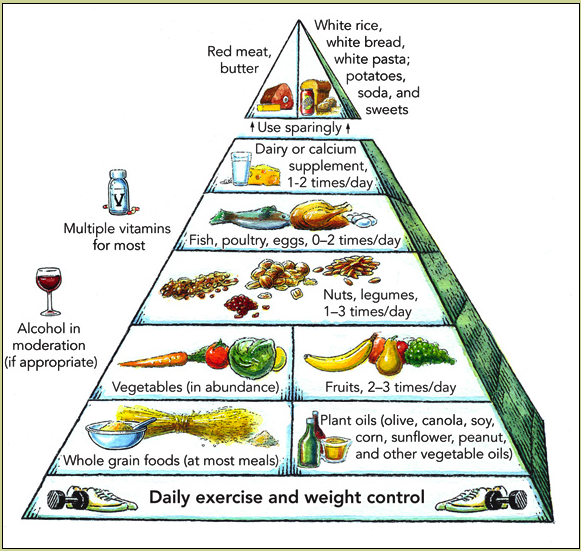
Photo Credit: Harvard Food Pyramid Public Domain 
A healthy diet includes a variety of foods. Fruits, vegetables, grains, dairy, meats, and nuts are all part of a nutritious diet. How much should you eat from each food group? Should you use the old “pyramid” to guide your food choices or is the new “my plate” a better choice? Your dietary choices should be made based on nutrition. Other factors to consider are your goals and primary objective, such as weight loss, muscle mass, lowering cholesterol or maintaining bone strength. The key to any diet plan is getting all the vitamins, minerals and other nutrients that your body needs to stay healthy. 
Your diet should include enough protein to maintain healthy muscles and bones. Meat is one option for protein. Plant-based proteins can be found in beans, rice, nuts, eggs and dairy. Meat and animal proteins usually contain more fat and cholesterol than plant proteins. If you are trying to lower your cholesterol, consider substituting meat protein for soy products or other vegetable protein sources. Whether you follow the food pyramid or food plate, you should make food choices based on nutritional value and your personal needs. A doctor or dietitian can help you create a diet that works for you.

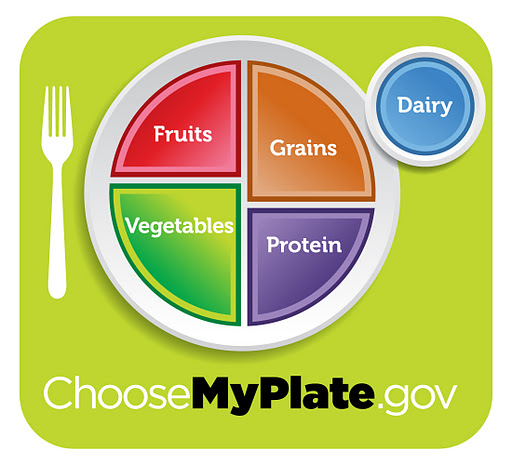
The food plate diagram recommends one half of each meal consist of fruits and vegetables. Healthy oils like olive oil and canola oil are included in the vegetable section, but not fatty oils like butter and oils that contain trans fats. French fries do not count as a vegetable. Choose a variety of vegetables of all colors and flavors to keep meals interesting as well as nutritious.

Photo Credit: USDA Public Domain

The other side of the food plate consists of healthy proteins and whole grain foods. Healthy proteins include fish, poultry, beans, peas, nuts and small portions of lean red meat. Avoid sandwich meats, bacon, sausage, hot dogs and other processed meat products. Whole grains include whole wheat bread, unprocessed oats, whole grain pasta, grits, bulgur wheat, cornmeal muffins and brown rice. Avoid pasta and bread made with bleached white flour and white rice. Dairy should be limited to one serving per meal. Drink an 8 ounce glass of whole Vitamin D enriched milk or water and a serving of fresh yogurt or cheese. Those who are lactose intolerant can substitute vitamin enriched soy milk for dairy products. 

Whether you choose to follow the food pyramid, food plate or your own diet plan, choose healthy foods and eat a variety of foods every day. Avoid too much caffeine found in coffee, tea and most sodas. Limit your sugar intake and get plenty of exercise. 

Fast Food Facts

It isn’t always easy to eat healthy, home-cooked meals every day. Our busy lifestyles frequently require that we eat on the run. This is especially true during the holiday season when we have social commitments like parties and family gatherings. Many Americans who work in an urban setting may choose fast food for their lunch because most fast food restaurants are conveniently located and the prices are usually cheap. Unfortunately most fast fast food and some sit-down family style restaurants offer food choices that are high in fat, sugar, salt and carbohydrates. Add a sugary soda and you can consume almost a day’s worth of calories on your lunch break, but you won’t get all the nutrition your body needs. 
If you typically have a sandwich for lunch, select a restaurant that offers deli-style foods that can be made to order. Some fast food sandwich chain restaurants offer submarine sandwiches on whole wheat bread or low-fat whole wheat bread wraps. Avoid the cheese and mayonnaise because these add extra calories, fat, sodium and sugars. Skip the French fries and onion rings. Opt for a side salad with no dressing or a low-fat dressing. 
Photo Credit: Public Domain US Government
Grilled sandwich meats are less fatty than fried foods. Choose a grilled chicken sandwich instead of a cheeseburger. Be careful not to undermine the grilled food choice by loading the sandwich with cheese, special sauces and mayonnaise. Choose a whole wheat bun if it is available. Select mustard over mayonnaise for extra flavor without all the added calories and fat.
Many supermarkets in America offer fresh foods, peeled, sliced, cut, cooked and placed in convenient containers ready to eat. Supermarkets offer washed and cut fresh vegetables and fruits as well as lean meats and cheeses. The deli section in supermarkets is a great place to find prepared lunch foods. Some supermarket prepare single serving fresh salads, fruit cups, wrap sandwiches, sushi and lean meat sandwiches.
For more information about calories, sugar and fat content of popular fast foods see:

WebMD, MedicineNet, Fast Food Sandwiches Picture Slideshow: Good and Bad Choices for Your Diet, Reviewed by Laura J. Martin, MD on August 29, 2011

America’s Healthiest, America’s Top 10 Healthiest Fast Food Restaurants, Tracy Minkin, et al. February 2009