After-Baby Exercise

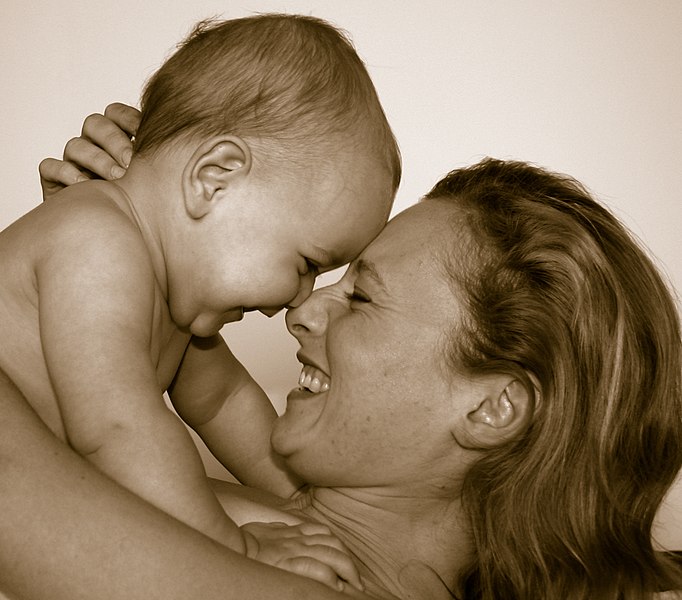
Photo Credit: Robert Whitehead CC-BY-2.0

The American College of Obstetrics and Gynecology suggests that women who exercised before and during pregnancy should be able to return to their pre-pregnancy level of fitness training after about 6 weeks. The changes that occurred in a woman’s body during pregnancy will persist for as long as 6 weeks, sometimes longer. Women who have had a Cesarean section delivery may need to wait a few additional weeks to begin fitness training again, because a C-section delivery is major surgery. Every woman’s body responds differently to the dramatic physical and hormonal changes that accompany pregnancy. The American College of Obstetrics and Gynecology states that physical exercise has been associated with a lower risk of postpartum depression. Your doctor can tell you when it’s safe to begin exercising again.When a new mother is ready to begin exercise again, start slowly and focus on core strength, muscle strength training and low-impact aerobic exercise for cardiovascular conditioning. 
Pelvic tilts are an excellent, low-impact exercise that helps to strengthen the muscles of the lower back and the abdominal muscles. The movement of the pelvic tilt is subtle, but effective. To perform the pelvic tilt exercise, lie on the floor on your back with your knees bent, feet flat on the floor and your hands at your sides palms down. Inhale and then gently, and slowly, lift your pelvis back toward your abdomen until your lower back presses against the floor. Do not allow your buttocks to lift off the floor. Hold the lift for 5 to 10 seconds. Exhale and lower your pelvis back to the beginning, relaxed position. Try to do 10 pelvic tilts each day. Increase the length of time you hold the tilt. 
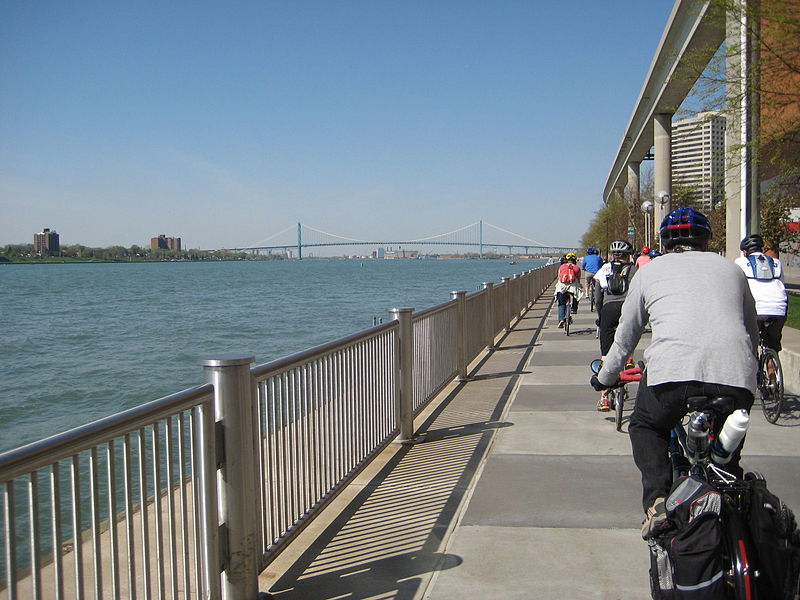
Aerobic exercise gets your heart pumping and your body sweating. It is a great way to condition your heart and lungs while burning calories to lose weight. After delivery of a baby, return to aerobic exercises slowly. Don’t try to run 2 miles after having a baby, even if you did so before you were pregnant. Walking is a perfect way to get a low-impact, cardiovascular workout for your whole body. Put baby in a stroller and go for a long walk in the park every other day. Swimming and bicycling are ideal, low-impact aerobic exercises. Remember to start slowly, exercising 10 to 15 minutes at a time and gradually increase the amount of time doing aerobic exercise until you return to your pre-pregnancy condition.  
When you think you are ready to return to the gym, avoid high-impact activities or lifting heavy weights. Strength training does not have to include lifting weights. Isometric exercises using your own body weight or resistance bands can help increase your muscle strength and burn fat. For example, push-ups strengthen your abs, chest, arms and upper back muscles. Exercise balls are great to help increase your strength and improve balance. Balance ball squats can help increase leg and abdominal strength. Stand up straight with your back to the wall and an exercise ball between your lower back and the wall. Lean against the ball slightly and slowly lower your body to a sitting position by bending you knees and rolling the ball up your back. You may be able to only lower your body to a half-sitting position the first few times you do this exercise after having your baby, but soon you will be able to do a full squat. Do 10 to 15 repetitions, if you can. Increase the number of repetitions as your strength returns.
Prop the ball against a wall and position it behind your lower-mid back.  Walk the feet out a bit so that you’re leaning against the ball, feet about hip-distance apart.  Bend the knees and lower into a squat, going as low as you can (no lower than 90 degrees) and keeping the knees behind the toes.  Push through the heels to come back up and repeat for 15 reps.

Is Fitness Boot Camp For You?

Photo by www.localfitness.com.au

Fitness boot camps are usually an outdoor group class that combines strength training, interval training, running and traditional calisthenic type exercises for fast weight loss and building muscle. There are many different types of boot camps, however. Some are very intense and should be attempted by those who are in top physical condition. Other boot camps are designed for beginners or those at an intermediate level of fitness. All fitness boot camps have one thing in common: fitness trainers push you to reach your goals and keep you motivated to succeed. Boot camps can last from a few days to several weeks or longer, depending on the program. Before signing up for a fitness boot camp, see your doctor for a complete physical and tell your doctor you want to take part in a fitness boot camp during your check up.
A fitness boot camp may involve hours of aerobic exercise and body weight exercises. Other boot camps focus more on strength training. Other camps may use a martial arts style workout. You may also use fitness equipment and even free weights for a total body workout and cardiovascular conditioning. Boot camp improves your endurance, strength and overall level of fitness. A typical whole body conditioning and strength training boot camp will typically consist of 30 to 45 minutes of exercise per day. Exercises include stretches, balance exercises, push-ups, squats, lunges, abdominal and core strengthening exercises, running, obstacle courses, team exercises and competitions. 
Fitness boot camp can be a fun and invigorating experience. If you enjoy competing, working out with a group and challenging yourself, consider signing up for a few days of a fitness boot camp. It’s a great way to get in shape, burn calories and lose weight while having fun and meeting new people.

For more information and exercise ideas, see:
ACE Fitness, Drop and Give Me 20!, by John Porcari, Ph.D, et al.

Different Kinds of Fitness: Which Is Right For You?

Photo Credit: Fishtoes2000 at en.wikipedia CC-BY-3.0

When you lead an active life that includes exercise and a healthy diet, you look better and you feel better. Your are at a lower risk for disease, including heart attack, diabetes, some types of cancer, stroke and high blood pressure. Exercise can also help you feel better emotionally by improving self-esteem and creating a sense of well-being. Sometimes it can be hard to find the time to exercise or to find a type of exercise you not only enjoy doing but one that will be right for you. There are so many ways to exercise, but how do you know what kind of exercise program will work for you? Choose the type of exercise that fits your lifestyle and will help you reach your fitness goals. 
Muscle strengthening is a type of exercise where the focus is on stronger muscles and building muscle tissue. Stronger muscles can help you lift heavier objects or to work and exercise longer before tiring. Muscle strengthening exercises include push-ups, sit-ups, isometric exercises and lifting weights. 

Aerobic exercise helps improve your lungs and your heart. Aerobic exercise increases the amount of oxygen to the cells of your body, especially to your muscles. Exercise that increases your breathing and heart rate is aerobic exercise. Aerobic exercise is most effective when you sweat and exercise for 30 minutes or more. Examples of aerobic exercise include dancing, running, jogging and bicycling. 
Flexibility is important to help you avoid injury and remain active without becoming sore and stiff. Stretching exercises help to improve flexibility. Stretching before exercise can help you to avoid injury during your workout. Stretching after a vigorous workout helps your body cool down and may help you avoid sore muscles.
Balance exercises help improve your posture as well as  your balance. Good balance can help you avoid injury during exercise. Poor posture can lead to back pain.Examples of balance exercises include standing on one leg for 30 seconds or longer, standing on your toes, balancing your body on your heels and standing on a balance board or a foam stability mat.  
The best fitness program will include all four types of exercise. Some activities, like swimming, bicycling, sports and yard work, include aerobic, strength, flexibility and balance exercise. When you choose activities or select an exercise program, do what you enjoy. You will be more likely to make exercise a habit if you have fun doing it. 

Exercise While Pregnant

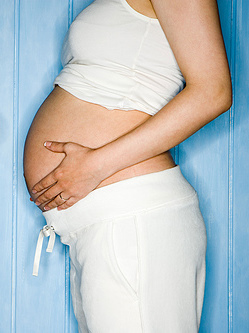
Photo Credit: Swangerschaft CC-BY-SA-2.0 2010

Pregnant women who exercised regularly before pregnancy can continue to exercise, if they take a few precautions. As long as you are in good health, not at risk for miscarriage and do not engage in strenuous exercise, a pregnant woman can enjoy regular physical exercise. Women who have not been physically active or engaged only in light, occasional physical activity before pregnancy should not start an exercise program more strenuous than walking. You are going to need strength and stamina to get through your pregnancy and delivery. Check with your doctor before beginning or continuing any exercise program. Women who are pregnant may benefit from light exercise in many ways. Walking and stretching exercises can help to relieve low back pain and prevent excessive weight gain. Swimming is a whole body aerobic exercise that most pregnant women can safely do throughout pregnancy to remain fit and control weight gain. Excess weight gain during pregnancy can contribute to gestational diabetes, high blood pressure and may even contribute to postpartum conditions like depression. Pregnant women who experience pregnancy-related conditions or are at risk for certain conditions should not exercise except on the advice and supervision of their doctor. Those who are at risk and should avoid exercise include women who are at risk for miscarriage or who have had a miscarriage in the past, history of premature delivery, bleeding or spotting and those with weak cervix or low placenta. Stretching exercises are especially helpful to maintain muscle tone and help to maintain flexibility. Stretching is important before other exercise, including walking, using a treadmill or swimming, to help reduce the risk of muscle strain. 

Begin a stretching exercise session with your neck and work your way to your feet. Sit in a comfortable chair or sit on the floor in a comfortable position. Place your hands on your thighs palms down and sit up straight and tall. Relax your shoulders and  your neck, and then drop your chin forward toward your chest. Rotate your whole head toward your right shoulder and then back to the middle of your chest. Continue rotating to the left shoulder and then back to your chest. Repeat this stretching exercise 5 times. 

Stretch your arms and shoulders to help relieve upper back stress and energize your whole body. Sit up straight, drop your shoulders down and back to straighten your back. Stretch your right arm forward and lean to the right stretching toward your fingertips. Return your right arm back to your side and then stretch forward with your left arm, and lean forward with your body stretching toward your left fingertips. Alternate back and forth in a swimming motion. Repeat this exercise for 10 repetitions. 
Kegel exercises during pregnancy strengthen the muscles of the abdominal floor that support the uterus, intestines and bladder. Sit in a comfortable chair with your feet flat on the floor and your arms relaxed at your sides. Sit up straight, tighten the muscles of your pelvic floor and then relax the muscles. To tighten the muscles in your pelvic floor, pretend that you are trying to stop the flow of urine midstream. Squeeze the muscles that you would use to stop your urine. Perform Kegel exercises anytime of the day, as often as you want, but try to do at least 10 sets of five contractions each day. Hold each muscle contraction for 5 to 8 seconds. Remember to breathe when doing Kegel exercises and do not contract your abdominal muscles while performing this exercise. 
Walking is a safe, effective form of aerobic exercise that can help a pregnant woman control her weight gain, remain physically fit and feel energized. Take extra precautions when walking while pregnant to avoid falls. Walk on smooth, flat areas such as sidewalks and walking trails. Do not walk when your path is covered in snow, ice or rain, which can make surfaces slippery and may result in a fall. Walk with a partner or a friend and avoid overexertion. A 20 to 30 minute walk every other day is generally safe for most pregnant women. 

For more information about safe exercises during pregnancy, see:

Exercise Is Good For Your Brain

Most everyone knows that exercise is good for your body and your cardiovascular system. Did you know that exercise is good for your brain, too? According to Professor Charles Hillman at the University of Illinois, 30 minutes of moderately strenuous exercise can increase your mental cognition by up to 10 percent. Professor Hillman measured the cognitive performance of volunteers before and after exercising. The volunteers performed better on the tests following exercise. Exercise helps you to perform better at cognitive tasks, because you think more clearly and your mood is improved. The brain functions better after exercise because  acetylcholine, a neurotransmitter, is released in the muscle tissues near nerve endings. Engage in some moderate exercise at least 30 minutes a day, 3 to 4 days a week to get a brain boost and a healthy body. 
Photo Credit: PD-USGOV
Jump rope is an exercise that you can do at home, at the gym, on your lunch break at work, or just about anywhere there is room to swing a rope. Jumping rope is an excellent moderately strenuous exercise that involves most all of the major muscle groups and helps to improve your coordination and balance. Athletes, especially boxers, jump rope to get a good aerobic exercise and improve their coordination and stamina. Jump rope for about 10 to 15 minutes or until you begin to sweat. Gradually increase your time spent jumping rope until you can jump steadily for 30 minutes. 

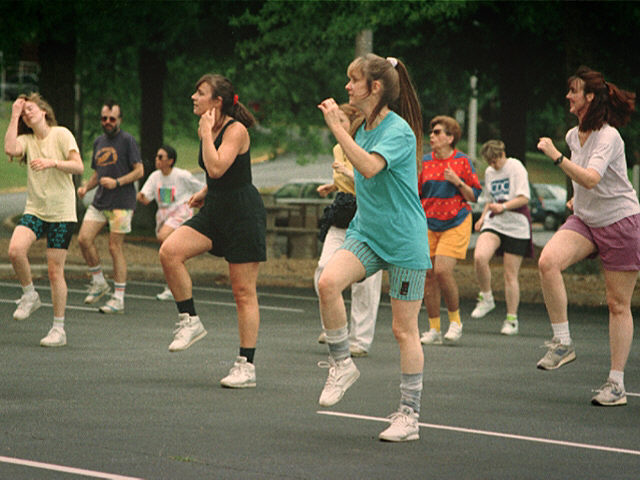
Aerobic dance exercise is another way to get a really good workout and boost your brain power. Dance aerobics classes are popular and often available at local gyms and fitness clubs. The advantages of signing up for an aerobic dance exercise class are detailed instructions and personal assistance from trained fitness professionals. The more experienced aerobic dancers can also do aerobic dance exercises at home by following instructions on an aerobic exercise DVD. Try to do at least 15 to 20 minutes of aerobic dance exercise every other day as part of your overall fitness program. 
Swimming is an aerobic exercise that is very low impact, but involves all the major muscle groups for an intense aerobic workout. Local gyms, fitness clubs and the YMCA usually have a swimming pool available for public use or a low membership fee. Swimming is one of the best ways to work your whole body with minimum risk of injury. Swim for 30 minutes, three times each week. 

For more information about exercising to improve cognitive function, see: 

ABC News Good Morning America, Study: Exercise Can Make You Smarter, Claire Shipman, et al. 2009
Scientific American, Fit Body, Fit Mind? Your Workout Makes You Smarter, Christopher Hertzog et al., 2009
The Franklin Institute, Brain Training Games, Renew-Exercise, 2004

3 Exercises for Strong, Toned Legs

Photo Credit: Credit: LocalFitness.com.au
Strong, toned, muscular legs are more than just physically attractive. Strong legs support your body and carry you through the day. Strong legs also improve your balance and posture. If your leg muscles are strong, you are also less likely to suffer sprains and joint pains. 
Try some single leg squats to develop your calf muscles. Stand with your hands on your hips and your feet about hip-width apart. Place your right foot slightly forward from your left foot and shift your body weight to your right foot. Tighten your abs, breathe in and then lift your left foot off the floor about 2 to 3 inches. Slowly lower your body to a sitting position. Keep your weight on your right leg, but you can rest your left toes on the floor for balance and stability, if needed. As you lower your body by bending your right knee, allow your left leg to straighten out and slide forward. Keep your back straight and try not to lean forward as you lower your body. Exhale and push back up to a standing position using your leg. Do 5 squats with each leg. 
Stretch your calf muscle for lean, toned legs. Face a wall about arm-length away and place your feet flat on the floor hip-width apart. Place your palms on the wall about 2 to 3 inches higher than your shoulder height. Step forward with your left leg and keep both feet on the floor. Squeeze your abs, breathe in and move your upper body toward the wall. This will stretch the calf muscle of your left leg (the leg behind). Hold the stretch for 30 seconds, and then push your body back upright. Repeat this exercise 10 times for each leg. 
Stretch the hamstring on the back of your leg by lying on the floor flat on your back in a doorway. Place the back of one leg against the wall straight up from your hip. Allow the other leg to stretch out straight through the doorway. Push against the wall with the back of your leg that is parallel to the wall and point your toes toward the ceiling. Hold the position and then relax. Repeat this exercise 10 to 15 times for each leg.  

Rotator Cuff Rehabilitation Exercises

Photo Credit: GTindy CC-BY-SA-3.0 2002

A rotator cuff shoulder injury is painful and may require rehabilitation exercise to repair and heal the injury. Symptoms of an injured rotator cuff include pain, joint stiffness and weakness. See a doctor immediately if you suspect you have injured your rotator cuff and follow her advice for treatment of the injury. Exercise can help heal an injured rotator cuff, but do not perform any rehabilitation exercises except under the supervision and with the approval of your doctor. You can strengthen and improve your rotator cuff to rehabilitate an injury and to lessen the risk of future injury by doing stretching and strengthening exercises. 
Stretching exercises increase the range-of-motion and restore flexibility to a stiff shoulder joint. An over-head stretch is easy to do. Stand up straight in front of a sturdy, stable chair with the back of the chair facing you. Bend forward at the waist and bend  your knees slightly. Reach forward with your arms straight and grasp the back of the chair. Look at the floor with your head between your arms and lower your body until you feel your shoulders stretch. Hold the stretch for 30 seconds and then stand up using a smooth motion. Repeat this exercise 2 times each day and increase to 4 times each day as your flexibility improves.  

Another effective rotator cuff flexibility exercise is a behind-the-back shoulder stretch. Reach behind your back with one arm and grasp the injured arm at the wrist. Pull the injured arm up gently to stretch the shoulder joint and increase flexibility of the rotator cuff. A variation of this exercise is to hold a towel behind your back. Hold the towel at shoulder level with your unaffected arm and grasp the towel behind your back with your injured arm. Gently pull the towel up to stretch your shoulder. Hold the stretch for about 30 seconds and then relax. Repeat the exercise twice each day. 
It is important to increase the strength of your shoulder and rotator cuff to help avoid injury or re-injury. Isometric exercises are a good way to build strength without moving the joint. Stand about 6 inches from a wall, facing the wall. Hold your injured arm close to your body and make a fist with your thumb over your fingers. Bend your elbow and press your fist against the wall. Try to keep your body stationary as you press your fist against the wall. Don’t push with all your strength, but push until you feel your muscles begin to contract. Hold the position for about 5 seconds and repeat the exercise 10 times each day. As you grow stronger, push against the wall harder and hold the position longer.
Continue doing rehabilitative exercises as directed by your doctor, even if your shoulder feels better and you are no longer experiencing pain. Shoulder stretching and strengthening exercises are important even if you don’t have an injury to increase your shoulder strength and avoid injury. 

Say Goodbye to Bat Wings

Photo Credit: Sergio Savarese CC-BY-2.0 2004

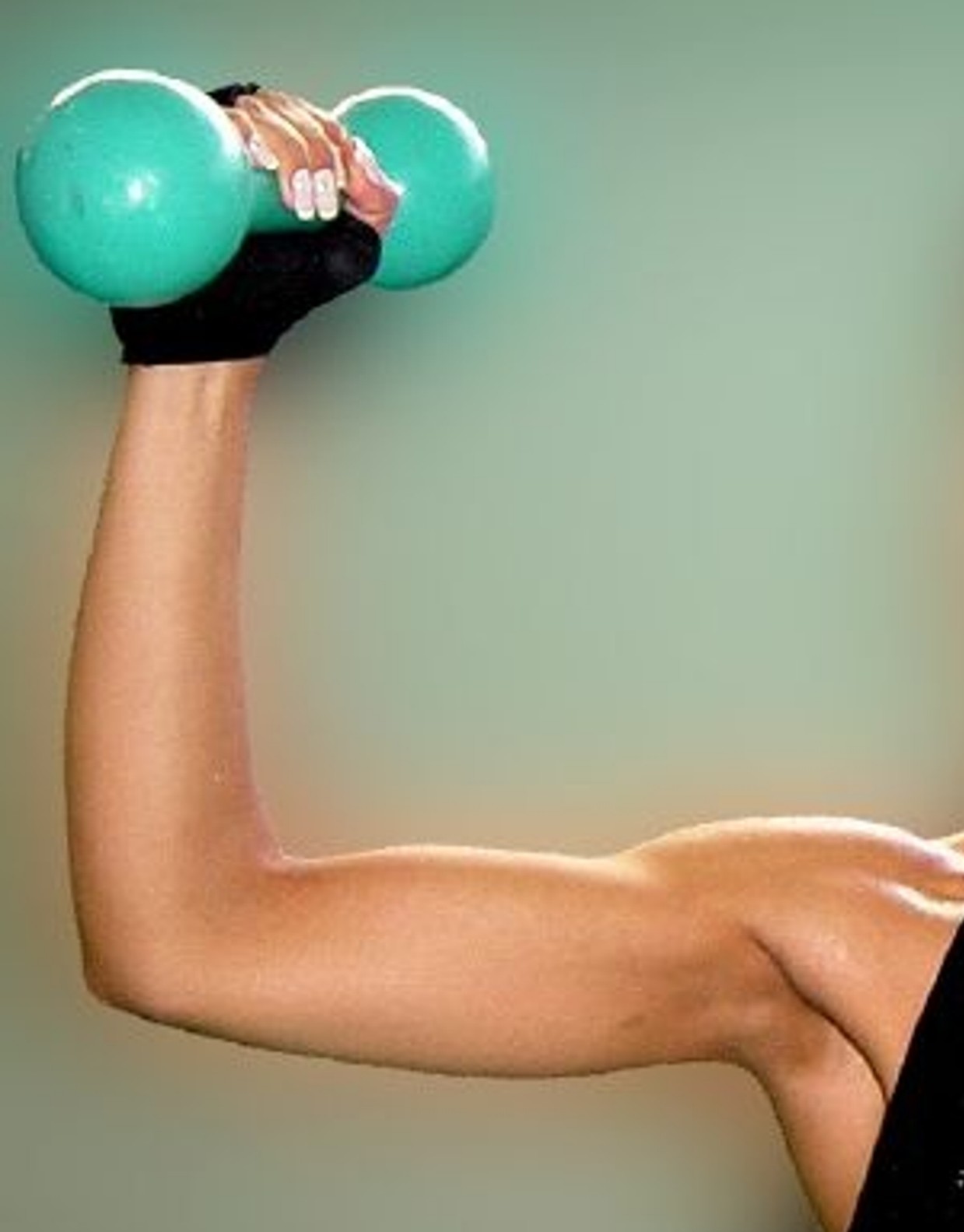
Rapid weight-loss and aging can often result in loose skin. One of the most difficult areas to firm up is the back of the arm. Exercising the triceps muscle on the back of the arm can help get rid of those flabby upper arms that many people call “bat wings.” Start now with regular triceps exercises to rid yourself of flabby arms in time for short sleeve spring clothing. You will need some elastic exercise bands and a set of 2 pound to 5 pound dumbbells. See a doctor before beginning arm exercises if you have joint problems, such as arthritis, hand injury or an injured rotator cuff in the shoulder. Start slowly and rest a full day between exercising your arms. You may experience some muscle soreness after the first day or two of exercise, but this is normal. Stop exercising if you experience pain or notice any swelling and see a doctor. Pain is an indication of injury. To avoid injury and excess muscle soreness, seek the guidance of a personal fitness trainer and start slowly. 
Dumbbell tricep extensions can be done while sitting or standing. Grasp a dumbbell with both hands. Raise your arms over your head and then bend your elbows to lower the dumbbell behind your head. Lower the dumbbell until you feel your triceps muscle begin to stretch. Hold this position for 5 seconds and then bring the dumbbell up over your head again. Hold it for 3 seconds and then repeat the exercise by lowering the dumbbell behind your head again. Do a set of 5 to 10 repetitions. Stop when your arms begin to feel weak. 
Use a chair or a bench to perform triceps dips. Stand in front of a sturdy chair or an exercise bench. Turn your back to the chair and lower your body to place your hands, palms down on the seat of the chair or bench. Your fingers should be facing forward. Bend your knees until your legs are perpendicular to the floor at a 90 degree angle. Keep your elbows close to your body and bend your elbows as you lower your body.. You should feel your tricep muscles tighten. Hold the position for a 5 to 10 seconds. Straighten your elbows to raise your body up and hold for another 5 to 10 seconds. 
The traditional push-up is one of the most effective exercises for the tricep muscles. It also works your abdominal muscles, your chest, back, shoulders, legs and glutes. Beginners should do push-ups with their knees on the floor instead of stretching out their legs. Rest your weight on your knees and hands. Straighten your body so that your head, neck and back form a straight line. Place your palms under your shoulders with your fingers pointing forward. Slowly lower your upper body toward the floor by bending your elbows. Lower your body until your face is about 2 to 3 inches off the floor or as low as you can comfortably go. Hold the position for 2 seconds and then straighten your elbows to push your body back up. 

2 Great Exercises for Slimmer Hips and Thighs

Photo Credit: Mauritsvink Public Domain
It can be difficult to lose fat and build muscle in your hips and thighs. You can lose fat, firm and tone your muscles with a whole body exercise regime, but you may need to do a little extra work by spot training to slim your legs and hips. The hips, thighs and stomach area tend to store more fat than any other part of your body. Two great exercises that can help burn more fat, tone and strengthen hips and thighs include dumbbell step-ups and dumbbell squats. Don’t start a new exercise program until you see your doctor and get a complete physical. A personal fitness trainer can help you stay motivated and offer instruction on how to perform exercises to get maximum benefit and avoid injury. 
Step-ups require an exercise step block and a set of dumbbells. Start with a low block and gradually increase the height of the step as you gain strength and stamina. Start by standing in front of the step block with your feet apart about hip-width. Hold a 2 to 5 pound dumbbell in each hand in an overhand grasp with your palms facing inward. Drop your shoulders, squeeze your shoulder blades and stand up tall and straight. Step up on the block with your right foot. Keep your body straight and push your body up with your left foot. Place your left foot next to your right foot on the step block platform. Shift your weight to your right foot and step backwards off the step block with your left foot. Place your left foot firmly on the floor and then bring your right foot back to the floor in the start position. Alternate legs and repeat the exercise. Try to do 10 repetitions leading with your right foot and then alternating and leading with your left foot for 10 more repetitions. Increase the number of repetitions and add a heavier dumbbell as your gain strength and endurance. 
Dumbbell squats help tone and firm your arms as you exercise your hips and thighs. Stand with your feet hip-width apart and hold a 2 to 5 pound dumbbell in each hand. Grasp the dumbbells in an overhand hold with our palms facing your thighs. Squeeze your abdominal muscles and inhale. Raise the dumbbells to your chest until they rest on the front of your shoulders. Lift your chest and squeeze your shoulder blades together so that you are standing tall. Slowly lower your body in a sitting position from the hips. You may need to shift your weight to you heels to maintain your balance. Try to bend your hips and knees at the same time for a smooth downward motion. Keep your feet planted firmly on the floor. Stop lowering your body when your heels begin to lift off the floor. Exhale and smoothly push your body back to the upright position using your feet. Try to do 5 to 10 squats. Increase the number of repetitions and add more weight when your strength and endurance increase.

Winter Blahs: How to Stay Motivated

Photo by www.localfitness.com.au

You made a New Year’s resolution to stick to a fitness program and a healthy diet. Great news! But now it’s mid-February and you’re just not as motivated as you were on January 2nd. Maybe you started a fitness program and diet, but you’ve allowed some of your plans to fall by the wayside. Don’t be too hard on yourself. Many people start an exercise and diet program only to stop after a few weeks and fall back into their old routine. A personal trainer can help keep you motivated and there are ways to stay motivated on your own.
Re-evaluate your goals. You may have set fitness goals that are unrealistic so that you are not seeing the results you expected. Design a new fitness program with short-term, intermediate-term and long- term goals. Try committing to completing a 10 minute walk 3 times each week for the next 4  weeks. After that, increase your walking time by 10 minutes for the next 4 weeks. Continue increasing your time until you walk for 30 minutes 3 days each week. On the days you are not walking, commit to doing 5 minutes of morning stretching exercises, followed by a healthy breakfast and then 5 more minutes of exercise. Gradually add afternoon and evening exercise. 
Have you lost your motivation because you are bored with your routine? Change your routine or start playing a sport that you enjoy. Take up dance aerobics or swimming. Try a Latin dance class or join a martial arts program. Invite friends and family to join you in exercise. Organize a fitness club at work. You are more likely to stay motivated and reach your fitness goals if you are having fun. If finding the time to exercise is a problem, a personal trainer can also help you design a program as part of your regular schedule. Give yourself a reward when you reach a particular goal. Go shopping for new clothes to fit your slimmer figure.