Fat Burning Treadmill Workout

Photo Credit: Kristan Hutchison National Science Foundation

Interval training is a form of exercise where you engage in vigorous exercise for a fixed amount of time, decrease the level of activity and then do vigorous exercise again. Interval training can help improve your speed, strength, endurance and burns fat. Your heart rate is a good indication of how hard you are working your body. Work out hard to increase your heart rate, then recover by allowing your heart rate to slow during moderate to mild exercise interval.  You can use a treadmill at home or in the gym to get a good interval workout in about 30 minutes. Warm-up by stretching your muscles and to increase flexibility in your joints before mounting the treadmill. This workout is easy to do but will really help burn fat and increase your physical endurance. 

Begin by setting the treadmill at an incline and walk at a rapid pace for 10 minutes. Keep your elbows above your heart but try to avoid using the handrails for a better workout. After about 10 minutes of power walking at an incline stop the equipment and get off. Do some stretching exercises for 5 minutes. Lower the incline on the treadmill to zero for a flat surface. Jog or sprint on the treadmill for 1 minute, and then reduce the speed to a walking pace for 5 minutes. 
After walking for 5 minutes, get off the treadmill. Do 20 squats. Return to the treadmill and repeat the 1 minute of sprinting, 5 minutes of walking. Stop and do 15 crunches. Return to the treadmill and again repeat the sprinting-walking routine. Do some stretches to cool down and finish up your exercise routine. 

Exercise and Type 2 Diabetes

Photo Credit: Mr. Hyde PD
It is important to exercise if you have type 2 diabetes. Exercise can help control your weight and improve blood sugar control. It is critical, however, that you monitor your blood pressure and take precautions to avoid a rapid drop in or rise in blood sugar before, during and after exercise. Exercise with a friend who knows that you are a diabetic and knows what to do if you do experience a rapid increase or decrease in your blood sugar. Always wear a medical alert bracelet to alert others to your condition should you become unconscious. Most importantly, see your doctor for advice about exercise and talk about how or if you should adjust your diet or medication to prevent a sugar reaction. 

Keep a log of your blood sugar to help you understand how your body reacts to exercise. Check your blood sugar about 30 minutes before exercise and write it down in a small notebook. Log what you’ve had to eat throughout the day and before exercise, too. Test your blood sugar again just before you start to exercise and write it down. The second test will reveal whether your blood sugar is rising, falling or stable. Follow your doctor’s advice about stabilizing your blood sugar before exercising. Check your blood sugar again after exercise and write it down in your notebook. Exercise stimulates your muscles and liver to release stored sugar for energy. After exercise, your body will remove sugar from your blood to replace the stored sugar used during exercise. The more vigorous your exercise routine, the more sugar your body will use for energy. This means that your blood sugar levels will drop after exercise up to several hours later. You may need to eat a high-carbohydrate snack, such as fruit juice, some crackers or raw fruits.

For more information about exercise and diabetes, see:

Improve Your Weight Training

Photo Caption: Lance Cpl. Ronald W. Stauffer USMC PD
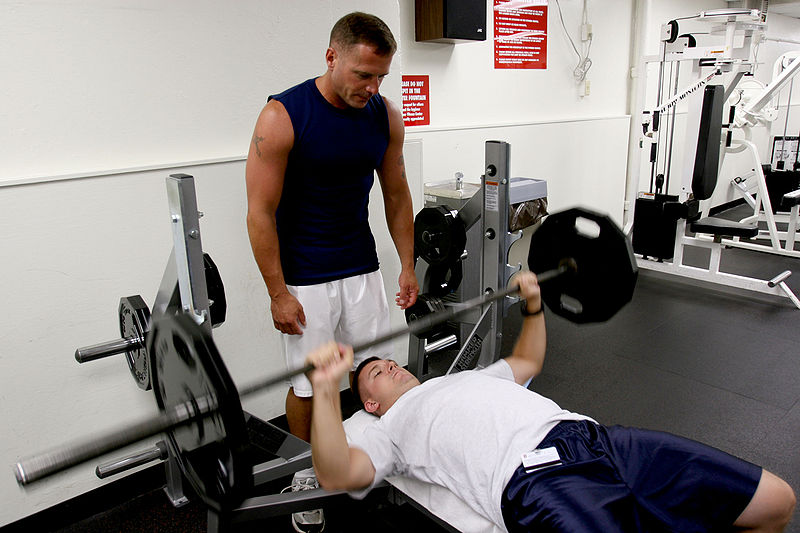
Weight training to strengthen muscles and burn fat should be a part of your exercise routine. You don’t have to be a bodybuilder to benefit from weight training. Done properly, weight training can help you to increase muscle strengthen, tone your muscles and burn body fat. Done incorrectly, you risk a strain injury or worse, a bone fracture. Don’t try to learn lifting techniques by watching people at the gym or watching an exercise DVD. Before picking up some dumbbells or grabbing a barbell, connect with a personal trainer who is knowledgeable about weight training. 
A fitness trainer can teach you the proper form for each lift. Improper form when lifting weights can result in injury and you won’t get the benefits of the lift. Begin with a light weight and establish good form when lifting. Gradually increase the amount of weight. It’s difficult to maintain good form when trying to lift too much weight. Lift the right amount of weight for your stage of physical development. Start with the lightest weight and lift it 15 times. Gradually increase the amount of weight you lift as your muscles get stronger. 
Don’t forget to breathe when lifting weights! Many people tend to hold their breath. If you hold your breath when straining to lift a weight it can cause your blood pressure to rise which can be dangerous. Breathe out when you lift and breath in when you lower the weight. 
Select a weight lifting routine that works your whole body for maximum fat burning and muscle toning benefits. Don’t exercise the same muscle group on consecutive days. Your muscles need one day of rest between exercise. You may choose to work all your major muscle groups with weights every other day or exercise daily working a different muscle group each day. A fitness expert can help you to develop a routine that works best for you. 

Sports Nutrition

Photo Credit: Master Sgt. Steve Miller USAF PD

Many people engage in sports activities, especially during the spring and summer months. Sports, such as golf, tennis, softball, basketball and baseball require strength, endurance and flexibility. Nutrition is a critical element of your fitness program. You have to eat to have the energy necessary to play 9 holes of golf or catch fly balls in the outfield. Sports nutrition often focuses on carbohydrates for energy. Professional athletes boost their performance by loading up on carbohydrates a couple of days before a competition. Protein is another important nutrient for strong muscles and repair of muscle tissue after vigorous sports. Whether you and your co-workers play softball on Saturdays or you play basketball with the kids after school, it’s important that you eat nutritious foods. 

Never skip breakfast. Your body has not had nutrition while you were sleeping and it will be low on energy stores. If you exercise without breakfast you may feel weak and dizzy. Plan to eat at least one to two hours prior to exercise. Fruit and whole grain cereals or whole wheat toast are good choices for breakfast. Slice some bananas or strawberries and add them to a bowl of whole grain cereal or oatmeal with low-fat vitamin-fortified milk. How much you eat will impact your performance. Eating too little can leave you feeling weak, but eating too much before exercise can also impact your performance. Try to avoid eating large meals right before a you play sports. Eat large meals at least 4 hours prior to physical activity. Small meals may be eaten as soon as two hours prior to sports exercise. If you eat too much too soon before exercise you may feel sleepy, sluggish or experience stomach upset. 
It’s important to eat after exercise to help repair your muscles and replace your body’s glycogen. Eat protein and carbohydrates after exercise. Drink fruit juices, eat a bagel with some low-fat cream cheese, have a snack of cheese and crackers, fruit, yogurt or a peanut butter sandwich. Don’t forget to drink plenty of water before, during and after exercise. 

Should I Exercise If I Have The Flu?

Photo Credit: mcfarlandmo CC-BY-2.0

Regular exercise combined with a healthy diet and sufficient sleep can help keep your immune system strong. Moderate exercise daily or at least every other day helps enhance your immune system’s flu-fighting power. To keep your immune system in peak condition and fighting off infections, try to get at least 30 minutes of aerobic exercise daily. Walking, riding a bicycle, running, jogging, swimming and dancing are  ideal ways to get in a challenging aerobic workout. But, should you continue to exercise if you do catch a cold or the flu?
If you do catch a cold or the flu, go easy on yourself. See your doctor before continuing your regular exercise routine. You  may be able to continue to exercise if you feel well enough, but do mild exercise instead of your moderate to vigorous routine. If you normally run for 30 minutes every day, walk for 20 minutes instead. Mild exercise can help relieve body aches and get your blood flowing to move the disease-fighting white blood cells through your system faster. Rest if you feel too ill to exercise. 
If you have a fever, you should not exercise. Fever is a sign that your body is trying to fight off an infection. Your body needs energy to fight the virus. Exercising can strain your immune system, which can exacerbate your symptoms and slow recovery. You can be susceptible to dehydration when suffering from a cold or the flu, so be sure to drink plenty of water. 

Workout With The Kids

Photo Credit: United States Navy Public Domain

Parents often have trouble finding time to exercise and care for their children. Infants and toddlers require constant care for stay-at-home parents. School age children keep parents shuttling them from one activity to the next. It can be tough to find time to exercise every day. The key to keeping fit with kids is to get fit with the kids. Involve your children in your fitness activities and parents get involved in their kids activities. With a little planning parents can find lots of things to do that are good exercise and fun for the kids.
Parents who are caring for a baby or a preschool toddler can take baby along on a walk or a jog. Invest in a sturdy jogging stroller and take baby along for the ride. Older children can go along for a bicycle ride in a child seat on the back of your bicycle. Don’t forget the helmets for both you and your child! Place your baby in a secure pack that straps to the front of your chest and take her along for your daily walk. The added weight will help you to burn more calories. Toddlers will enjoy activities when the parents are part of the action. Take your toddler to the park and push him on the swing or merry-go-round. This is a pretty good workout for your arms and your toddler will have fun. 
School-age children may enjoy skating or rollerblading in the local skate park. Go to a park that has monkey bars and race your child across the monkey bars. Have a contest to see who can do the most pull-ups on the bars. Play games like touch football, kickball, keep away, tag or softball. Go swimming together at the local pool or community center. Have a contest to see who can swim across the width of the pool the fastest. 
Fitness can be a great way for parents to stay connected with their teenagers. Play team sports with your teenager, such as doubles tennis, ping pong, volleyball, baseball or play one-on-one basketball. Volunteer to help coach your teen’s school sports team. Fitness video games are another way to connect with your teenager and get some exercise at the same time. Take part in a community walk to raise money for a charity. Remember to involve your teen in activities at home too, like yard work and gardening.