Aerobic Conditioning

Photo Credit: Benson Kua CC-BY-SA-2.0
Your aerobic condition is your body’s ability to absorb oxygen and move it through your blood to your cells where it is used to metabolize fuel, or the nutrients you consume. Your aerobic conditioning might be lacking if you cannot exercise at a sustained maximum heart rate for more than a few minutes. In other words, you lack endurance. You can improve your aerobic conditioning and improve your endurance by progressively increasing the amount of time you exercise at your maximum heart rate. Be consistent in your training and your body will adjust to the intensity of your workout.
Determine your maximum heart rate by subtracting your age from the number 220 and then multiplying the difference by 70 percent to 85 percent. If your current age is 46, then your maximum heart rate is 174. Multiply 174 by 70 percent, and your maximum sustained heart rate for aerobic conditioning is 122. At first, you might be able to workout at about half or three-fourths of your maximum heart rate of 122, but by continuing to workout at your maximum heart rate and gradually increasing the length of time you exercise at this level, your aerobic conditioning and endurance will improve.
When you are able to exercise at your maximum heart rate for 20 minutes, your body burns fat. Combine aerobic exercise with a low-fat, nutritious diet and you will lose weight. Do some strength training 2 to 3 days each week to build muscle mass as you burn fat. Aerobic conditioning exercises also improves your heart health and improves lung capacity.


Beat the Middle Age Spread

Photo Credit: Mallinaltzin CC-BY-3.0
For some people, especially women, a spreading waistline is just part of entering middle age. Hormonal changes in a woman’s body can cause fat to migrate from the upper body and legs to the abdomen. Belly fat is a serious health risk for both men and women. Belly fat increases your risk of heart disease, diabetes and some types of cancer. Belly fat is difficult to lose, but it’s not impossible. Reducing your calories and getting aerobic exercise every day can help burn fat and trim your waistline.
Belly fat isn’t only the round shape you see on the outside, it includes fat inside your belly around your internal organs. Internal belly fat, or visceral fat, puts you at a greater risk for cardiovascular disease, strokes, breast cancer, colon and rectal cancer and type 2 diabetes. The best way to reduce belly fat, both visceral and visible fat, is to eat a healthy diet and get at least 30 minutes of aerobic exercise every day.
Eat more fruits and vegetables and lean meats. Cut fats and fatty foods from your diet completely. Avoid soda and sugary foods, or limit the amount of sweets and sodas you consume. Switch to no-sugar drinks, such as flavored water. Avoid processed flour and white flour foods. Switch to whole grain crackers, bread and flour. Try to avoid buying any processed foods, opting instead for fresh foods. Canned soups, frozen dinners and ready-to-eat or quick preparation foods are often high in calories, fat, preservatives and sodium. Cut back on fast food or stop eating at fast food restaurants altogether. The typical fast food burger can add 600 calories or more to your diet. Drink plenty of water throughout the day to keep your body hydrated. As a bonus, your skin will be softer and more supple if you are properly hydrated.
To get rid of belly fat and to keep it off, you have to exercise. Adults need to get at least 30 minutes of aerobic exercise every day. Aerobic exercise, also called cardiovascular exercise or just cardio, is any activity that increases your heart rate and respiration and makes you sweat. Brisk walking, jogging, climbing stairs, walking on a treadmill or working around the house and mowing the lawn are good ways to get exercise.


Muscle Foods

Photo Credit: Veganbaking.net CC-BY-SA-2.0
Lifting weights and isometric exercises help to build larger, stronger muscles, but exercise is only part of the picture. You have to eat a muscle-healthy diet if you want to have bigger muscles. There are a lot of products on the market, mostly protein-based drinks and shakes, that promise to help build bigger muscles. Protein shakes and supplements, if used as recommended and with your doctor or personal trainer-dietitian’s supervision, can provide extra protein to build muscle tissue. However, protein supplements alone are not enough. Your muscles need a variety of nutrients in addition to protein. A balanced diet that includes carbohydrates, vitamins and trace minerals will help you achieve your big muscle goals.
Low-fat fortified dairy products provide protein for muscle tissues, carbs for energy and plenty of vitamins for your overall health and fitness. Dairy products are rich in calcium, potassium and vitamin D. Vitamin D and calcium are essential not only for stronger, larger muscles, but also for strong bones. Add some milk, cheese and yogurt to your diet to help build strong muscles and bones.
Lean meat is a good source of protein. Lean beef is also a good source of iron, which helps keep your blood healthy for efficient delivery of oxygen and removal of cellular waste. Beef is also loaded with selenium, zinc, magnesium and muscle-building amino acids. Trim off the fat before cooking a steak or a pot roast. Chicken and eggs are also good sources of protein and other vitamins and minerals. Eggs are rich in amino acids, vitamins B, D and E and zinc.
Drop that bag of potato chips and snack on nuts and whole grain crackers to get a boost of protein for your muscles. Nuts and whole grains, such as wheat and oats, also provide your body with antioxidants and vitamin E that help repair cell damage caused by free radicals. Avoid salted or honey roasted nuts as these can add additional sodium and calories that you don’t need. Whole grain pasta, bread and crackers with some low-fat cheese makes a great protein-rich snack.


Bounce for Weight Loss

Photo Credit: Mikefifield CC-BY-3.0

Many of us probably played on a trampoline in the back yard when we were kids. Playing on a trampoline can be a lot of fun (if done safely). But did you know that bouncing on a trampoline can actually help you get fitter and lose weight? Bouncing on a trampoline is a moderate-intensity aerobic exercise that improves bone health and burns fat.You don’t need one of those giant trampolines that take up most of the back yard to bounce your way to fitness. A mini-trampoline, also called a rebounder, can help you get fit while having fun. 

The basic bounce is simply standing in the middle of the mini-trampoline and bouncing. It’s a good workout for your back, legs, spine joints and abdominal muscles. Stand in the middle of the trampoline with your feet slightly apart. Bend your knees and then straighten you legs quickly to begin the bouncing. You don’t have to bounce high, just a few inches off the surface will do. Bounce steadily for about 20 minutes or until you are sweating.
Once you have mastered the basic bounce, it’s time to try some fancy footwork. “Walk” in the middle of the trampoline by standing with your feet a few inches apart and then lift your left heel. As you lower your left heel, lift your right heel. Get your rhythm and work up to a brisk “walk.” Jog in place in the middle of the trampoline by lifting your entire foot about an inch off the surface of the trampoline on the upward bounce. Alternate feet and jog off the excess fat while working your muscles.


Slouching Can Hurt You!

Photo Credit: Skoivuma CC-BY-3.0
If you sit at a desk for 8 hours a day at work, you become susceptible to slouching. Slumping your shoulders and leaning forward in a slouched position often results from fatigue and weak muscles. Weak muscles in the back, shoulders and neck can result in poor posture and slouching. When you slouch, you make yourself susceptible to neck, back and shoulder pain. Your muscles and joints can become stiff and you may develop a headache. The best way to avoid slouching and all the negative physical effects is to be mindful of your posture at all times and to develop strong muscles.
The pelvic lift exercise helps strengthen your back muscles. Try to do repetitions every day to help strengthen your back from your neck to your spine, and strengthen your thighs. Lie on the floor on your back with your knees bent. Place your feet flat on the floor close to your butt. Place your hands on each side of your body with your palms down. Take a deep breath, squeeze your abs and then lift your hips up toward the ceiling. Hold for a few seconds and then relax.
The plank exercise helps to strengthen your shoulders, back and abdominal muscles. Leg extensions help work your abs and thighs. Leg extensions also help to strengthen your hips and pelvis.


Hula Hooping: A Game or a Serious Workout?

Photo Credit: Patrick Dohney CC-BY-2.0
Hula hoops have been around for decades. They come in all sizes and colors. Some have beads inside that make a noise as it goes around your hips and others light up when you play with it. The hula hoop is traditionally considered a toy, but did you know that the hula hoop is a great way to lose weight and tone your body? Adults who want to lose weight and firm up muscles from the top down can use a hula hoop for a whole-body workout.
The rocking, back-and-forth, motion of your body causes repeated contraction and relaxation of your muscles. Your body flexes and your spine and hips are rotated. Your knee joints and the leg muscles that stabilize your knee and hip joints also get a good workout. The motion of your legs and hips that keep the hoop rotating around your waist improves the flexibility and strength of your hamstrings, quadriceps and hip flexors. Your core muscles also get a good workout as you tighten and relax your abdominal muscles to keep the hula hoop moving. Your butt muscles will feel the burn when you rotate the hula hoop higher on your waist.
Hula hooping can help you keep your spine, hips and leg joints flexible for increased range of motion. Hula hoop exercise is a low-impact exercise than can help you burn fat and lose weight if you hoop for about 30 minutes after you start to sweat and your heart rate increases.


Ab Exercises for a Firmer, Flatter Stomach

Photo Credit: Fj.toloza992 CC-BY-SA-3.0
Most of us could do with a fat loss and stronger muscles around our midsection. Belly fat and weak abdominal muscles can not only make you look like a pear, but belly fat can also contribute to diseases such as heart disease and even cancer. Burn fat and lose weight by eating a healthy diet and getting at least 30 minutes of aerobic exercise every day. Do ab strengthening exercises to firm up your tummy every other day in addition to aerobic exercise to help flatten and firm your abs.
The front plank is an effective abdominal exercise that strengthens the tranverse abdominis and the rectus abdominal muscles. Get on the floor and support your body on your forearms and your toes. Stretch your body out fully. Keep your spine straight from the top of your head all the way to your heels. Squeeze your abdominal muscles tightly and then lift your entire body straight up off the floor. Keep your elbows underneath your shoulders for balance and support. Hold the plank exercise for 5 seconds and then relax. Try to do 5 repetitions of this exercise.
Leg lifts are another very effective abdominal exercise. Your butt and legs will also get a good workout. Lie on the floor on your back. Place your hands, palms down, under your butt. Flatten your back against the floor and keep your legs close together stretched out in front of your body. Squeeze your abs tight and then lift both legs upward toward the ceiling. Lift your legs as high as you can. Bend your knees and then bring your knees toward your chest. Straighten your legs back out and lift toward the ceiling. Hold for a few seconds and then relax. That’s one rep. Try to do 5 repetitions.
The crunch is the tried and true abdominal exercise. Lie on the floor with your knees bent and your feet flat on the floor. Place your hands on the floor, palms down, on either side of your body. Squeeze your abs tight and lift your upper body off the floor using your abdominal muscles. Hold for a few seconds and then relax. Start with 5 repetitions and gradually build up to 10 or more.


Strength Training with a Medicine Ball

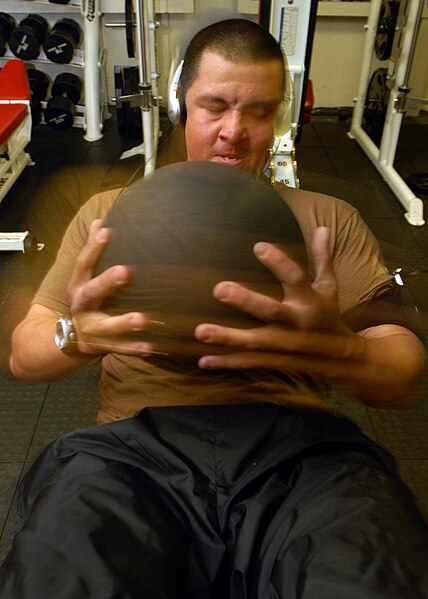
Photo Credit: PD-USGOV-MILITARY-NAVY
A medicine ball is a heavy ball that you can use to strengthen your upper body and abdominal muscles. Today’s medicine balls aren’t like those big, heavy things your high school physical education teacher used to throw at you. Medicine balls for strength training are available in different weights from 2 pounds up to 25 pounds. Working out with a medicine ball once or twice each week can help you build muscle and burn fat.
You should select a medicine ball that you can lift without straining your arms. When you workout with a medicine ball, make sure your body is balanced and your feet flat on the floor. Workout your shoulders and upper body by holding a medicine ball in front of your chest with both hands. Extend your arms straight out from your shoulders and slowly raise the ball over your head. Hold it for a few seconds and then lower your arms. Keep your arms extended and then raise the ball over your head again. Try to do 10 repetitions of this exercise. You can work your triceps by holding the ball over your head and then lowering it behind your head by bending your elbows.
Work your obliques on each side of  your waist by holding a medicine ball while doing oblique twists. Lie on your back on the floor and bend your knees until your shins are parallel with the floor. Place a medicine ball between your knees. Rotate your knees to the left and then back to center. Rotate your knees to the right and then back to center. Keep your back flat against the floor and rotate from the waist. Do 10 repetitions.
 

Flex Your Hips

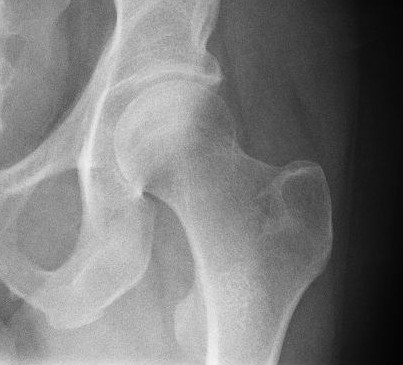
Photo Credit: Scuba-limp CC-BY-SA-3.0
Your hip flexors are muscles that help flex your hip joint when you stand up and sit down. When your hip flexors are weak or tense, you can experience stiffness and pain in your hip or lower back. Hip flexor exercises help to strengthen the muscles and improve flexibility of the joint. If you suffer from osteoporosis, spine injury or hip injury, consult your doctor before trying any hip exercises.
Lying leg raises can be done on the floor or on an exercise bench. Lie on your back and flatten  your back as much as possible. Bend both of your knees and then raise your knees toward your chest as far as you can. Keep your knees together  and try to avoid lifting your lower back off the floor. Lower your knees but don’t touch the floor with your feet and then bring your knees back to your chest again. Try to do 8 to 10 repetitions of this exercise.
Stretching your hip flexor muscles help improve flexibility to make bending, walking and standing up easier. Lie down on your back on your bed or on an exercise bench. Allow your legs to hang over the bed with your butt close to the edge of the bed or bench. Place your feet flat on the floor with your knees bent. Raise one knee up toward your chest but leave the other foot on the floor. Grab your knee with both hands and gently pull your knee toward your chest. Lower your foot back to the floor and repeat on the other side. Try to do 8 to 10 repetitions with each leg.


Can You Be More Alert with Exercise?

Photo Credit: Ranveig CC-BY-SA-3.0
Do you find yourself having difficulty paying attention sometimes? Is it hard to concentrate? Do you forget important information sometimes? People who regularly exercise their bodies tend to be more alert than people who do not exercise or exercise infrequently. When you exercise, blood flows to every part of your body, including your brain, is increased. If you exercise, you may be able to stay focused, be more alert and remember more information.
Student participants in a study by the California Department of Education, California Project Lean, “Successful Students Through Healthy Food and Fitness Policies” performed better on tests than than their classmates who did not exercise. The students who exercised also performed better overall as demonstrated by better reading and writing skills and better grades.
Exercise can also increase the size of your brain! A study published in The Journals of Gerontology, “Aerobic Exercise Training Increases Brain Volume in Aging Humans,” Stanley J. Colcombe, et al., older people who did aerobic exercise had larger brains after 6 months of exercise. The increased blood flow to the brain during exercise may contribute to increase in brain tissue. The people who took part in the study also demonstrated improved cognitive brain function.
When you exercise, it isn’t just your muscles that are growing. Your entire body, including your brain, benefits. Combine regular aerobic exercise with a healthy diet and you are on your way to improved fitness and greater mental alertness.