Are Cherries the New Super Fruit?

Photo Credit: USDA PD

By now just about everyone has heard about the powerful nutritional and antioxidant benefits of fruits and vegetables. All fruits and vegetables are good for you, but some have more of the good stuff than others. Cherries are loaded with antioxidants that help to prevent cell damage due to free radicals. Tart cherries are among the fruits with the most antioxidants per serving. 

Cherries are also a source of phytonutrients that boost the effectiveness of antioxidants. Other important antioxidants found in cherries include anthocyanins. Anthocyanins give cherries their red color, but more importantly they help to reduce inflammation. Cherries have more of these antioxidants than any other fruit. The anti-inflammatory properties of cherries make them a good food for people who suffer from arthritis and gout.
Cherries are also good for your heart health. In addition to their anti-inflammatory properties and high levels of antioxidants, cherries help to reduce cholesterol levels. Lower cholesterol reduces your risk of developing atherosclerosis, or hardening of the arteries and plaque buildup on the walls of your arteries. You can get all the healthy benefits of cherries by eating them raw, in juice or dried.
 

Eat Breakfast for Heart Health

Photo Credit: USDA PD
You’ve been told numerous times to never skip breakfast. Your body needs fuel after fasting all night while you were sleeping. Breakfast gives you the energy you need to make it to lunch time without feeling hungry, weak and grumpy. But did you know that eating breakfast might help reduce your risk of heart attack? According to the Harvard Heart Letter, eating a breakfast that includes whole grains reduces your risk of having a heart attack.
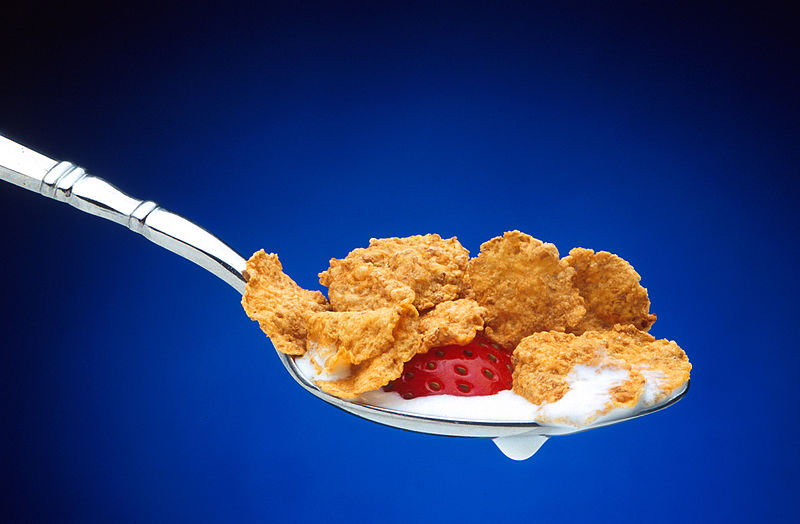
A healthy, low-fat, heart-friendly breakfast should include whole grains, such as oats, high-fiber cold cereal with milk and fruit and 1 cup of yogurt with walnuts or almonds. Whole grain muffins, including wheat, oats and barley with low-fat milk and peanut butter supply your protein and grain requirements. English muffins with low-sugar or no-sugar-added fruit spread is also a heart-healthy choice for breakfast. Try an egg white omelet with low-fat cheese, fresh bell peppers and whole wheat toast and oranges. If you are running late for work, you can always blend up a delicious breakfast smoothie with bananas, blueberries, strawberries, orange juice and some kiwi. Toss in some broccoli for extra nutrients and antioxidants.
Eat a healthy diet and get plenty of rest and exercise to keep your body in top shape and your weight under control.
 

Stretch Before and After Running

Photo Credit: Steve Newman CC-BY-SA-3.0
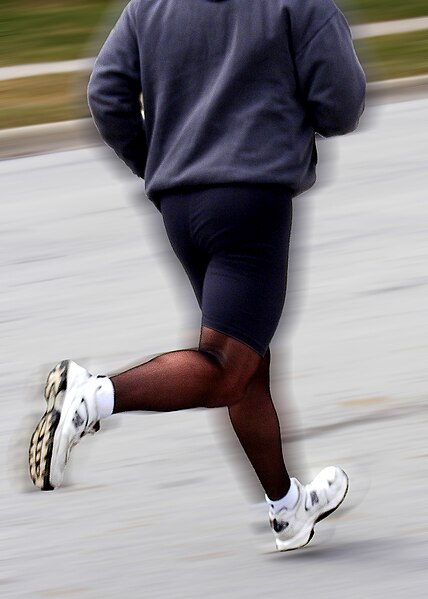
Stretching your muscles after you warm-up, but before exercise, may help reduce your risk of injury from muscle strains and joint sprains. Stretching after you cool-down may also help to reduce the pain of delayed onset muscle soreness. Stretching after a run can help to remove lactic acid from your muscles. Lactic acid is the stuff that makes your muscles feel fatigued and may contribute to muscle soreness after exercise. Running really works your butt, hip flexors, quadriceps, hamstrings and your calf muscles. Your feet and ankles take a pounding, too. Stretching your muscles can also help you feel less tired after a vigorous run.
Avoid bouncing when you stretch your muscles and stretch slowly. Stretching too fast or bouncing on your muscles to stretch them can cause injury. Bouncing will cause your muscles to tense, which is the opposite of what you want to happen. Stretching should relax your muscles to help remove toxins that may contribute to soreness. Stretching will also stimulate blood flow to help repair the micro-tears that occur with exercise.
Runners who do not properly warm-up and stretch before a run may experience muscle cramps. Muscle cramps are involuntary contractions of the muscle tissue, which can be painful. Stretching can help reduce the risk of muscle cramps by stimulating blood flow. Stretching also helps to increase joint flexibility. After a long run of 30 minutes or more, your muscles may begin to feel tight. After walking to cool down, stretch your muscles to alleviate tightness and increase flexibility in your muscles and joints.


Health Benefits of Chaga

Photo Credit: André Karwath CC-BY-SA-2.5
Chaga is a mushroom that has been used for thousands of years, especially by the Chinese, as a health and nutritional supplement. Chaga is used by millions of people to help boost the immune system, to promote longevity and as a treatment for many common ailments. Chaga serum is even used to help preserve the youthful appearance of your skin. What can chaga supplements and extracts do for you, you ask?
Chaga is rich in antioxidants that neutralize free radicals in your body to help prevent cell damage. Free radicals are unstable molecules that are produced by your body naturally as part of the metabolic process. Left unchecked, free radicals can cause irreparable damage to your cells, even altering the cells’ DNA. Foods and herbs that are orange in color, including chaga, are loaded with antioxidants. Chaga is especially rich in a group of antioxidants called flavonoids. Flavonoids are especially helpful to reduce your LDL cholesterol. That’s the bad cholesterol that contributes to a number of diseases, including plaque on your artery walls.
By now, just about everyone has heard about the the health benefits of dietary fiber. It helps with digestion, keeps you regular and significantly lowers your risk of heart disease, diabetes, aids in weight loss and helps you feel fuller longer so you don’t overeat. Consuming natural dietary fiber may help to lower your blood pressure and reduce your risk of some types of cancer, especially gastrointestinal cancers. Chaga is loaded with healthy dietary fiber.
Chaga may also inhibit the growth of certain types of bacteria due to chaga’s rich supply of antibacterial molecules, including selenium, pantothenic acid, sterols, tripeptides, triterpenes and zinc. Chaga may also help to relieve inflammation, because it contains a number of anti-inflammatory substances that inhibit the effects of molecules, such as nitric oxide synthase and cyclooxygenase-2.
Your immune system will benefit from a chaga supplement, too. It contains beta glucans polysaccharides that support your body’s natural ability to fight off infection. Chaga’s polysaccharides promote the body’s production of white blood cells, which are the primary defense against disease-causing invaders in your blood.

You can find out more about the many health benefits of chaga at Chaga International. Review some of the scientific and research information when you visit Chaga International.

Pelvic Tilt Exercises

Photo Credit: CarpalTunnelX CC-Zero
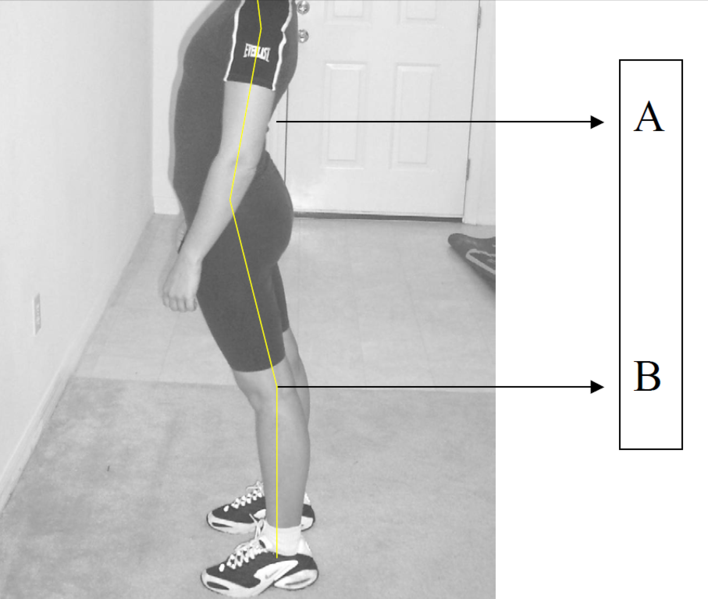
Lordosis, also called anterior pelvic tilt, is characterized by a forward tilted pelvis. The forward rotation  of the pelvis results in a deeply curved back and a protruding belly. The most common cause of lordosis is lack of exercise. People who spend a lot of time sitting can develop lordosis. Poor posture and a sedentary lifestyle can result in weak hip and abdominal muscles, which cause the pelvis to tilt forward. Exercise can strengthen these muscles and help correct or prevent a tilted pelvis.
The kneeling hip flexor stretch exercise works to strengthen the hip flexors, the abdominal muscles, the quadriceps and the oblique muscles. Strengthening and stretching these muscles can help improve posture and correct a forward rotated pelvis. Kneel on one knee and plant the other foot on the floor. Make sure the thigh is parallel to the floor. Straighten your back by pulling your shoulders down and back. Squeeze your abdominal and gluteal muscles tightly and then lean forward placing your weight on your foot. Keep your back straight and do not allow your pelvis to tilt to one side. Hold the stretch for 30 seconds and then return to the start position. Do 5 repetitions with each leg.
The lower back stretch targets the erector spinae muscles of the lower back. Stretching this muscle can help relax and strengthen the back muscles that are shortened by an excessive arch in the lower back. Sit on a chair with your feet place as far apart as is comfortable. Bend at the waist until your shoulders are between your knees. Reach between your legs under the chair with both arms and stretch as far as you can. Hold the stretch for 5 to 10 seconds and then relax. Repeat this stretch 10 time.
Leg presses target the gluteals, quadriceps and the adductor magnus muscle of the hip. Use a leg press machine to perform this exercise. Place your feet a little higher on the platform than you normally would to perform leg presses. Extend your legs until your knees and hips are fully extended. Hold the press for 5 seconds and then relax. Try to do 10 to 15 repetitions of this exercise.


Hip Exercises to Relieve Minor Joint Pain

Photo Credit: Scuba-limp CC-BY-SA-3.0
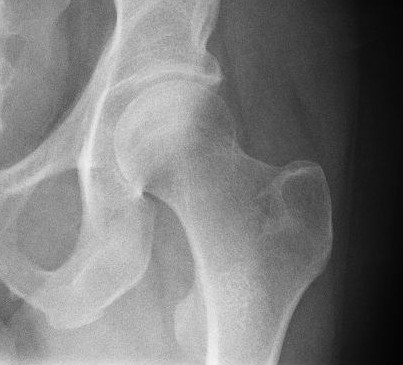
If you have painful knees, the problem might not be in your knees. It could be your hips. Weak hip muscles are often the cause of pain in your knees, ankles and even in your feet. When the muscles that stabilize your hip joint are weak, the hip and everything below it can become misaligned causing pain and instability. You can strengthen your hip muscles to stabilize your hip joint and relieve minor joint pain in your legs with exercise. See your doctor if pain is severe or does not improve with exercise.
Hip rotation exercises strengthen the hip abductor muscles. The abductor muscles work to move your legs out to the side of your body away from the midline of your body. Get on the floor on your hands and knees. Keep your back straight and flat. Lift your right knee off the floor and rotate your leg from the hip upward and outward until you cannot lift it without rotating your body. Keep your torso straight and parallel to the floor and keep your knee bent. Return your knee to the floor. Repeat 8 to 10 times on each side.
An exercise ball is a good option to help strengthen your hip joints and give your core a good workout at the same time. You will use your abs to stabilize your body and maintain your balance while performing leg lifts on an exercise ball. Sit down on a large exercise ball with your feet flat on the floor. Adjust your body until your knees are bent at a 90-degree angle and your thighs are parallel to the floor. Sit up tall and straight and squeeze your abs. Lift your left foot off the floor a couple of inches and hold the position for 5 seconds. Lower your left foot back to the floor and repeat 8 to 10 times on each side.
A resistance band can help strengthen your hip flexor muscles. Anchor a resistance band to a wall or door frame. Loop the band around your right ankle and stand with your back to the resistance band’s anchor. Step forward until there is slight tension on the band. Stand with your feet about hip-width apart. Keep your right leg straight and slowly lift your leg forward and upward. Keep your other foot planted firmly on the floor. Lift your leg forward pulling against the resistance band until you cannot pull any further. Hold the position for 2 seconds and then relax. Do 8 to 10 repetitions with each leg.


Stretching Your Back

Photo Credit: Gray’s Anatomy PD
A stiff back can keep you from enjoying ordinary activities and can make you feel tired and limit your range of motion. Muscle strain is one of the major causes of stiff muscles. You can get a stiff back from the way you sleep to sitting in the same position for a long period of time. Poor posture, such as slouching, can cause stiffness and even pain in your back and neck. Stretching your muscles throughout the day relieves stiffness and increases circulation to your tired, stiff muscles. If you are stuck behind a desk all day, you can stretch your back muscles to alleviate or prevent muscle stiffness. Start with your neck and stretch your muscles all the way down to your lower back.
Stretch your neck by sitting up straight in your chair. Drop your shoulders slightly and squeeze your belly tight to straighten your spine. Tilt your head and drop your left ear toward your left shoulder. Resist the urge to bring your shoulder to your ear. Stretch as far as you can without causing pain. Raise your head back up and lower your right ear toward your right shoulder. Repeat 4 times on each side. Continue to stretch your neck by sitting up straight and turning your head first to the left and then to the right as far as you can. Repeat 4 times in each direction. Tuck your chin down toward your chest and hold for 10 seconds. Now that you’ve loosened up your neck, let’s move to your shoulders.
Sit up straight and bring both of your shoulders up toward your ears. Hold the position for 10 seconds and repeat this shoulder stretch 4 to 5 times. Squeeze your shoulder blades together and hold the squeeze for up to 10 seconds. Squeeze your shoulder blades until your upper back feels more relaxed.
A torso twist can relieve stiff middle and lower back muscles. Sit up straight in your chair and twist from your waist to the right as far as you can. Grab the side of your desk chair and pull your body around to the right farther as long as you don’t experience pain. Repeat on the other side.


Aerobic Conditioning

Photo Credit: Benson Kua CC-BY-SA-2.0
Your aerobic condition is your body’s ability to absorb oxygen and move it through your blood to your cells where it is used to metabolize fuel, or the nutrients you consume. Your aerobic conditioning might be lacking if you cannot exercise at a sustained maximum heart rate for more than a few minutes. In other words, you lack endurance. You can improve your aerobic conditioning and improve your endurance by progressively increasing the amount of time you exercise at your maximum heart rate. Be consistent in your training and your body will adjust to the intensity of your workout.
Determine your maximum heart rate by subtracting your age from the number 220 and then multiplying the difference by 70 percent to 85 percent. If your current age is 46, then your maximum heart rate is 174. Multiply 174 by 70 percent, and your maximum sustained heart rate for aerobic conditioning is 122. At first, you might be able to workout at about half or three-fourths of your maximum heart rate of 122, but by continuing to workout at your maximum heart rate and gradually increasing the length of time you exercise at this level, your aerobic conditioning and endurance will improve.
When you are able to exercise at your maximum heart rate for 20 minutes, your body burns fat. Combine aerobic exercise with a low-fat, nutritious diet and you will lose weight. Do some strength training 2 to 3 days each week to build muscle mass as you burn fat. Aerobic conditioning exercises also improves your heart health and improves lung capacity.


Beat the Middle Age Spread

Photo Credit: Mallinaltzin CC-BY-3.0
For some people, especially women, a spreading waistline is just part of entering middle age. Hormonal changes in a woman’s body can cause fat to migrate from the upper body and legs to the abdomen. Belly fat is a serious health risk for both men and women. Belly fat increases your risk of heart disease, diabetes and some types of cancer. Belly fat is difficult to lose, but it’s not impossible. Reducing your calories and getting aerobic exercise every day can help burn fat and trim your waistline.
Belly fat isn’t only the round shape you see on the outside, it includes fat inside your belly around your internal organs. Internal belly fat, or visceral fat, puts you at a greater risk for cardiovascular disease, strokes, breast cancer, colon and rectal cancer and type 2 diabetes. The best way to reduce belly fat, both visceral and visible fat, is to eat a healthy diet and get at least 30 minutes of aerobic exercise every day.
Eat more fruits and vegetables and lean meats. Cut fats and fatty foods from your diet completely. Avoid soda and sugary foods, or limit the amount of sweets and sodas you consume. Switch to no-sugar drinks, such as flavored water. Avoid processed flour and white flour foods. Switch to whole grain crackers, bread and flour. Try to avoid buying any processed foods, opting instead for fresh foods. Canned soups, frozen dinners and ready-to-eat or quick preparation foods are often high in calories, fat, preservatives and sodium. Cut back on fast food or stop eating at fast food restaurants altogether. The typical fast food burger can add 600 calories or more to your diet. Drink plenty of water throughout the day to keep your body hydrated. As a bonus, your skin will be softer and more supple if you are properly hydrated.
To get rid of belly fat and to keep it off, you have to exercise. Adults need to get at least 30 minutes of aerobic exercise every day. Aerobic exercise, also called cardiovascular exercise or just cardio, is any activity that increases your heart rate and respiration and makes you sweat. Brisk walking, jogging, climbing stairs, walking on a treadmill or working around the house and mowing the lawn are good ways to get exercise.


Muscle Foods

Photo Credit: Veganbaking.net CC-BY-SA-2.0
Lifting weights and isometric exercises help to build larger, stronger muscles, but exercise is only part of the picture. You have to eat a muscle-healthy diet if you want to have bigger muscles. There are a lot of products on the market, mostly protein-based drinks and shakes, that promise to help build bigger muscles. Protein shakes and supplements, if used as recommended and with your doctor or personal trainer-dietitian’s supervision, can provide extra protein to build muscle tissue. However, protein supplements alone are not enough. Your muscles need a variety of nutrients in addition to protein. A balanced diet that includes carbohydrates, vitamins and trace minerals will help you achieve your big muscle goals.
Low-fat fortified dairy products provide protein for muscle tissues, carbs for energy and plenty of vitamins for your overall health and fitness. Dairy products are rich in calcium, potassium and vitamin D. Vitamin D and calcium are essential not only for stronger, larger muscles, but also for strong bones. Add some milk, cheese and yogurt to your diet to help build strong muscles and bones.
Lean meat is a good source of protein. Lean beef is also a good source of iron, which helps keep your blood healthy for efficient delivery of oxygen and removal of cellular waste. Beef is also loaded with selenium, zinc, magnesium and muscle-building amino acids. Trim off the fat before cooking a steak or a pot roast. Chicken and eggs are also good sources of protein and other vitamins and minerals. Eggs are rich in amino acids, vitamins B, D and E and zinc.
Drop that bag of potato chips and snack on nuts and whole grain crackers to get a boost of protein for your muscles. Nuts and whole grains, such as wheat and oats, also provide your body with antioxidants and vitamin E that help repair cell damage caused by free radicals. Avoid salted or honey roasted nuts as these can add additional sodium and calories that you don’t need. Whole grain pasta, bread and crackers with some low-fat cheese makes a great protein-rich snack.