Exercise Is Good For Your Brain

Most everyone knows that exercise is good for your body and your cardiovascular system. Did you know that exercise is good for your brain, too? According to Professor Charles Hillman at the University of Illinois, 30 minutes of moderately strenuous exercise can increase your mental cognition by up to 10 percent. Professor Hillman measured the cognitive performance of volunteers before and after exercising. The volunteers performed better on the tests following exercise. Exercise helps you to perform better at cognitive tasks, because you think more clearly and your mood is improved. The brain functions better after exercise because  acetylcholine, a neurotransmitter, is released in the muscle tissues near nerve endings. Engage in some moderate exercise at least 30 minutes a day, 3 to 4 days a week to get a brain boost and a healthy body. 
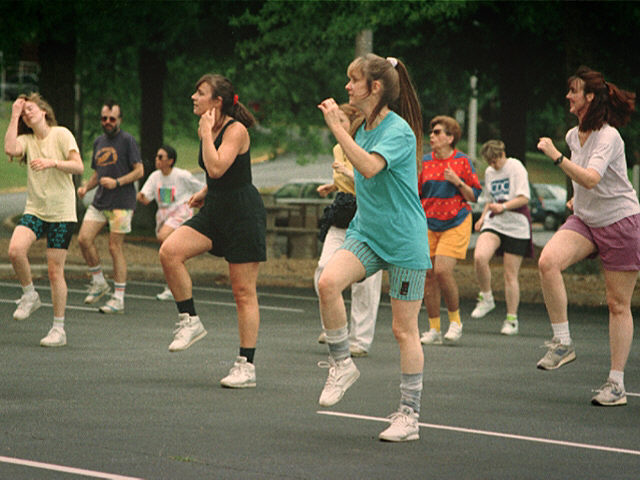
Photo Credit: PD-USGOV
Jump rope is an exercise that you can do at home, at the gym, on your lunch break at work, or just about anywhere there is room to swing a rope. Jumping rope is an excellent moderately strenuous exercise that involves most all of the major muscle groups and helps to improve your coordination and balance. Athletes, especially boxers, jump rope to get a good aerobic exercise and improve their coordination and stamina. Jump rope for about 10 to 15 minutes or until you begin to sweat. Gradually increase your time spent jumping rope until you can jump steadily for 30 minutes. 

Aerobic dance exercise is another way to get a really good workout and boost your brain power. Dance aerobics classes are popular and often available at local gyms and fitness clubs. The advantages of signing up for an aerobic dance exercise class are detailed instructions and personal assistance from trained fitness professionals. The more experienced aerobic dancers can also do aerobic dance exercises at home by following instructions on an aerobic exercise DVD. Try to do at least 15 to 20 minutes of aerobic dance exercise every other day as part of your overall fitness program. 
Swimming is an aerobic exercise that is very low impact, but involves all the major muscle groups for an intense aerobic workout. Local gyms, fitness clubs and the YMCA usually have a swimming pool available for public use or a low membership fee. Swimming is one of the best ways to work your whole body with minimum risk of injury. Swim for 30 minutes, three times each week. 

For more information about exercising to improve cognitive function, see: 

ABC News Good Morning America, Study: Exercise Can Make You Smarter, Claire Shipman, et al. 2009
Scientific American, Fit Body, Fit Mind? Your Workout Makes You Smarter, Christopher Hertzog et al., 2009
The Franklin Institute, Brain Training Games, Renew-Exercise, 2004

Exercise to Increase Lung Capacity


Photo Credit: Kristopher S. Wilson Public Domain

Exercise can help to increase our lung capacity, which means you can take in more oxygen with less effort and better efficiency. Greater lung capacity can improve your endurance, especially if you like to run, jog, swim or engage in strenuous exercise for 90 minutes or longer, 3 to 4 times each week. Long distance runners and marathon runners are among those who need maximum lung capacity. One of the benefits of aerobic exercise, like swimming and running, is an increase in lung capacity and improved cardiovascular function generally. Breathing exercises focus on improving lung capacity and efficiency. If you suffer from any kind of lung condition like asthma or cardiopulmonary obstructive disease (COPD), check with your doctor before trying lung exercises. 
Breathing by using the abdomen, or the diaphragm, can help you improve lung function. The muscle primarily responsible for breathing is the diaphragm. The diaphragm is located between your chest and your belly. When the diaphragm contracts, air is drawn into the lungs and the belly expands outward. The function of the diaphragm is unconscious, and we breathe without even thinking about breathing. You can take control of your breathing by taking slow, deep breaths using the diaphragm. In addition to improving your lung capacity and oxygen stores in the cells, breathing exercises can help you to relax and improve your overall sense of well-being. 
Become aware of your breathing by placing one hand on your belly and the other hand on your chest. Relax your abdominal muscles and breathe in deeply through your nose. The hand on your belly should move out farther than the hand on your chest. Pull down with your diaphragm to fill your lungs completely. It may take some practice, but after a few deep breaths, you should feel the air being pulled into your lungs as the diaphragm moves downward and the belly outward. Hold a deep inhale for about 5 to 7 seconds. Exhale by pushing all of the air out of your lungs through your mouth. Continue to exhale by pulling your diaphragm upward for about 5 to 7 seconds. Repeat this breathing exercise for a total of 5 deep inhalations and 5 deep exhalations. Sit on a chair to perform this breathing exercise the first few times you do it, in case you experience some mild dizziness. 
If you sit in a chair to do deep breathing exercises, sit up straight and look straight ahead. Drop your shoulders down and back to straighten your spine. Relax your hands, palms down on your thighs. Perform this exercise twice each day. When standing to do deep breathing exercises, stand up straight by dropping your shoulders down about one inch and push them slightly toward the middle of your back. Place your hands on  your hips with your elbows pointing out to each side. Relax and then begin your breathing exercise. 

Prevent Food Cravings From Destroying Your Diet

Photo Credit: Evan-Amos CC-Zero
Many people get food cravings from time to time. Men and women both get food cravings. When you are trying to lose weight, succumbing to a food craving can undo a week’s worth of weight loss efforts. Foods that are most often craved by women in the United States are sweet, calorie-laden, fat-rich foods, such as chocolates, ice cream, cookies and cheesecake. Food craving is a complex interaction of the brain, the stomach and hormones. Food cravings may also be all in your head.
According to research by Eva Kemps and Marika Tiggemann of Flinders University, Australia, people who have food cravings also have vivid image of the food in their minds. The clearer and more vivid the image of the food, the stronger the craving. When mental resources are focused on the image and memory of a food, it’s hard to focus on other mental tasks, hence a craving for the food. It is possible that the opposite may also be true. We can use our brain power to reduce cravings. In an article by Science Daily, The Psychology of Food Cravings, it is reported that people who had food cravings could reduce the craving by thinking about other things. In one experiment volunteers who were craving a food were shown flickering images of black and white dots on a computer screen. Cravings were also reduced when people thought about other things, such as a place they like to visit, a particular smell they remember (not food related) or to picture a rainbow. When people concentrated their mental energy on something other than a food craving, the craving lessened. 
Another way to help reduce food cravings, which can lead to over-indulging in diet-busting foods and treats, is to prevent yourself from becoming too hungry. Never skip meals and always eat a healthy breakfast that includes protein and complex carbohydrates found in whole grains, low-fat milk and nutrient-rich fruits and juices. Carry healthy snacks with you so that you can munch on them before lunch and before dinner, if you get hungry. Fresh fruits, vegetables and whole grains like granola bars are healthy alternatives to the candy bar sugar fix. 
For tips about how to curb food cravings, see:
WebMD, The Facts About Food Cravings, Elaine Magee, MPH, RD, 2005

Food Alternatives for Lactose Intolerance

Photo Credit: Stefan Kühn CC-BY-SA-3.0 2004

Lactose intolerance is the inability to digest lactose. Lactose is found in milk and foods made with milk. Other foods that contain lactose include some breads, pancakes, cookies, waffles, doughnuts, pastries and breakfast cereals. Processed meats, such as bacon, sausage, hot dogs and luncheon meats also contain lactose. Margarine, salad dressings and whipped topping made with milk as well as ice cream, cheese and butter all contain lactose. Because lactose is found in so many foods, it can be difficult for the lactose intolerant person to get enough calcium, potassium and vitamin D. There are good alternative natural food sources of these nutrients. There are also alternatives to milk that are lactose-free and fortified with the vitamins and minerals found in regular milk and milk products. Vitamin D helps the body to absorb calcium for strong teeth and bones, and as such is a critical nutrient. 
Salmon and sardines are rich sources of calcium and omega-3 fatty acids. Green vegetables, including broccoli, spinach and kale greens are loaded with calcium as well. Soy and almond milk fortified with vitamin D, potassium and calcium can satisfy the daily recommended allowances of these important nutrients. Bananas are a good source of vitamins and minerals including potassium, calcium and manganese. Eggs are also a good source of vitamin D as well as protein. Most lactose intolerant adults can get enough vitamin D and calcium by eating fortified foods, fruits and vegetables, fish, whole grains and by choosing lactose-free milk alternatives. 

Core-Building Medicine Ball Workout

PD-USGOV-MILITARY-NAVY

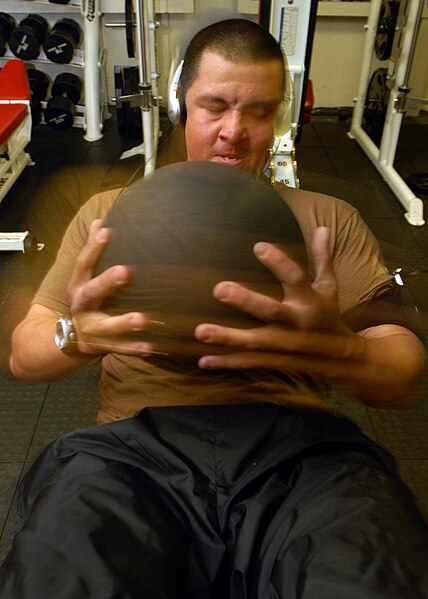
A medicine ball is a heavy, weighted ball that is used to strengthen the arms, legs and core muscles. Medicine balls vary in weight from a couple of pounds to as much as 25 pounds. Medicine balls differ from hand weights that are raised and lowered. Incorporating a medicine ball into your workout routine will involve twisting, bending, turning and tossing the ball. Exercises using a medicine ball can involve the full body and a wide range of muscles. As your core strength, arms and leg strength increases, move up to a heavier ball. 
An easy medicine ball exercise is the figure eight. Stand up straight with your legs slightly apart no wider than your shoulder width. Keep your feet flat on the floor and point your toes forward. Hold a medicine ball with both hands and extend the ball out in front of your abdomen. Move the ball in a figure eight, down, up and around to the right 5 times. Repeat the figure eight motion 5 times toward the left. Increase the number of repetitions or move up to a heavier ball when you can complete 10 repetitions without your arms feeling tired. 
Twists will strengthen your entire upper body, including your back and core muscles. Stand up straight with your feet apart. Hold a medicine ball with both hands with your elbows slightly bent toward your body. Swing the ball up to the right and twist your torso to the right with the momentum of the ball. Swing the ball back to the left turning your torso with the ball. Keep your feet planted on the floor and try to keep your heels from lifting up. Keep your abs tight during this exercise. Repeat this exercise 5 times in each direction. 

You can work your oblique muscles using a medicine ball. Lie down on your back and raise your knees toward your chest. Place a medicine ball between your knees and squeeze your knees to hold the ball. Place your hands palms down on each side of your body for stability. Keep your upper back on the floor during this exercise. Rotate your knees to the left as far as you can and then return to the center position. Rotate your knees to the right and return to center. Do 5 repetitions on each side. 

3 Exercises for Strong, Toned Legs

Photo Credit: Credit: LocalFitness.com.au
Strong, toned, muscular legs are more than just physically attractive. Strong legs support your body and carry you through the day. Strong legs also improve your balance and posture. If your leg muscles are strong, you are also less likely to suffer sprains and joint pains. 
Try some single leg squats to develop your calf muscles. Stand with your hands on your hips and your feet about hip-width apart. Place your right foot slightly forward from your left foot and shift your body weight to your right foot. Tighten your abs, breathe in and then lift your left foot off the floor about 2 to 3 inches. Slowly lower your body to a sitting position. Keep your weight on your right leg, but you can rest your left toes on the floor for balance and stability, if needed. As you lower your body by bending your right knee, allow your left leg to straighten out and slide forward. Keep your back straight and try not to lean forward as you lower your body. Exhale and push back up to a standing position using your leg. Do 5 squats with each leg. 
Stretch your calf muscle for lean, toned legs. Face a wall about arm-length away and place your feet flat on the floor hip-width apart. Place your palms on the wall about 2 to 3 inches higher than your shoulder height. Step forward with your left leg and keep both feet on the floor. Squeeze your abs, breathe in and move your upper body toward the wall. This will stretch the calf muscle of your left leg (the leg behind). Hold the stretch for 30 seconds, and then push your body back upright. Repeat this exercise 10 times for each leg. 
Stretch the hamstring on the back of your leg by lying on the floor flat on your back in a doorway. Place the back of one leg against the wall straight up from your hip. Allow the other leg to stretch out straight through the doorway. Push against the wall with the back of your leg that is parallel to the wall and point your toes toward the ceiling. Hold the position and then relax. Repeat this exercise 10 to 15 times for each leg.  

Fun Exercise Ball Workout

Photo Credit: LocalFitness.com.au
An exercise ball, also called a balance ball, is a great piece of equipment to develop balance and muscle strength. The exercise ball comes in a variety of sizes so that almost everyone can find a size that fits their body type and the intensity of their workout. The balance ball works large and small muscle groups as well as stimulating proprioceptors for a total body workout. Proprioceptors are sensors in the body that tell us where our body is in space and in relation to other objects. Proprioceptors let us know where a part of our body is in relation to the rest of our body. We can tell without looking if our knees are bent or if our hand is raised. Working out on an exercise ball can help sharpen proprioceptors for improved balance. 
Squats on an exercise ball help develop your core muscles, including your abdominal muscles and glutes. Stand up straight with an exercise ball between your lower back and a wall. Lean against the ball and hold your hands at your sides with your hands on your hips. Point your toes forward and slide your feet about hip-width apart. Try to keep your feet flat on the floor, squeeze your abdominal muscles and slowly lower your body toward the floor as if you are going to sit down on a chair. Stop when the top of your thighs are parallel to the floor and your knees are bent at a 90 degree angle. If you can’t go all the way to a “sitting” position, go as low as you can without pain and hold the position for 10 to 15 seconds. Exhale and push your body back to standing position. Repeat this exercise for 5 to 10 repetitions.
Stretches and bridges are good way to strengthen your abdomen, back, neck, arms and leg muscles. Get on the floor on your hands and knees and place the exercise ball under your belly. Lift and extend your right arm and your left leg. Stretch your arm and leg away from the center of your body out to to the sides. Hold the position for 10 to 15 seconds and return to the start position. Repeat this exercises with your left arm and your right leg. Breathe in and tighten your abs when stretching and then exhale when returning to the start position.  

Place the exercise ball on the floor and position it underneath your belly. Place your palms flat on the floor about shoulder-width apart with your fingers pointed forward. Keep your head, neck and spine in a straight line. Extend your legs in a straight line with your spine and slowly walk your body forward on  your hands. Keep your belly balanced on the ball and allow the ball to roll beneath your body. Go as far forward as you can. Beginners may want to stop when the ball is underneath their thighs. As you get stronger and your balance improves, walk forward until the ball is underneath your ankles. Walk back until the ball is back underneath your belly. 

Exercise to Fight Depression

Photo Credit: Public Domain
You know that exercise can help you get fit, improve cardiovascular health, strength, flexibility and help you lose weight. Did you know that exercise can also improve your self-esteem and improve your mood? Physical exertion causes your brain to release endorphins, which reduce the effectiveness of pain receptors in the brain. The result is a feeling of well-being. You feel physically energized and emotionally well when your brain releases this chemical. The feeling has been called “runner’s high” because of a euphoric feeling. The effects of regular exercise are stress reduction, less anxiety, improved self-esteem, more restful sleep and fewer feelings of depression. 
Any physical activity that you enjoy doing can  help ward off feelings of depression and improve your mood. You don’t have to run miles or lift weights at the gym to enjoy the benefits of regular exercise. Riding a bicycle, dancing, walking, playing golf and tennis, basketball, softball, even gardening, yard work and house work is exercise. Low-impact aerobic exercises like swimming, bicycling and walking will get your heart pumping, your muscles working and your brain busy making endorphins. Do what you like to do and involve a friend or group of friends and family. Make exercise a regular part of your family activities. Aim for about 30 minutes of moderate exercise every other day. Gradually increase the time you spend exercising or exercise more frequently. If you are having trouble getting started or motivated to exercise, a personal fitness trainer can help. Make exercise part of your regular daily routine for a healthy mind and a positive attitude.

Do not ignore depression. Sometimes even exercise and healthy diet cannot alleviate feelings of depression. Moderate to severe depression may require immediate medical intervention. If you or a loved one could be suffering from depression, seek  help.

For more information about depression and depression help resources, see:

WebMD, Depression: Support and Resources

Tennis Elbow

Photo Credit: Kos Public Domain
Painful joints, tendons and muscles of the elbow may indicate a condition known as lateral epicondylitis or tennis elbow. As the name implies, tennis players who have not perfected the backhand return can suffer strained tendons that cause the pain of tennis elbow. Anyone may suffer this condition. Tennis elbow is caused by overworked tendons. People who engage in repetitive motions of the wrist and arm can be susceptible to tennis elbow. The pain may remain localized in the elbow or it can spread to the forearm and wrist. Severe tennis elbow pain can be debilitating. It can be difficult to turn a doorknob, pick up a coffee cup or hold a cooking pot by the handle. Tennis elbow will usually clear up on its own with some basic home-treatments. See a doctor if rest, ice and over-the-counter anti-inflammatory pain relievers do not relieve symptoms of tennis elbow. 
Tennis elbow can affect anyone who engages in repetitive motion of the hand, wrist and arm, but some people are more susceptible to this painful condition. Chefs, painters, carpenters, plumbers and butchers often suffer from tennis elbow because of the daily repetition of the same arm movements. There are some ways to avoid this condition. First, learn the proper form when playing tennis, racquetball or golf. The swinging motion of the arm can result in stressed and injured tendons if the movement is not properly executed. When repetitive motions at work are the cause of tennis elbow, change to a more ergonomic way of performing the task. Raise or lower your chair if excessive use of a computer mouse is the culprit. Change the standard keyboard and computer mouse to ergonomically designed versions. Take frequent breaks from performing repetitive movements to stretch your arm muscles. Continue mild to moderate exercise as elbow pain allows and perform some stretching and strengthening exercises twice daily. Hold each exercise for up to 30 seconds and do up to 10 repetitions. 
Sit on a sturdy chair, bend the affected elbow and place your forearm on your thigh. Hold a light, 1-pound dumbbell in your  hand with your palm down, facing the floor. Your hand with the weight should be extended beyond your knee, far enough to allow the wrist and hand to move up and down without touching your knee. Slowly lift your wrist up toward the ceiling. Hold the position and then slowly lower your wrist down toward your knee and hold the position. After performing 10 repetitions, do the same exercise with your palm facing the ceiling while holding the dumbbell. Strengthen the tendons and muscles of your forearm by holding a dumbbell in your hand and extending your arm straight out in front of your body. Hold a dumbbell in your hand so that it is perpendicular to the floor. Your palm should be pointed toward your body. Rotate your hand and wrist until your palm is pointed at the floor. Slowly rotate back to the start position. 

Avoid Knee Injury

Photo Credit: Nevit Dilmen CC-BY-SA-3.0  2010

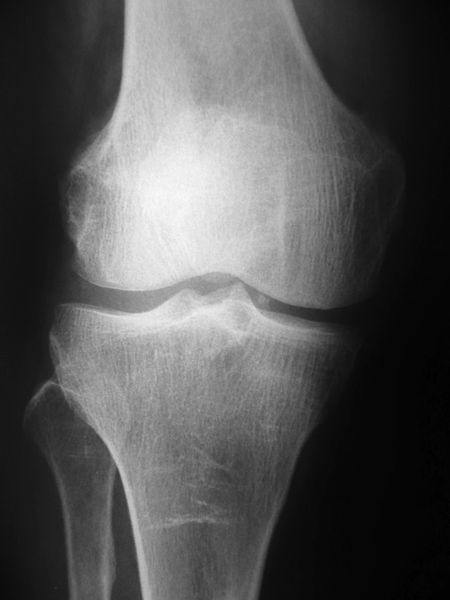
Your knees take a pounding every day. Every step you take, climbing stairs, walking through the grocery store, pressing the gas and brake pedal in your car, and standing up and sitting down all require movement of your knee joints. Running, jogging and jumping are high-impact activities that can cause injury if your knee muscles weak or the joint not as flexible as it should be. You can avoid knee injury by strengthening your knee muscles with exercise and taking a few common sense precautions. 
Take care of your joints by drinking plenty of water, eating healthy foods and keeping your weight under control. Extra pounds can take a toll on your knee joints. Losing weight can  help you avoid acute injury and long-term chronic pain due to deterioration of the joint. Extra stress is placed on the knee joint, muscles and tendons with every step when you are overweight. Regular exercise, rest, hydration and a healthy diet can help you lose weight and save knees.  
Most knee injuries can be attributed to weak muscles in the leg. Exercises that strengthen the hamstrings and quadriceps muscles can help prevent knee injury and pain. Balance exercises also help promote knee health. Use a balance board to exercise and strengthen the leg muscles. Simple exercises that you can do just about anywhere, any time include standing on one leg for 60 seconds, standing on your toes, shifting your weight to your heels for 30 seconds or more and swimming. Swimming is an excellent whole body aerobic workout. 
If you are already experiencing knee pain, stiffness or weakness, see your doctor to rule out injury or a condition, such as gout or osteoarthritis. Consult a personal fitness trainer to help you develop an exercise and diet program to improve your knee health.