Strengthen Your Knees

Photo Credit: AKha CC-BY-SA-3.0 2011
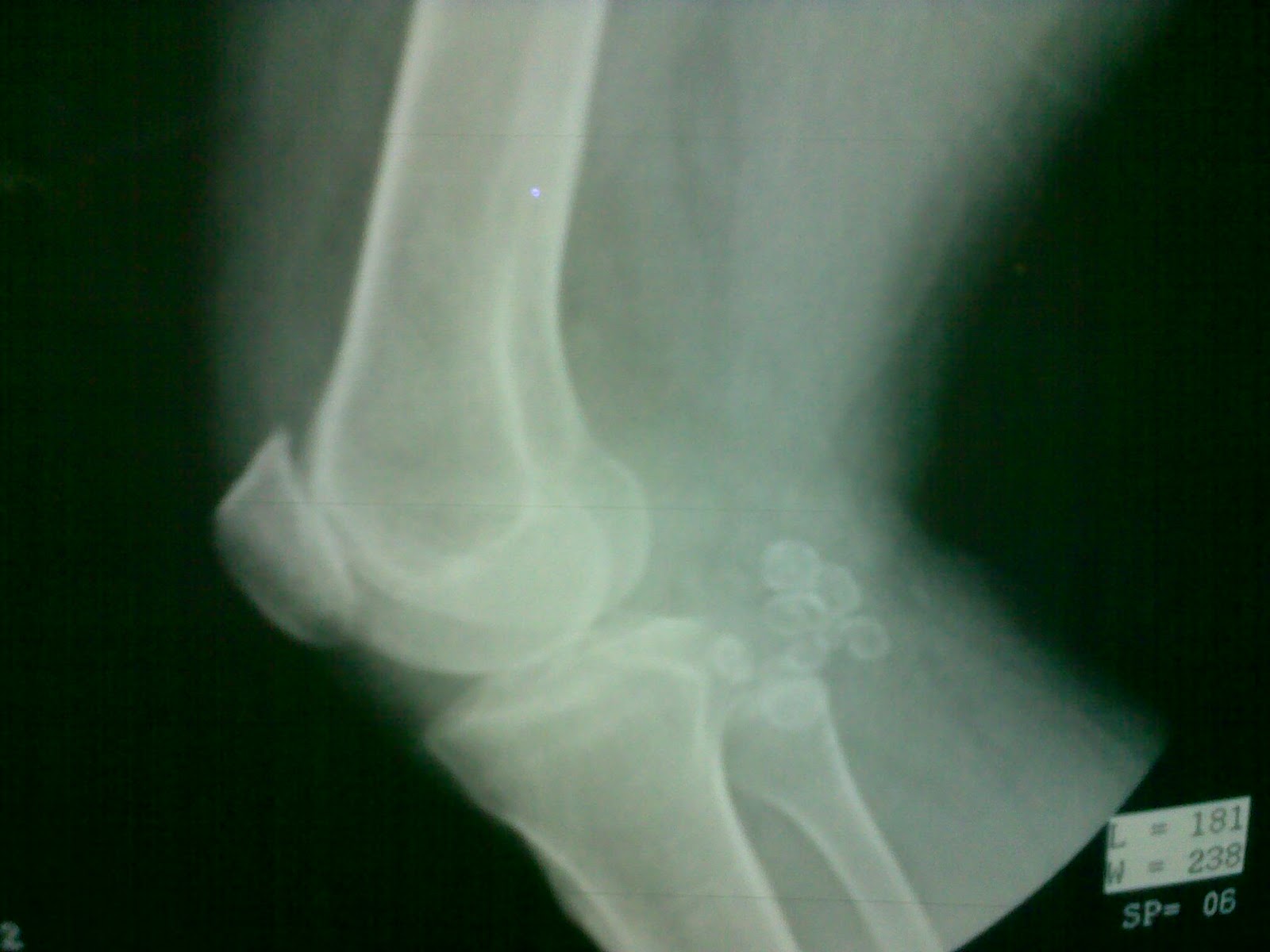
Everyone needs strong knees. A knee injury can interfere with your normal activities and even prevent you from walking without a crutch or a walker. The time to think about your knees is before you experience an injury or knee pain. The knee joint is connected to and surrounded by several leg muscles, including the quadriceps, hamstring and calf muscle.. Strengthening these muscles can help you avoid a painful knee injury. Perform knee strengthening exercises 3 times each week with a day of rest between exercises.
Strengthen the quadriceps to help avoid knee injury by performing some squats. Stand up straight with your feet spread a few inches wider than your hips. Keep your hands at your sides with your palms facing your hips. Lower your shoulders and pull them back  Squeeze your abdominal muscles and look straight ahead. Inhale and bend your hips and knees at the same time while lowering your body to a sitting position. Keep your knees from going forward past your toes as you lower your body to a squatting position. Stop lowering your body and hold the position for a few seconds just as your heels begin to lift off the floor. Try to keep your feet from shifting and keep your knees and hips close together. Exhale and move your body back to a standing position by pushing up using your feet. Repeat this exercise 5 times and increase the number of repetitions when you feel stronger.
Calf raises strengthen the muscles in your lower leg. Strong calf and shin muscles can help prevent knee injury. Add a barbell weight to increase the effectiveness of the calf raise exercise. Beginners should perform calf raises without using a barbell or under the supervision of a personal trainer. Place a barbell with 10 to 20 pounds of weight on top of your shoulders, behind your head on your shoulders at the base of your neck. Breathe in and tighten your abdominal muscles. Keep your feet shoulder-width apart and flat on the floor. Shift some of the weight to your heels for stability. Exhale and lift your heels off the floor in a rolling motion from heel to the ball of your foot. Your body weight will shift to the balls of your feet. Lean forward slightly to maintain your balance if necessary. Hold this position for a few seconds. Exhale and roll back until your feet are flat on the floor again and your body weight is on your heels.
Sit up tall on chair with your feet flat on the floor. Squeeze your thigh muscles and hold for 10 seconds. Relax for 5 seconds and repeat the 10 second squeeze. This exercise will help strengthen the quadriceps. Strengthen the hamstring by sitting on the chair with your feet flat on the floor. Pull your heels back toward the chair seat while keeping your feet on the floor. Stop when you feel the hamstring pull slightly. Hold the position for 10 seconds and then slide your feet back toward the front of the chair. Try to do 10 repetitions of this exercise. 

Sore Muscles

Photo Credit: Public Domain
When you begin an exercise program, or change your regular routine by adding new or more strenuous exercise, you may experience some muscle soreness. Muscle soreness occurs when muscles are exerted more than usual, which causes tiny tears in the muscle tissue. The muscle tissue that is torn becomes inflamed and sore. Mild muscle soreness is not unusual. Muscle tissue will normally heal quickly and soreness should go away in a couple of days.You can avoid some muscle soreness by stretching before trying a new exercise. Stretch the muscles that a new exercise will target for about 10 to 15 minutes before beginning the exercise. After exercise, take a few minutes to cool down by stretching again  for 10 to 15 minutes. See a doctor if soreness is accompanied by swelling or discoloration.
Treat sore muscles by alternating ice and heat therapy directly on the affected. Begin with an ice compress directly on the sore area to reduce inflammation. Follow-up with heat to increase the blood flow to the tissues. Increased blood flow brings more nutrients and oxygen to the cells and speeds up removal of cellular waste products that cause pain. Soreness that interferes with your normal activities can be treated with over-the-counter, anti-inflammatory pain medications, such as ibuprofen, naproxen or an aspirin. Acetaminophen will relieve pain as well. Do not exceed the maximum recommended dosage for these medications, and do not take them for more than one or two days. Check with your doctor before taking any over-the-counter pain reliever if you have any medical conditions.
Increase your daily intake of vitamin C and protein to help prepare your muscles for strenuous exercise. Extra protein after a workout will nourish your muscles and aid in more rapid repair of tiny tears that cause soreness. Take it easy for a few days while your muscles are sore, but don’t stop exercising. Concentrate your activity on other muscle groups while your sore muscles repair. If your arms are sore from lifting, focus on exercising your legs or back muscles. The affected muscles will be stronger and less prone to soreness from the same level of exertion once your muscles repair and the soreness subsides. 

Are Fruits High In Sugar?

Photo Credit: André Karwath CC-BY-SA-2.5 2005
Sugar is a simple carbohydrate found in many fruits. Sugars are monosaccharides and disaccharides. Monosaccharides are simple sugar molecules like glucose and fructose. Dissacharides are two sugar molecules, such as sucrose. Sucrose is the familiar granulated table sugar. Lactose and dextrose are other types of dissacharide sugars. When several sugar molecules combine, they form a starch, or a complex carbohydrate. Sugar not only makes food taste sweet, it also provides your body with the fuel necessary for energy and body functions. Although sugar provides energy and is relatively low in calories (about 16 calories per teaspoon), it contains no essential vitamins and minerals. Fresh, raw fruits contain the monosaccharide fructose, but they also contain a number of essential vitamins and minerals. The sugar content varies in different fruits, but generally, raw fruit does not contain enough sugar to derail your diet. 
Fruits that are high in natural sugar will taste sweeter than other fruits. Apples, dates, bananas, figs, cherries and grapes contain more natural sugars than watermelon, strawberries, lemons, limes and kiwi fruits. Whole, fresh fruits contain essential vitamins like A, C, E and K. Minerals include potassium, zinc and magnesium. Fruits are also abundant in fiber, which should be an important part of a healthy, balanced diet. 

For more information about sugar content in popular foods, see:
WebMD, Sugar Shockers: Foods Surprisingly High In Sugar, by  Elaine Magee, MPH, RD

Sports Drinks or Plain Water?

Photo Credit: saw2th CC-BY-SA-2.0 2007

Is it better to drink plain water or a sports drink when exercising? Water is essential for life. It is critical that you remain hydrated before, during and after exercise.  Minerals, such as potassium, are lost during exercise. Plain water does not contain all the nutrients you use up when exercising, but it is absorbed more rapidly than other drinks. Some sports drinks can provide lost nutrients and electrolytes if you engage in strenuous exercise lasting more than 60 to 90 minutes. A good rule is to drink water or a sports drink before, during and after exercising. Drink about 8 ounces of water or a sports drink every 20 minutes during exercise. 
Plain water is the best way to stay hydrated, because it is absorbed faster than sports drinks. Unlike water, many sports drinks provide carbohydrates for energy and replenish minerals to restore your electrolyte balance. When you sweat, your body loses sodium, potassium and magnesium. Water can re-hydrate your body but not replenish lost minerals. The carbohydrates in some sports drinks can also help to replenish your blood glucose levels for extra energy when you need it. Read the label when choosing a sports drink. Ideally, the carbohydrates in a sports drink should be fructose, sucrose or glucose based. Check the calories in the drink as well. Most sports drinks contain few calories, but if you are counting calories avoid drinks with high-calories.

You can make your own sports drink at home. Mix 1/2 plain water with 1/2 fruit juice for medium intensity exercise. Add 1/3 water to 2/3 fruit juice for more strenuous exercise to replace more lost minerals and for extra glucose for energy. You can mix your favorite juice with water. Natural grape juice, apple juice and orange juice all contain the minerals, vitamins and sugars needed to replenish your lost energy and electrolytes. Avoid using carbonated water and steer clear of juice “drinks.” Most juice drinks contain a small amount of natural juice and are high in sugar and calories. 
For more information about exercise and hydration, see:

WebMD, What To Drink When You Exercise, by Elaine Magee, MPH, RD, 2007

Strengthen Your Core For Better Posture

Photo Credit: Skoivuma CC-BY-3.0 2009

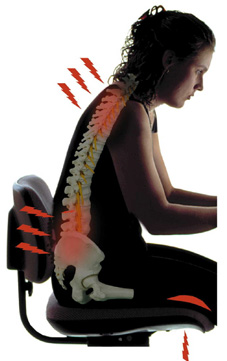
Poor posture can lead to tight muscles and a stiff, aching back. Maintaining good posture, especially when working at a desk 8 or more hours each day, can help prevent back aches. Strengthening your abdominal muscles and the muscles in your lower back can help you maintain good posture. A stronger core will also improve your balance and stamina. Add some core strengthening exercises to your regular routine to improve your posture. 
Leg extensions coordinate your core muscles to work together. Lie on your back and bend your knees. Keep your feet flat on the floor and place your hands behind your head. Roll your back until your lower back is on the floor. Tighten up  your abdominal muscles, breathe out and lift your head a few inches off the floor. Pull your left knee toward your chest and simultaneously extend your right leg straight out at a 45 degree angle from the floor. Hold this position for 5 seconds and then lift your leg toward the ceiling. Return to the start position and inhale. Repeat starting with the other leg. Do 10 repetitions if you can.
Roll-up exercises will strengthen all of your abdominal muscles and your obliques. Begin with your back on the floor and your legs stretched out straight. Stretch your arms toward the ceiling and press your lower back to the floor. Tighten your abdominal muscles, exhale and roll your body off the floor to a sitting position. Begin by rolling your head upward, then your shoulders, upper back and finally lower back. Try to roll up in a smooth, continuous motion. Inhale when you reach a sitting position. Exhale, tighten your abdominal muscles and reverse the roll until you return to the starting position. 

The crossover exercise also works all the core muscles. Again, begin on your back with your hands behind your head. Pull your knees to your chest and press your lower back to the floor. Tighten your abdominal muscles, breathe out. Pull one knee as close to your chest as possible and extend the other leg out straight. Roll your body toward the knee that is bent to your chest. Inhale and switch legs extending the bent knee, pulling your other knee toward your chest and rotating your torso in the opposite direction. Do 10 repetitions of this exercise. 
Does Joint Popping Cause Arthritis?

Photo Credit:  Jojo PD-User 2009
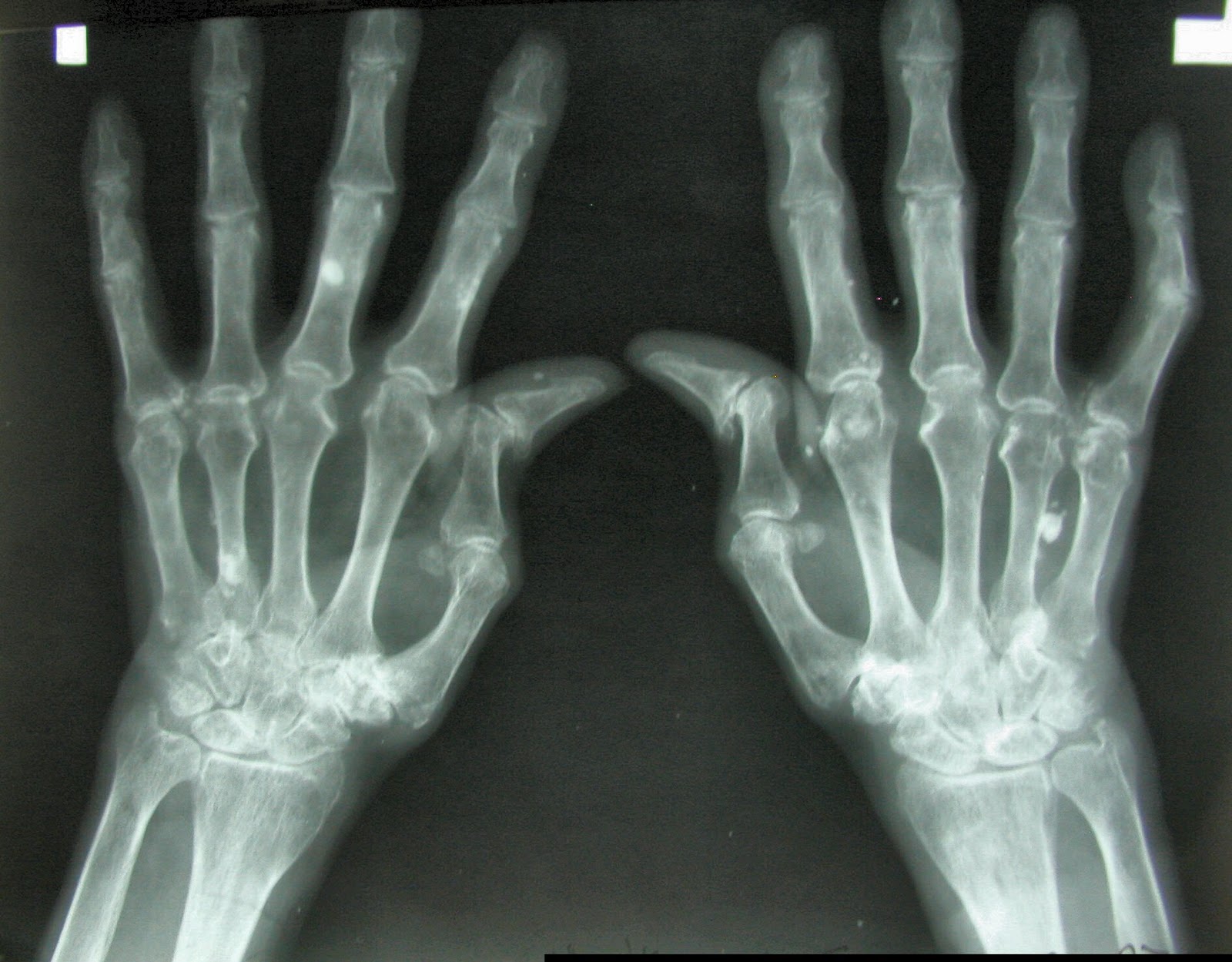
Some people are in the habit of popping their knuckles and other joints. The joints make a “pop” sound when pulled or pressed due to a build up of tiny amounts of nitrogen gas in the fluid surrounding the joint. Pressing or pulling on the joint can force the gas out of the joint, which causes the joint to “pop.” You’ve probably heard that popping your knuckles or other joints can cause arthritis. There is no evidence to support a causal connection between joint popping and arthritis. Generally, cracking your knuckles and popping other joints is not harmful. The knees, elbows, ankles or back may “pop” during exercise. This is normal and not cause for alarm, unless the pop is followed by pain, swelling or discoloration. Seek medical attention if you experience pain following a joint pop. Pain may be an indication of an injury or joint condition, such as arthritis, and should be treated by a physician. Stretching exercises can help reduce joint popping during exercise. It is also important for those suffering from arthritis to remain active and continue to exercise to improve their range of motion and flexibility. 
Exercises that focus on stretching and balance include yoga, Pilates and tai chi. See your doctor before beginning an exercise program. A personal fitness trainer can help you design a program to keep your joints flexible and reduce the pain and swelling of arthritis. Strengthening the muscles can also help relieve joint pain and swelling due to arthritis. 
Isometric exercises increase the strength of the muscles without moving the joints. Isometric strength exercises include hand presses, wall presses, abdominal squeezes and muscles flexing. To do hand presses, place your palms together and press your hands together in a “prayer” position in the middle of your chest. Keep your elbows down and press your palms together. Hold the press for about 10 to 20 seconds and relax. Repeat this exercise 5 times and increase the number of repetitions as your arm strength increases. Wall presses are performed by standing about 1 foot from a wall and pressing your palms against the wall. Gently lean in toward the wall and support the weight of your body with your arms. Hold the position for 10 seconds and then relax. Repeat 5 times. Increase the number of repetitions as you become stronger. You can strengthen the leg muscles by standing on one leg for 30 seconds. Repeat with the other side. Increase the length of time you stand on one leg as you become stronger. 

For more information about joints and arthritis, see:

Strengthen Your Feet & Ankles

Photo Credit: אנדר-ויק CC-BY-SA-3.0 2009

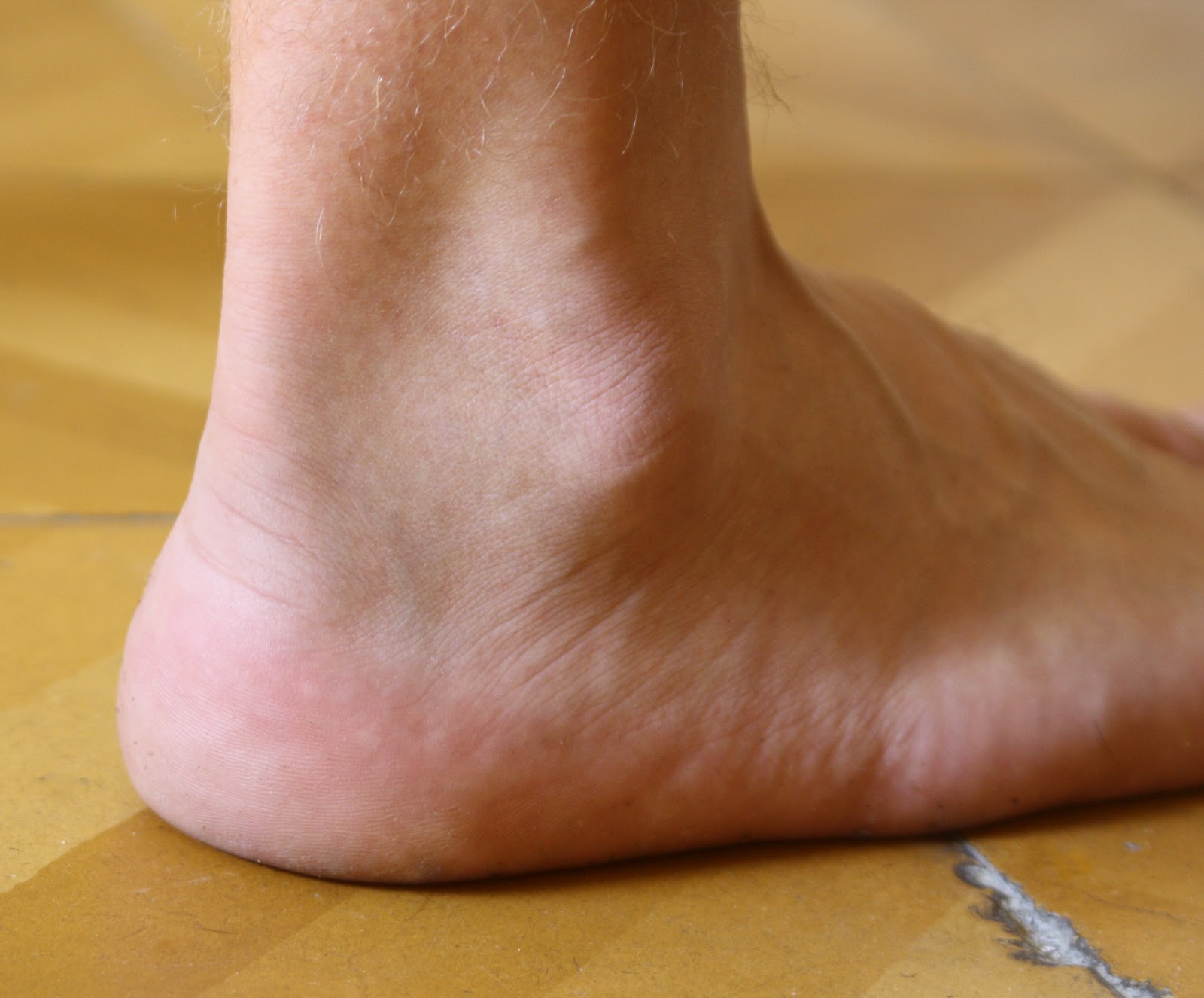
Everyone, especially walkers, joggers and runners need strong feet and ankles to avoid injury, soreness and pain. Strong ankles and feet can  help you avoid injury from a sprain. Ankle sprains are a common injury, even among people who do not run or jog. Untreated ankles sprains can cause long-term joint problems, such as stiffness or weakness. See a doctor right away if you sprained your ankle and notice any swelling, bruising or other discoloration of the foot and ankle, coldness, numbness or tingling in the foot and toes. Begin exercising to rehabilitate your sprain only under the advice of a doctor and supervision of a rehabilitation fitness expert. There are a few exercises you can do to strengthen your ankles and help prevent injury. Try these exercises in your bare feet. 

Stand on one foot and hold your arms out from the shoulders parallel to the floor. Keep your eyes open and look straight ahead. Hold the position for 60 seconds, if possible. Try to avoid rocking on your foot by keeping the sole of your foot on the floor. Lower your leg and repeat with the other side. This exercise will not only strengthen your foot and ankle, it is a great balance exercise too.

Stand on the edge of a stair with your toes and allow the heels of your feet to drop an inch or two inches below the stair. Hold the wall or a hand-rail for support and balance if needed. Hold this exercise for up to 60 seconds. Lift your heels and stand on the edge of the stairs using your toes. Hold this position for up to one minute. Next, lower your heels as far down as you can and hold the stretch for 10 to 15 seconds and relax. Repeat the stretch for 10 repetitions.

Use a table or a stable chair for balance and stand on your toes. Hold the position for 5 seconds and then lower your feet back to the floor. Repeat this exercise for 20 repetitions. When your feet and ankles become stronger, increase the number of repetitions or perform the toe stand exercise using one foot at a time. 
Increase your ankle range of motion by stretching and rotating your foot. Sit on a chair and raise one leg about  2 to 3 inches off the floor. Point your toes and rotate your ankle clockwise 5 times and then counter-clockwise 5 times. Repeat with the other foot. Try to move only your ankle and not your leg. Next, drop a towel or a sock on the floor and use your toes to pick it up. Drop it and pick it up again 2 more times. Repeat the exercise 3 times with each foot. Increase the number of repetitions as it becomes easier for you to pick up the towel or sock. 

Exercise For A Healthy Heart

Photo Credit: FEMA Public Domain

Most Americans do not get enough exercise. Inactivity and an unhealthy diet can lead to obesity, heart disease and diabetes. Exercise can help reduce weight and lessen the risk for heart disease and diabetes. You can lose weight by cutting back on calories, but to prevent regaining lost weight, exercise is essential. You don’t have to join a gym or buy expensive equipment to exercise and lose weight for a healthy heart. But if you have been inactive for years, or if you don’t know how to begin, see your doctor for a check-up and consider a personal trainer to help you develop an exercise program that will work for you.

You can get more exercise during the day than you realize. You can maximize the aerobic value of your everyday activities. People with babies and small children often take a stroller along when shopping or going to the park. Pushing your child in a stroller for 1/2 hour or about 1 1/2 miles is excellent aerobic exercise for you and fun for your baby. As you begin to lose weight and feel stronger, consider buying a jogging stroller for your child. You can push baby along while you jog through the park. Walk the dog for an extra 10 minutes each day. Your dog will love it and you will get more exercise. Mowing the lawn and raking leaves are common activities that are good exercise for weight loss and a healthy heart. Use a push mower to cut your grass. Shoveling snow is also good exercise, but be careful not to over-exert yourself during cold weather. Limit shoveling to no more than 15 minutes and then rest for 15 to 20 minutes. Park your car a few blocks from your workplace and walk when weather permits. Walking is one of the safest and easiest heart healthy exercises. Walk instead of driving when you can. Take the stairs instead of the elevator or escalator.

Set aside at least 30 minutes every other day just for exercise. If you don’t know how to begin, a fitness trainer can help you develop an exercise program that works with your schedule and your current level of fitness. You can break up your 30 minutes of exercise into 10 minute blocks of exercise spread throughout the day. Exercise is a critical part of a healthy life. Keep your heart strong and lose weight by eating a nutritious diet and exercising.

For more information about exercise and heart health, see:
National Institutes of Health, National Heart, Lung and Blood Institute, Physical Activity and Your Heart (PDF File)

Get Fit With Baby

Photo Credit: Yihungkuo CC-BY-3.0 2009

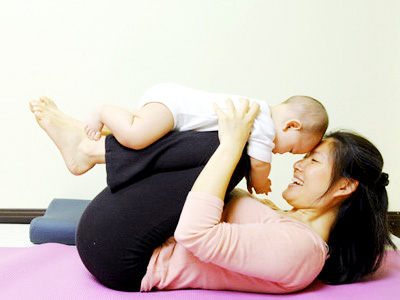
Women who have had a baby can use exercise time as a time to bond with their baby and enjoy some fun time together. The exercises are a game to baby and fun for you while you firm and tone your body. Exercise also lowers your stress levels, which is important for new mothers. See your doctor before beginning any exercise program or resuming your previous routine. Women who have had a C-Section should not begin or resume an exercise program without their doctor’s okay. Make sure your baby is safe and always hold her securely. Never use dumbbells or other weights when baby is nearby. Don’t push yourself when exercising with baby. The idea is to have fun while getting some light exercise. When your baby can hold his head up on his own, sit up and roll over, you should be able to begin some exercises, but always check with your baby’s pediatrician before beginning exercise games.

Lie down on your back on a soft rug of exercise mat. Bend your knees up toward your chest with your feet together. Place baby on your shins and slowly raise and lower your shins a few inches on her tummy with baby facing you. Raise and lower your shins a few inches, slowly and pretend baby is flying. Hold your baby securely at all times. Repeat this exercise for 2 to 3 minutes. From this same position, you can do some crunches with baby. Keep baby securely on your shins and lift your shoulders using your abdominal muscles. As you perform the crunch, give baby a kiss and then lower your shoulders back to the floor. Perform 10 or more crunches and get lots of kisses.

Lie on your back on the floor and place your baby on your tummy facing you. Hold baby securely. Flatten your shoulders and bend your knees to place your feet flat on the floor. Lift your bottom off the the floor to perform a bridge exercise. Lower your bottom back to the floor and repeat. Baby will enjoy the up and down motion. Do 5 to 10 bridges. From this position, you can move to baby bench presses. Hold your baby firmly with both hands. Bring her close to your chest with your elbows bent and close to your sides. Lift baby straight up above your chest and then lower her back to your chest. Give baby a snuggle or a kiss when you bring him back down.

Morning Exercise to Energize Your Day

Photo Credit: Pedro Simões CC-BY-2.0 2009


We’ve all had days when we didn’t want to get out of bed. To energize your body for the day ahead, try doing some Pilates or other exercises right in your bed. Stretching exercises in your bed before you go down for your morning coffee and breakfast can jump-start your metabolism. A morning workout in your bed can help you have more energy for your regular workout routine later in the day. Your mind and body will be prepared to take on whatever challenges come your way throughout the day. Throw back the covers and exercise!
After hours of sleeping, your back may feel a bit stiff. Roll your body into a ball to stretch out  your spine and work your abs. Sit up in bed and bring your knees to your chest. Hold your knees with your hands and then curve your back by bending forward over your knees. Roll back on the bed on your back and then roll to the upright position again. Perform this exercise for 10 repetitions.
Strengthen and energize your core muscles by doing some leg lifts next. Stretch out on your bed with your legs extended and your arms relaxed by your side. Point your toes toward the ceiling. Lift your left heel off the bed about 12 inches. Lower your left leg until your heel is about 1 inch from the bed. Hold your leg off the bed for about 10 seconds and then raise your leg back up. Repeat 10 times for each leg.
Bring your knees up to your chest and point your toes. Lift your head and shoulders off the bed using only your abdominal muscles. Hold this position for about 10 to 15 seconds and then relax. Repeat this exercise 10 times. Stretch your abdominal and back muscles next by bending your knees so that your lower legs are parallel to the bed. Keep your feet and knees together and your shoulders flat against the bed. Swing both knees to the right side of the bed. Try to keep your shoulders on the bed. Hold for 10 seconds and then swing your legs to the left side. Do 10 repetitions for each side.