Nutritional Snacks For Traveling

Photo Credit: Jon Sullivan Public Domain

It isn’t always easy to eat healthy meals and snacks when traveling. Fast food and vending machines may be convenient, but the fare they offer can undo your weight-loss program and often the food is high in fat, but low in nutrients. You should eat when traveling because your body will need energy to fight off fatigue. The best way to avoid hunger and the urge to grab a fat laden burger or a bag of greasy chips from a vending machine is to plan ahead and pack your own snacks. Fewer airlines and practically no rail companies provide in-transit meals. The meals that are provided are usually highly processed foods laden with chemical preservatives. The best alternative is to bring your own food. Check with your travel agent or transportation provider to make sure the snacks you want to bring on mass transit are permitted before you leave home. Drink plenty of water before you begin your trip and stash a few bottles of water in your carry-on baggage. Dehydration can contribute to fatigue and headache. 
Pack a few apples, oranges, whole peaches and grapes for your trip. These fruits travel well and will keep fresh for hours in plastic containers or a soft-side lunch box. Wash your fruits thoroughly and dry them before placing them in plastic containers or in a lunch box. Don’t slice or peel the fruits, but plan to eat the fruit whole. Oranges can be peeled and separated into slices before placing them in a container. 
Granola and nuts travel well and won’t spoil during long trips. Pick up a box of granola or granola and fruit bars on your way to the airport or train station. Granola and nuts are loaded with fiber, vitamins, minerals and antioxidants that are essential to healthy cell function. Granola and nuts contain heart-healthy fats that your body needs to absorb fat-soluble vitamins and minerals. Select whole nuts and granola bars with whole grains, such as oats, for maximum nutrition. Always eat a healthy breakfast before you travel. Eating breakfast will prevent mid-morning hunger and the temptation to indulge in sweet rolls or donuts. Limit your caffeine consumption. Caffeine can increase your heart rate and make you feel fatigued after the caffeine wears off. 
When staying in a hotel, bring bottled water, fresh fruit and whole-grain crackers to the hotel. High fiber crackers and cookies make a filling and healthy late-night snack and can help you avoid the temptation to order room service food. Try to avoid ordering fast food or room service during your trip. Many fast food menus contain foods that are high in saturated fat and calories, but offer little in nutrition. Bring a bag of fresh, raw vegetables along for the trip. Carrots, celery and broccoli travel well in plastic containers.

Total Body Toning Exercises

Photo Credit: Glenn Francis CC-BY-SA-3.0 2008

Who doesn’t want a body that looks great, feels great and functions like an athlete? Not everyone can achieve a body builder physique, but everyone can benefit from exercise and whole body toning. Whole body toning can increase your metabolism, which can help you achieve your weight loss goals and decrease body fat. You can also strengthen all of your muscles and achieve a leaner, healthier body. The purpose of whole body toning is to tone and strengthen all the major muscles groups in each exercise routine. Think of whole body toning as a head-to-toe program. Start at the top and work your way down to a firm, toned and strong body. Do at least 10 repetitions of each exercise every other day for maximum benefit. Combine your exercise program with a healthy nutritional diet, and you are on your way to achieving your goal of a toned, firm body. 
Start your total body toning with some biceps curls. Stand up straight with your eyes forward and your feet about shoulder-width apart. Plant your feet firmly on the floor and tighten your abs. Hold a 5 to 8 pound dumbbell in each hand with your palm facing forward. Slowly lift the weight upward by bending your arm at the elbow. Avoid using your shoulder to lift the weight, focusing instead on using your biceps. It is important to keep your upper body straight and do not lean into the lift. Repeat the lift 10 to 15 times with each arm. Alternate sides every other lift or every 5 lifts to increase the abdominal workout and improve balance. Increase the effectiveness of your total body workout by incorporating a step-up exercise. Use a low step block and step up using the leg on the same side as the lift and then step down when you lower the weight. Keep your elbows close to your body to maximize the effectiveness of this workout and to help maintain your balance. Chess presses will strengthen your entire upper body and abdominal muscles. Lie on a weight bench or on the floor. You can also stand upright for this exercise. Place a 5 pound dumbbell in each hand. Hold the dumbbell with your palms facing forward. Bend your elbows at the same level as your chest. Press your arms straight up if you lying down or straight out if you are standing up. Slowly return your elbows back to your chest and repeat this exercise at least 10 to 15 times. 
Stability balls are a great tool to strengthen your core, improve your balance and tone your whole body. Grab some 5 to 8 pound dumbbells in each hand and lie back on a large stability ball. Bend your elbows with your palms facing toward your face and keep your elbows close to your body. Raise your upper body to perform a crunch while keeping your mid-back on the stability ball and your feet planted firmly on the floor. Repeat this exercise 10 to 15 times. Increase the number of repetitions as your strength and endurance increases. 
  
You don’t need expensive exercise equipment to perform some whole body toning exercises. Lie down on a mat or on the floor on your back. Place your hands under your butt with your palms on the floor. Keep your shoulders pressed against the floor and lift both of your legs about 10 to 12 inches off the floor. Point your toes toward the ceiling and then spread your legs slightly, about hip-width. Lift one leg up a few inches and then lower it. Lift your right leg as you lower your left leg and then alternate in a scissors motion. A variation of this exercise is to lift both legs about 12 inches off the floor and cross your ankles, left over right and then right over left. Perform about 20 repetitions for a great lower body and abdominal toning exercise routine. 

Plyometric Training

Photo Credit: LocalFitness.com.au CC-BY-SA-3.0 2008
Plyometric training is a form of exercise where the muscles are stretched and then contracted. The movements of plyometric training can be intense and high impact, so preparation and training are important to help avoid injury. Those who want to begin a plyometric training regime must exhibit both strength and endurance. Jumping, hopping and quick movements around and through obstacles are part of an effective plyometric exercise program. Exercises that take advantage of the elasticity of the muscles and the stretching reflex helps to build strength, flexibility, speed and endurance of the muscles. Quickly contracting and relaxing the muscles involved in a particular activity, such as jumping or pushing, can help an athlete perform better and ordinary people go through a busy day without becoming fatigued. 
Begin any plyometric exercise routine with a thorough stretching of all the muscles of the body. Stretch your arms, legs, chest, back and shoulders. Be sure to stretch your muscles prior to exercises because many of the explosive movements, such as pushing upward with great force in a jumping motion, can result in injury if your muscles are not ready for the exertion. Invest in a good pair of athletic shoes that will provide support for your foot arch and absorb shock from jumping and landing hard. Some plyometric exercises are high impact, so it’s important to protect your feet. You will get more benefit and avoid injury if you perform jumping exercises on any surface other than concrete. Hardwood floors like those found in gymnasiums or cushioned tile floors are best. 

Plyometric training is tough on your joints as well as your muscles. Don’t begin any high-impact exercise program without consulting your doctor, especially if you suffer form joint conditions such as arthritis or gout, or if you have bone loss due to aging or vitamin deficiencies. Gradually increase the power and intensity of your exercise over time. An easy way to incorporate plyometric training into your daily fitness routine is to do some interval training. For example, if you walk for 30 minutes each day, insert 5 minutes of a quick sprint or fast jog for every 5 minutes of walking. When performing squats, insert a squat jump by pushing upward and jumping with power from every third or fourth squat. Incorporate a burst of high intensity exercise for 5 minutes after each 10 minutes of regular exercise. Perform some high energy jumping jack exercises following 10 minutes of push-ups or crunches.

Dietary Supplements & Safety

Photo Credit: KTo288 CC-BY-SA-3.0 2009

In recent years there has been an increase in the marketing and use of dietary supplements. Herbal and so-called natural supplements are available at grocery stores and pharmacies in nearly every town in America. Dietary supplements may tout benefits such as lowering blood pressure, appetite suppression for weight loss, increased energy or improved sexual performance. Dietary supplements, especially herbal concoctions, are not subject to the same strict FDA regulations that apply to prescription drugs. Manufacturers of herbal dietary supplements are not required to have FDA approval before marketing their product. Manufacturers of dietary supplements can make health benefit claims if the manufacturer can show some research to support the health claims, and if the manufacturer disclaims FDA approval and evaluation of the claims. Essentially, all that is required of dietary supplement makers is that they follow good manufacturing practices and meet minimum quality standards. The FDA does monitor safety reports of dietary supplements after they are available to the public. Even if a manufacturer follows the less stringent rules to the letter, there is still no guarantee that an herbal supplement is safe for you to take. The side effects of many plant extracts are not completely understood and the combination of different herbal supplements may cause serious side effects. Always consult a physician before taking any over- the-counter herbal supplement.
Compare the ingredients contained in dietary supplements. A reliable database of ingredient information is maintained by the National Library of Medicine. Visit the National Library of Medicine website for information about the plant source, uses and known or potential side effects of a supplement ingredient. The database contains a list of all known herbal and other dietary supplements in alphabetical order, so information is easy to find. You can also search for information about ingredients by uses, manufacturer or brand name. Research all ingredients, not the just the primary ingredient. Dietary supplements often contain many ingredients, some in trace amounts. Even tiny amounts of some ingredients can have serious side effects if you are sensitive to the ingredient or have an allergy. It is critical to your health that you educate yourself about supplement ingredients and talk to your doctor before using any over-the-counter herbal or other dietary supplement. 
Dietary supplements may be beneficial if used properly with the advice and supervision of your doctor. Avoid mixing different types of supplements without knowing the potential side effects of each and how the ingredients react when combined. Your doctor is the best person to talk to about whether you need a dietary supplement.

For more information about dietary supplements, see:

National Center for Complementary and Alternative Medicine, Using Dietary Supplements Wisely

Whole Body Exercises

Photo Credit: LocalFitness.com.au

Many exercises focus on one or two muscle groups, such as curls for biceps and triceps or crunches for abdominal strength. Focused training is important, but a well-rounded exercise program should include some whole body exercises. A well-rounded exercise program will include stretching for flexibility, aerobic exercise, and strength conditioning. Stretching exercises are important to warming up before more intense exercise and help improve flexibility. Walking, jogging and dance-style exercises are excellent aerobic workouts that help increase muscle strength and improve cardiovascular health. Exercises that use your own body weight, such as push-ups and pull-ups, and weight lifting strengthen the arms, back, stomach, legs, hips and abdominal muscles. Before you begin any exercise program, see your doctor for a complete check-up. Some simple whole-body exercises that you can add to your daily exercise routine are the crawl, a push-up and a step-up style exercise. These exercises require no equipment and can be performed at home or in the gym.

The crawl exercise works all the major muscle groups in your body. Begin a simulated crawl on your stomach on the floor. Put your hands in front of your shoulders and bend your elbows. Extend your legs behind your body. Place your forearms on the floor under your shoulders and pull your shoulder blades down. Push your right knee forward by bending your knee and pushing it out to the right side of the body until your knee is even with your hip. Slide your right arm back toward your right knee. Keep your left leg extended and your left forearm on the floor in front of your body. Hold this position for 2 or 3 seconds and then return to the start position. Repeat on your other side. 
Begin the step-up exercise by kneeling on your left knee. Keep your upper body straight. Bend your elbows slightly and keep your eyes forward. Push your right elbow back, your left arm forward, while simultaneously pushing your left knee upward toward the ceiling. Push off hard from your left toes in an explosive upward movement. Return to the start position and repeat this exercise for 5 repetitions. Repeat the exercise on the other side.
This push-up exercise adds an extra step to improve the effectiveness of your whole-body workout. Start this exercise in a push-up position with your hands under your shoulders and your legs stretched out behind your body. Bear the weight of your legs on your toes and make sure your fingers are pointed forward. Make a straight line with your body from head to toe and then raise your body up by pushing upward with your arms. Raise your right leg up toward the ceiling and hold the position for 3 to 4 seconds or longer. Lower your body and repeat on the other side. 

Are You Ready to Power-Walk?

The benefits of walking cannot be stressed enough. Walking is one of the easiest ways to lose weight, improve your overall level of fitness and it’s fun. You don’t need fancy equipment to exercise by walking. You need only don a good supportive pair of walking shoes, some comfortable clothing and a safe place to walk. In addition to losing weight and burning body fat, walking can help you reduce your bad LDL cholesterol level and increase your good  HDL cholesterol. You may see your blood pressure lowered and by losing body fat you reduce your risk of developing type 2 diabetes. Walking is a low-impact exercise that works the whole body with minimal risk of injury. For those who want to take their walking exercise to the next level, power-walking may be the answer. Power-walking is a type of brisk walking with a technique to get the most from each stride. The goal of a power-walking exercise is not speed but power and technique. 

Photo Credit: Escuela Virtual de Deportes CC-BY-SA-2.5-CO 2010
Begin your power-walk by concentrating on pushing off from the back foot as your front foot lands on the ground. Walk heel to toe. The front foot should contact the ground heel first and roll across the ground toward the toe as you push off with your back foot using your toes. Allow your hips to rotate forward and backward and your waist to twist naturally while walking. Avoid the urge to lean forward as you power-walk. Keep your upper body upright and look straight ahead. People naturally swing their arms when casually walking. For the power-walk, bend your elbows and keep your arms close to your body. Allow your elbows to swing back and forth with your gait, but don’t pump your arms. Try to keep your upper body and arms as relaxed as possible while you push off during a power-walk. 
If you’ve been walking at a normal gait for 30 minutes or more without becoming fatigued, introduce power-walking in 5 minute intervals. Interval training can help improve your stamina, cardiovascular and respiratory health. You’ll burn more calories by interval training. Walk at a normal gait for 10 minutes and then power-walk for at least 5 minutes. Cool down by returning to a normal walking pace and repeat 5 minutes of power-walking. Beginners may want to power-walk for 2 to 3 minutes and gradually build up to the full 5 minutes of power-walking. As your stamina increases, increase the amount of time for each interval of power-walking until you can power-walk for 10 minutes followed by 5 minutes of normal walking pace. 

For more information, see:

Functional Training

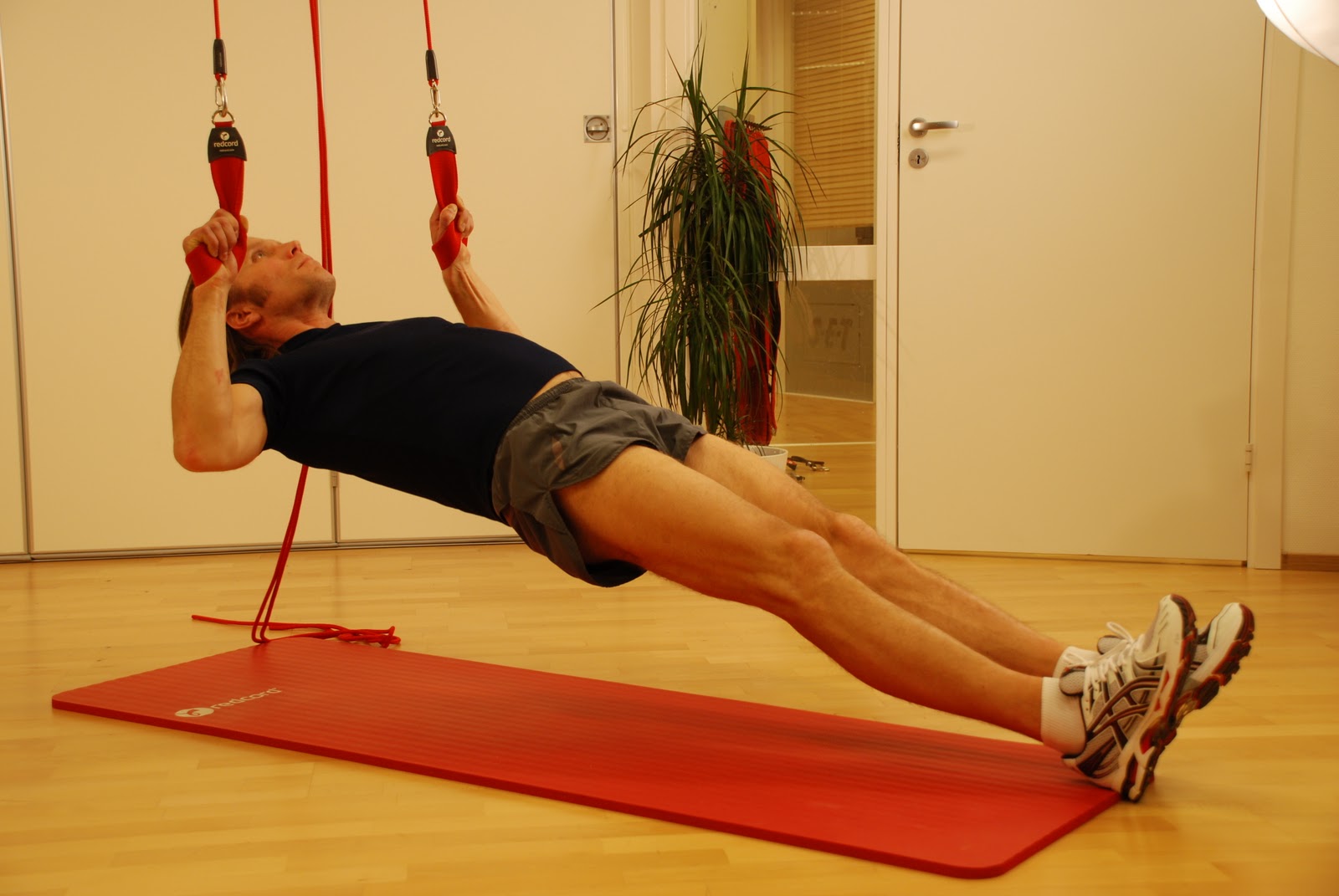
Functional training can improve how you perform every day activities. Ordinary tasks, such as lifting groceries into the car, carrying a child, rearranging furniture and lifting laundry baskets, are activities that require functional strength. The purpose of functional strength training is to increase the strength and endurance of muscles involved in ordinary activities. Functional training can help you recover from an injury, increase range of motion or improve your overall strength, agility and balance. Functional training is especially effective to rehabilitate joints and muscles following injury or surgery. 
Photo Credit: Slyngebehandling CC-BY-SA-3.0 2007
Functional training involves repeating the same movement to improve your performance of that movement. For example, a worker who lifts boxes all day can benefit from functional training exercises that improve the strength of the arms for lifting and the legs for supporting extra weight. Lifting free weights helps strengthen the upper body and legs for more efficient lifting with reduced risk of injury. A professional basketball player can benefit from jumping, running and stretching exercises to improve his or her performance on the court. Golfers can benefit from functional training that strengthens the arms, upper body and improves range of motion in the arms and shoulders. Function exercises can be tailored to meet a specific need by working the major muscle groups involved in performing a task. A whole body approach to functional training is better than working isolated muscles if you want to improve your overall strength and endurance. 
Exercises that use your own body weight with normal movements are a good way to begin functional strength training. Pulling, pushing, sitting and standing up from a seated position are activities that most people perform many times throughout the day. Push-ups, pull-ups and squats involve a wide range of muscles and muscle groups and can increase your strength and endurance for most daily activities. A fitness trainer can help you develop a functional exercise program tailored to your specific needs. 

For more information about functional strength training, see:

What To Do About Cellulite

At some point in their lives most women, and some men, will have to deal with cellulite. Cellulite is fat deposits in the skin which cause a dimpled appearance. Cellulite is not the same as other body fat that resides deeper in the body. Cellulite is not normally used by the body as an energy source making it next to impossible to get rid of. Short of surgery or expensive spa skin treatments, there isn’t much a woman can do about cellulite. She can reduce the appearance of cellulite by drinking plenty of water and engaging in aerobic exercise. Strength training can also help reduce the appearance of cellulite by increasing the size and definition of muscles. 
A diet rich in fiber and antioxidants can help reduce the amount of cellulite in the skin and improve skin appearance. Foods that nourish the skin cells includes eggs, peanut butter, olive oil, soy protein, nuts, fruits and  berries. Citrus fruit like oranges and grapefruit contain vitamins and minerals essential to healthy skin and other organs. Eat a variety of fruits and vegetables to help improve collagen production and keep your skin cells healthy.

Diet alone is not enough to reduce fat cells in the skin. You have to exercise to help reduce the appearance of cellulite. Most women who have had children will see some cellulite on their hips and thighs. The best exercises are those that tone and firm the muscles of the buttocks and thighs. Squats will strengthen your entire lower body, and especially your thighs and butt. The most effective way to perform a squat is to stand with your feet apart, about shoulder width, and then slowly lower your body by bending your knees until you reach a seated position. Slide your back down a wall or hold onto a sturdy chair for balance if you are a beginner.

Lunges strengthen your thighs, buttocks and back and can help reduce the appearance of cellulite in the thighs. Stand up straight with your feet comfortably apart, about hip-width. Place your hands on your hips for balance, and then step forward on one foot as far as you can while lowering your upper body straight down.  Keep your other foot planted flat on the floor. Return to a standing position and repeat the exercise on the other leg.

Performing bridges can help strengthen your back and increase muscle definition in your butt, thighs and abdomen. To do the bridge exercise, lie on your back and bend your knees placing your feet flat on the floor. Keep your knees apart about hip-width. Slowly lift your back off the floor beginning at your buttocks and moving upward until your hips and legs form a diagonal line from the knees to the shoulder. Hold the position for a few seconds, lower your body back to the floor slowly and then repeat the exercise.

There is no magic pill to help reduce cellulite. Creams and drug therapies have demonstrated some effectiveness, but the results are usually temporary improvement in the dimpled appearance of the skin. Surgery is an option, but should only be considered after thoughtful consultation with your doctor.

For more information about causes and treatment of cellulite, see:

WebMD, Can You Beat Cellulite?, by Collette Bouchez, reviewed by Cynthia Dennison Haines, MD, 2005

Strength Training for Older People

Photo Credit: NIH Public Domain
How many times each month do you lift a basket of laundry, load the car with heavy bags from the market, pick up a small child or move furniture to clean underneath? Daily activities like these require strength and endurance. The old adage “if you don’t use it you lose it” definitely holds true for muscle mass and strength. As we age, we can lose muscle mass if we become or remain inactive. Inactivity combined with aging can result in increased body fat, small, weak muscles and a loss of bone density. Even if you have already experienced some muscle mass loss and decreased bone density, exercise and strength training can help restore some of your lost muscle and bone. Regular exercise that includes strength training can also help reduce the risk and symptoms of arthritis, diabetes, obesity and chronic back pain. If you have been inactive for several months or if you have never practiced a regular exercise and strength training regime, see your doctor for a complete physical and advice about the best strength training program for you. 
You don’t need to join a gym or use expensive exercise equipment to start a strength training program. Push-ups, crunches, squats and lunges are all exercises that you can do using only the weight of your own body for resistance. Warm up and prepare your muscles for strength training exercises by stretching. Start out slowly and perform only a few body weight resistance exercises. Try to complete 5 repetitions of each exercise for the first few days. Gradually increase the number of repetitions until you can perform 15 repetitions without becoming exhausted. You can continue to increase repetitions or increase the amount of time devoted to each exercise. Perform each exercise for 3 minutes every other day for the first week. Don’t focus on the number of repetitions, but each exercise continuously for a full 3 minutes. Add one minute to each exercise each week until you can exercise for a full 30 minutes without becoming exhausted.
Try some free weights like dumbbells or add some resistance band exercises after your begin to see results. Resistance bands are rubber tubes that stretch and offer resistance when you pull on them. You can stand on a resistance band and pull it upward with your arms for triceps, biceps and upper body strength training. Free weights can also help increase arm and upper body strength. 
Begin any new strength training program slowly and carefully. Always take a full 24 hours of rest between strength training exercises to allow your muscles to recover and repair. The goal in strength training is to gradually increase your strength and endurance. Stop exercising immediately if you feel any pain in your muscles or joints. Pain is an indication that you are over-exerting your body. You may feel a bit sore after the first few days, which is normal as your muscles and joints are not accustomed to the extra work. See a doctor immediately if pain persists or if there is swelling. 

For more information about strength training, see:
Centers for Disease Control, Why Strength Training?

Choosing the Best Fruit & Vegetables Juices

Photo Credit: PD USDA ARS
Every person needs to eat several servings of fruits and vegetables every day. The best way to get nutrition from fruits and vegetables is to eat them raw. Steamed vegetables retain more vitamins and minerals than boiled vegetables. Vegetables that have been lightly grilled in olive oil are tasty and retain most of the nutrients your body needs. The alternative to eating raw fruits and berries is to drink fruit juice. Fruit and berry juices that contain most of the natural pulp are better for you than strained juices because the pulp provides necessary fiber and extra vitamins and minerals. Drinking vegetables in a juice mixture that contains flavorful fruits and berries can increase the nutritional value of your juice drink. For example, tomatoes contain lycopene which is important for men’s prostate health, but not everyone likes the taste of plain tomato juice. Vegetable juice mixtures can be made at home using a juicer. Some juices available at the supermarket may contain excess sodium and sugars, so read the nutrition labels carefully. Buy a low-sodium, low-sugar or sugar-free juice when possible.
Cranberry and orange juice are both loaded with Vitamin C, which is an important immune system supporting nutrient. Select an orange juice with some pulp or make your own juice at home. A cranberry juice mixed with blueberry juice and cherry juice makes a delicious, nutritious juice cocktail. Pomegranate juice tastes delicious and is loaded with antioxidant vitamins and minerals, but pomegranate juice is high in sugar. If you are counting calories, drink one 8-ounce of pomegranate juice each day. You can dilute juices that have a high sugar content with water to help reduce the amount of calories and still get most of the benefits of drinking juices. Red grape juice is rich in the antioxidants flavanoids and resveratrol that your cells need to function properly and repair damage. Select a red grape juice that is made from the whole grape, including the seeds and skin. 
When you make juice at home using a juicer, many nutrients are tossed out with the pulp and the skin. Use a juicer that pulverizes the whole fruits and vegetables so that you get the maximum nutritional benefit from fresh juices. Try mixing different fruits, vegetables and berries to create  your own unique juice blends.
For more information about the benefits of juice and juicing, see:
Mayo Clinic, Is juicing healthier than eating whole fruits or vegetables?, Jennifer K. Nelson, R.D., L.D., 2010