Stretching At Work

Sitting at a desk all day at work can take a toll on your body. Your back can feel tired, your arms and legs feel tense and your neck may hurt. Slumping over in your chair can wreck your upper back and shoulders. Sit up straight and exercise regularly throughout the day to avoid back pain and stiff muscles. You can stretch your muscles and exercise your body while sitting at your desk. Stretching at your desk can help stimulate your circulation and help avoid an aching back. You will feel more invigorated and less tired after a few stretching exercises at your desk. 
Photo Credit: Public Domain
Begin stretching by tucking your chin. Look straight ahead and straighten your back. Drop your shoulders slightly and then tuck your chin toward your chest. Resist the urge to slump your shoulders. Tighten your abdominal muscles and keep your back straight and your shoulders back. Hold the stretch straight forward for 10 seconds. Turn your chin toward your left shoulder and hold for another 10 seconds and then turn toward your right shoulder. Return your chin to the middle of your chest. Repeat this exercise 10 times. 
Stretch your neck muscles to help relieve tension in your neck and upper back. Sit up straight in your chair with your shoulders straight and your knees together. Look straight ahead and then slowly lower your right ear toward your right shoulder. Hold the position for up to 30 seconds when you feel the muscles on your left side begin to stretch. Repeat this exercise on the other side. 
After stretching your neck, focus on your shoulders and upper back. Look straight ahead and sit up tall in your chair. Drop your shoulders slightly. Roll your shoulders in a circle toward the front 10 times and the reverse the rotation toward the back.  Next, sit up tall and push both of your shoulders back toward the back of your chair. You should feel your chest muscles stretching. Relax and then repeat 8 to 10 times.

For more information and examples of stretching at work, see:
Mayo Clinic, Slide Show: Office Stretches, 2010

Exercises to Strengthen Your Back

Photo Credit: Public Domain
A tired, sore, aching back can interfere with your daily activities and prevent you from enjoying many things. There are several easy exercises that you can do at home that can help strengthen your back muscles, increase flexibility and help relieve back pain. See your doctor to make sure it is safe for you to exercise your back and rule out conditions like osteoporosis before starting an exercise program.
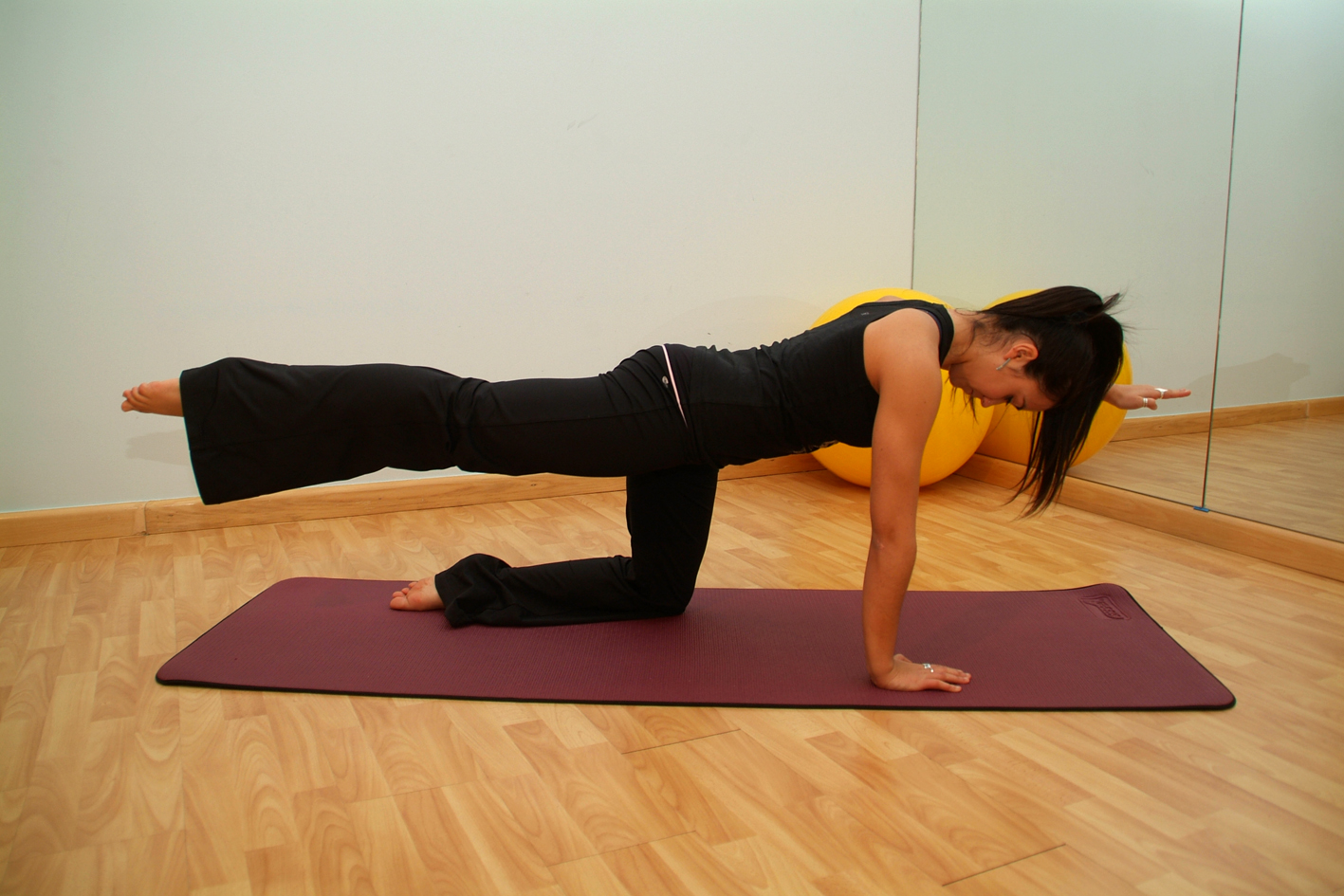
An easy exercise to help strengthen your back is the leg extension. Start the exercise by getting on the floor on your hands and knees. Place your knees directly under  your hips and keep your hands flat on the floor at shoulder width. Tighten up your tummy and then extend one leg straight out behind you. Extend your arm on the opposite side straight out in front of your body. Try to keep your head, neck, spine, arm and leg in a straight line. Hold the stretch for a few seconds and then return to the start position. Repeat using the other arm and leg. Do 5 or more repetitions of this exercise every day to help strengthen your back muscles and improve flexibility and strength.
The side plank exercise is an excellent way to help strengthen your back and improve balance and coordination. Lie on your left side with your body forming a straight line. Lean on your elbow and forearm with your elbow directly below your shoulder. Lift body straight up on your elbow so that your body forms a straight line. Hold this position for a few seconds and then relax. Do 5 repetitions and then switch sides. This exercise will not only strengthen your back, but also help to tone and strengthen your abdominal muscles. 

When your back muscles feel tight, you can do some toe touches to stretch the muscles and improve flexibility. Stand with your feet hip-width apart. Raise your arms over your head and reach as high as you can. Bend over from the waist and try to touch your toes with your fingertips. Hold the stretch for a few seconds and return to an upright position. Repeat this exercise 5 to 10 times to really stretch the back muscles and strengthen your core.

Hip lifts strengthen your lower back and leg muscles. Lie on your back with your knees bent and your arms at your sides. Place your palms flat on the floor and press your shoulders against the floor. Squeeze your abdominal muscles and your buttocks and then lift your hips toward the ceiling. Hold the position for 10 to 20 seconds and then relax. Repeat this exercise 10 times.

The lunge is an exercise that works your back, abs and leg muscles. Stand up straight with your feet slightly apart. Put your hands on your hips for stability and then take a giant step forward with one leg. Keep the other foot planted firmly on the floor. Slowly lower your upper body straight toward the floor until your forward legs forms a 90 degree angle. Hold the position for a few seconds and then push back with your forward leg to the upright position again. Repeat the lunge 5 to 10 times on each side. This exercise will also improve flexibility and balance.

For more information on back pain and exercises, see:

Start the Day Off Right!

Eating a healthy breakfast every day can help jump-start your metabolism, help you feel energized and give your body the nutrition it needs to start a busy day. The best way to lose weight is to keep your body burning calories instead of storing fat, so make sure you begin your day by eating something nutritious to fire up your metabolism for the whole day. If you skip breakfast, you miss out on a prime opportunity to boost your body’s calorie burning engine. If you are not eating breakfast, you may not be getting  all the nutrients your body needs to remain healthy. 

Remember, you have not eaten anything while you were sleeping. After 7 or 8 hours of sleep, your body needs food. Breakfast is essential to replenish your nutrient stores and stave off hunger, which can cause you to over-eat at lunch. Fasting by skipping breakfast can also increase your body’s insulin, which results in fat storage. Hunger can also tempt you to eat donuts or candy, which may temporarily stave off hunger pangs because they are loaded with sugar, but contain practically no vitamins and minerals. Avoid fast food breakfast sandwiches. Most are loaded with sodium, sugars, chemical preservatives and fat. 
Photo Credit: Parkerman & Christie CC-BY-2.0 2008
You will feel more energetic during the whole day if you eat a healthy breakfast of high fiber, high protein and low-fat foods. Oatmeal, whole wheat cereals, fruits like bananas, blueberries and strawberries and yogurt are high fiber foods that contain fewer calories than a bagel or a muffin. Multi-grain and whole grain cereals with low-fat milk, some fresh fruit such as bananas or strawberries and a cup of orange juice is low in calories, but packed with nutrients and fiber. Whole-grain waffles with fruit and low-fat sweeteners, such as natural corn syrup, provide energy and taste great.

For more information, see:
WebMD, Lose Weight: Eat Breakfast, by Jeanie Lerche Davis, reviewed by Louise Chang, MD, 2010

Understanding Metabolism

Your metabolism is the process of converting food into energy that is used by your body. Even when you are at rest and not exercising, your body is hard at work converting food and beverages into usable energy to keep your heart beating, keep you breathing, repairing damaged cells and tissue and making new cells.  The metabolic rate is how fast your body converts food and drink into energy by burning calories. Generally, the more muscle you have, the faster your metabolism. 
Photo Credit: Abhijit Tembhekar CC-BY-2.0, 2009
The foods you eat can have a direct impact on your metabolism and metabolic rate. High protein foods increase your metabolism, because it takes more energy to digest a high protein diet than a diet high in fats and carbohydrates. Other factors, such as age, gender and lifestyle also impact your metabolism. Women tend to have a slightly slower metabolism than men. Everyone’s metabolism slows down as we age. Those who do not engage in regular physical activity, like exercise, may have a slower metabolism. 
The thyroid gland, located in the front of the throat, controls almost ever aspect of metabolism. The thyroid produces hormones that speed up or slow down your metabolic rate and control whether your body stores fat. Hypothyroidism is a condition in which the thyroid does not produce enough of the metabolism-regulating hormones. This can lead to weight gain and other problems, some serious. Conditions of the thyroid gland should be treated by a doctor. If your thyroid gland is functioning normally, but you still can’t seem to lose weight, stimulating your metabolism by eating a healthy diet and regular exercise may help increase your metabolic rate so that your body burns fat for energy and builds muscle.
Starvation diets, fad diets and diet pills are not the answer to boosting your metabolic rate and reducing body fat. Depriving yourself of food can actually cause your metabolic rate to slow as your body responds to fewer nutrients. Starvation and fad diets can be very harmful to your health. Diet pills suppress your appetite and can cause you to eat less and less often, which is also harmful because your body is not going to get proper nutrition. Your metabolism may also slow down if you wait hours between meals. You can stimulate your metabolism by eating several smaller meals, including nutritious snacks throughout the day. Start with a healthy breakfast, some exercise like walking, a mid-morning snack and then a light lunch. Eat some fruit, granola, yogurt or other healthy snack in the afternoon. Eat a light snack, such as an apple or a salad, after dinner and drink plenty of water. Small meals throughout the day will stimulate your metabolism as your body must burn calories to digest food. 
In addition to eating healthy meals and snacks every few hours throughout the day, regular aerobic exercise can boost your metabolism. A brisk 30-minute walk in the morning and late afternoon or 30 minutes of aerobic exercise at the gym helps your body burn calories and fat stores. Strength training helps to build muscle and burn fat. Changes in your daily routine, like taking the stairs instead of the elevator or walking to work, can help you burn more calories and stimulate your metabolism. 

For more information, see:

Mayo Clinic, Metabolism and Weight Loss: How You Burn Calories, 2011

Mayo Clinic, Hypothyroidism, 2010

Foods for Healthy Skin

Did you know that your skin is the largest organ of your body? The foods we eat and the beverages we drink can have a positive or a negative effect on the appearance of our hair and skin. Our skin protects us from infections, allows us to perceive temperature changes and feel sensations like touching and it helps to regulate body temperature by sweating or shivering. Vitamin B, specifically biotin, is necessary for healthy growth of your skin and hair. Vitamin A is required for proper healing. Foods rich in antioxidants, vitamins and minerals can help maintain skin health and help maintain a youthful appearance.
Photo Credit: Jeff Kubina  CC-BY-SA-2 2005
Fruits and berries are rich in antioxidants that help stave off skin damage from free radicals in your diet. In addition to tasting great, blueberries can help prevent premature aging of your skin. Fresh, raw blueberries are best. Kiwi is also rich in nutrients to protect your skin health. Eat fresh berries and fruit plain as a snack or add fresh blueberries to a salad or a cup of yogurt for extra skin protective nutrients. Yogurt is rich in calcium, which is also needed for healthy skin, hair, teeth and bones. Nuts, like walnuts, are rich in omega-3 fatty acids and Vitamin E. Try some raw as a snack or on your favorite salad.
Spinach is one of the most nutritious of the leafy green vegetables. Among the many nutrients found in spinach are antioxidants. It also contains a generous quantity of lutein for healthy eyes. Vitamin B, Vitamin C and Vitamin E are all found in spinach. Potassium, calcium, iron and magnesium are essential minerals that you can get when you eat spinach.
Seafood, such as oysters and fresh wild salmon, are packed with zinc which is essential to cell repair. Salmon contains omega-3 fatty acids, which keep the skin from appearing dry and flaky. Selenium, also found in salmon and oysters, helps prevent skin damage from exposure to the ultraviolet rays of the sun.
Tomatoes have been promoted as a good source of the antioxidant lycopene. Lycopene is absorbed into the body more easily from cooked or processed tomatoes than from eating raw tomatoes. Drink tomato juice and  enjoy tomato sauce over whole wheat pasta, which is a tasty way to nourish and protect your skin, hair and nails.
The easiest way to protect your skin and maintain a healthy, youthful appearance is to drink plenty of water and eat a balanced diet. Eat lots of fresh fruits and vegetables, whole grains and seafood to ensure you are getting all the nutrition you need to keep your skin young and glowing.
For more information see:
American Academy of Dermatology (2007, November 9). What To Eat For Glowing Healthy Skin. ScienceDaily. Retrieved December 15, 2011,

Exercise and Nutrition for the Vegetarian

Photo Credit: Gila Brand CC-BY-2.5 2007
A vegetarian diet consists primarily of plants. Some vegetarians consume a few animal products, but no meat. Animal foods that a vegetarian may consume include eggs, milk and cheese. Vegetarians may also eat fish, but no vegetarian will eat pork, beef or chicken. Vegans, on the other hand, consume only plants and no animal products at all. There are many reasons why a person may choose a vegetarian or vegan lifestyle. Their health and nutrition does not have to be compromised by removing meat and animal products from their diet. A vegetarian or vegan can live a healthy, strong life without meat and other animal products. If you choose a vegetarian or vegan diet, be aware that you may not get enough Vitamin B, Vitamin D, zinc, iron and protein in your diet. You can get these nutrients from plant and non-meat sources. Exercise requires carbohydrates for energy and protein for muscle and other tissue regeneration. Be sure to get enough nutrients in your diet if you are vegetarian or vegan.
Protein is essential to muscle development, cell repair and muscle growth and regeneration. Vegetarians can get enough protein from foods such as peanuts and peanut butter, whole grain breads, dried beans and peas, whole grain brown rice, corn breads and cheese. Milk, soy protein and eggs can supplement all the protein needs for the body for day-to-day functions, including regular exercise. 
Good sources of iron, which is essential for the efficient movement of oxygen by the blood, includes prunes, prune juice, whole grains, spinach and dried fruits like raisins. Some whole grain cereals and fruit juices may be fortified with an iron supplement. Iron is critical to normal bodily functions, but too much iron like too little iron, can be very harmful. Never take iron supplement without seeing your doctor first. A blood test is necessary to determine if you are getting enough iron in your diet. Your doctor or dietitian can help you develop an eating plan to get enough iron or prescribe a supplement.
Before exercising, it is important that the vegetarian and vegan eat enough carbohydrates and drink enough water to sustain their energy and hydration levels. During exercise, everyone should drink a cup of water ever 20 to 30 minutes.  Good sources of carbohydrates for vegans and vegetarians include all fruits and vegetables, whole grains, fruit juices and tofu. About 2 hours before exercising, eat some cooked whole grain wild rice, beans and sweet potatoes so that your body has enough carbohydrates and protein to sustain your energy levels and nutrition requirements for exercise.
After exercising, have a snack of fruit, whole grain wheat crackers, hard cheese, yogurt or nuts. Remember to drink water and avoid caffeinated drinks and sports drinks. Mangoes, raisins, prunes, bananas and apricots are nutritious choices to replenish depleted carbohydrate supplies. 

Healthy Holiday Gift Ideas

Photo credit: Iwona Erskine-Kellie CC-BY-2.0 2007

Many find it difficult to eat right and exercise during the busy holiday season. Traditional holiday fare can be loaded with calories, fat, sugar and carbohydrates. Candies, cake, puddings and pies tempt us almost daily in the weeks and days leading up to the New Year. It is often even more difficult to find a gift for the health-conscious person on your gift list.

Typical holiday traditions at work include the Secret Santa and gift name exchange. Often when you have no idea what to buy someone, a box of chocolates or other sweet treat is the usual default gift. This year instead of giving sweets, gift your co-worker a basket of fresh fruits or a selection of choice unsalted nuts. Natural gourmet dried fruits and Oriental teas are also a healthy alternative to candy.

A slow-cooking crockpot and a hand-decorated soup tureen make an ideal gift for anyone, especially the person on your gift list who may be trying to lose weight or just maintain a healthy weight. Include a package of lentils or dried peas in festive wrapping. You can include your favorite soup or bean recipe, handwritten inside a holiday card for a special touch.

Reusable Japanese bento boxes are a superb gift idea for a co-worker, friend or family member. Bento boxes consist of a number of small, partitioned compartments for a wide variety of food. In Japan, the boxes are used to hold rice, vegetables, meat, fish and noodles. The small compartments limit the total amount of food consumed, provide for a greater variety of foods and encourage the recipient to take their lunch to work instead of eating fast food.
Healthy food cookbooks make an excellent gift for people who love to cook. Your local bookstore probably has a section of cookbooks devoted to healthy, diet, organic and natural recipes. Cookbooks can also be found for specific types of food, like the Mediterranean diet, Greek cooking, Japanese recipes and healthy versions of traditional American dishes. Heart healthy cookbooks are available at the American Heart Association.
If you are still not sure what to give, consider giving a gift membership to a local gym or fitness club. Select a club or gym that offers a variety of fitness activities, such as group aerobics, swimming, weight lifting, Pilates, Yoga and Karate. The avid exerciser or runner would appreciate a new set of fitness bands or a spa treatment.

Food Pyramid or Food Plate?

Photo Credit: Harvard Food Pyramid Public Domain 
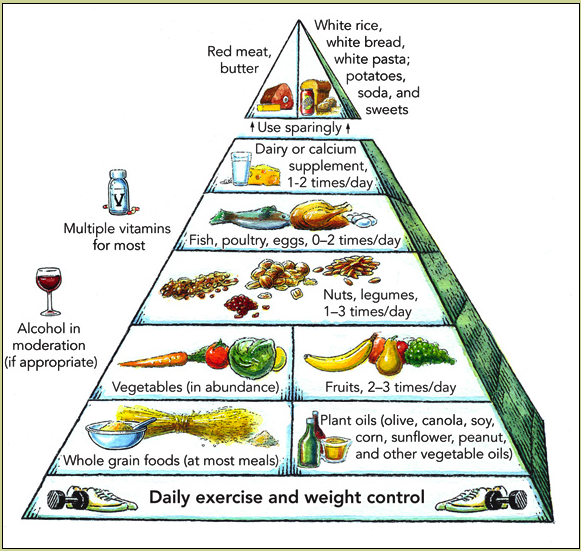
A healthy diet includes a variety of foods. Fruits, vegetables, grains, dairy, meats, and nuts are all part of a nutritious diet. How much should you eat from each food group? Should you use the old “pyramid” to guide your food choices or is the new “my plate” a better choice? Your dietary choices should be made based on nutrition. Other factors to consider are your goals and primary objective, such as weight loss, muscle mass, lowering cholesterol or maintaining bone strength. The key to any diet plan is getting all the vitamins, minerals and other nutrients that your body needs to stay healthy. 
Your diet should include enough protein to maintain healthy muscles and bones. Meat is one option for protein. Plant-based proteins can be found in beans, rice, nuts, eggs and dairy. Meat and animal proteins usually contain more fat and cholesterol than plant proteins. If you are trying to lower your cholesterol, consider substituting meat protein for soy products or other vegetable protein sources. Whether you follow the food pyramid or food plate, you should make food choices based on nutritional value and your personal needs. A doctor or dietitian can help you create a diet that works for you.

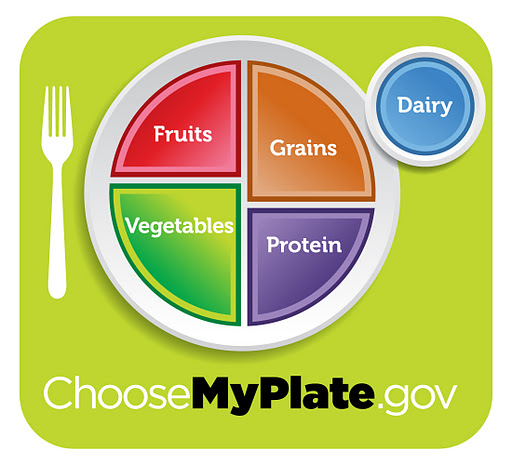
The food plate diagram recommends one half of each meal consist of fruits and vegetables. Healthy oils like olive oil and canola oil are included in the vegetable section, but not fatty oils like butter and oils that contain trans fats. French fries do not count as a vegetable. Choose a variety of vegetables of all colors and flavors to keep meals interesting as well as nutritious.

Photo Credit: USDA Public Domain

The other side of the food plate consists of healthy proteins and whole grain foods. Healthy proteins include fish, poultry, beans, peas, nuts and small portions of lean red meat. Avoid sandwich meats, bacon, sausage, hot dogs and other processed meat products. Whole grains include whole wheat bread, unprocessed oats, whole grain pasta, grits, bulgur wheat, cornmeal muffins and brown rice. Avoid pasta and bread made with bleached white flour and white rice. Dairy should be limited to one serving per meal. Drink an 8 ounce glass of whole Vitamin D enriched milk or water and a serving of fresh yogurt or cheese. Those who are lactose intolerant can substitute vitamin enriched soy milk for dairy products. 

Whether you choose to follow the food pyramid, food plate or your own diet plan, choose healthy foods and eat a variety of foods every day. Avoid too much caffeine found in coffee, tea and most sodas. Limit your sugar intake and get plenty of exercise. 

Pre-Workout Fuel

It is critical to keep your body well nourished and fueled to get the most benefit from your workouts. But what should you eat and when should you eat it? What and when you eat depends on the kind of exercise you are going to do. 
People who exercise in the morning should rise early enough to eat a healthy breakfast before running, jogging, walking or other exercise. You will need to replenish your blood sugar and hydrate your body. Drinks some water when you first wake up and eat a variety of fresh fruits and whole grain foods. Eat breakfast about 2 hours before you plan to start your morning exercise routine. If you are going to eat 1 hour or less prior to exercising, eat a light breakfast of fresh fruit like bananas or grapefruit, orange juice and whole wheat toast.  
Photo Credit: Aleph CC-BY-SA-2.5 2007
Many people like to take advantage of their company fitness center during their lunch break. Before heading to the fitness center or gym on your lunch break, eat a small whole-grain pasta salad and drink a glass of water no sooner than 2 hours prior to working out. If you don’t have time to digest a light lunch before your workout, eat a snack of whole wheat crackers and hard cheeses or fruit and yogurt before exercise. These foods can provide the complex carbohydrates and other nutrients your body needs. Carbohydrates are essential for energy, so don’t skip a snack before a workout. For late afternoon workouts, add some protein to your pre-workout meal. Natural peanut butter, turkey, white meat chicken or beans are a good source of protein. 
Avoid eating a heavy meal less than 3 hours before working out. The less time between the time you eat and the time you plan to begin your workout, the less you should eat. If you’re in a rush, grab some fresh fruit, cheese and whole grain crackers. Carbohydrate-rich foods are easy to digest and provide all the energy your body needs for stamina. Drink plenty of water before, during and after your workout to avoid dehydration.

Get Lean & Strong with Pilates

Pilates exercises develop lean, strong muscles and a strong core. A strong abdomen, hips and lower back area result in better posture and overall improvement in balance. The goal of a Pilates workout is to increase endurance, strength and flexibility. This method of exercise requires concentration, breathing control and stretching. Try a few easy mat exercises as an introduction to Pilates.
Photo Credit: J. Vílchez, Public Domain
Stretch your spine and strengthen your lower back by doing the Pilates spine stretch exercise. Sit on your bottom and press your hip bones against the floor. Stretch your legs straight out and point your toes toward the ceiling. Try to keep your shoulders relaxed while extending your spine, so that your head is lifting toward the ceiling. Breathe in deeply, stretch your arms out toward your toes and drop your chin toward your chest. Your body should form a “C” shape. Keep your arms at the same height as your shoulders. Exhale when you reach the full extension of the stretch. Breathe in and use your ab muscles to pull your body back to an upright position. 
Try the spine twist next since you are in the sitting position. Tighten your abdominal muscles and point your toes toward the ceiling. Stretch your arms out to your sides, keeping them even with your shoulders and with your palms down. Stretch your spine upward until you are sitting as tall as possible. Breathe in deeply and twist your body from your waist. Exhale halfway through the twist, and then continue to twist your upper body, then finish your exhale. Inhale on the return and then repeat by twisting in the other direction. Keep your buttocks firmly on the floor and your lower body as straight as possible. 

The side plank position is an excellent exercise to strengthen the abdominal muscles, arms and legs. From a sitting position, stretch your legs out to one side of your body so that your right hand is on the floor and your left arm is resting on your thigh. Put the top foot in front of the lower foot on the floor. Place the hand on the floor under your shoulder. Spread your fingers a bit for support and stability. Breathe in deeply, tighten your abdominal muscles and press your body upward with your right arm. Extend your left arm toward the ceiling. Support the weight of your body with your abdominal muscles and your shoulder. The front of your body should be perpendicular to the floor. Squeeze your legs together and keep your abs tight for stability. Hold the position for 3 to 5 seconds, breathe out and relax back to the floor. Repeat this exercise on the other side. 
For more information about Pilates exercises, see:

WebMD, Pilates and Yoga: Are They Good Exercise?, by Jodi Helmer, reviewed by Michael W. Smith, MD. 2011

WebMD, The Benefits of Pilates, by Barbara Russi Sarnataro, reviewed by Brunilda Nazario, MD. 2009