May Is National Physical Fitness and Sports Month

Photo Credit: Peter van der Sluijs CC-BY-SA-3.0

May is National Physical Fitness and Sports Month. It’s a great time to start a fitness program or help family members become more active. It’s never too late to start getting fit. Children and teens should get an hour of exercise each day. Adults of all ages need about 1 hour 15 minutes of vigorous exercise or 2 1/2 hours of moderate exercise each week. Once you make exercise part of your daily routine, it’s easy to stay physically fit and active throughout your life. People who exercise regularly are less likely to have high blood pressure, reduce the risk of type 2 diabetes and have lower cholesterol. National Physical Fitness and Sports Month is a good time to get active and to help family members become more active.  You can find more information about recommended activity levels for people of all ages and physical ability on the US Department of Health and Human Services website, Physical Activity Guidelines.
Help get members of your family off the couch and exercising by taking small steps. Choose an activity that every member of the family can participate in regardless of their fitness level. Begin by taking a family walk around the block after dinner two times each week for a month. Go for a family block walk three times each week the next month. Take the whole family for a bike ride or go roller skating in the park after dinner one night each week. 
Sign up for a family membership at your local YMCA or gym. Take the whole family swimming at the gym or YMCA every weekend. Meet up with family members at the gym twice each week and then enjoy a treat like low-fat frozen yogurt afterwards. Make it a routine and make it fun for everyone. Challenge family members by helping them to set realistic fitness goals and then make it a race to success! For example, challenge your spouse to a race to lose 10 pounds in the next 60 days by eating nutritious foods and exercising regularly. 
Buy fitness-friendly birthday, anniversary and holiday gifts instead of toys, games and trinkets. Bicycles, skates, skateboards and sports balls make great gifts for kids and adults. Don’t forget the helmets and protective pads! Dumbbells, pedometers, new exercise clothes and sneakers are great gifts for adults and kids. Try a new healthy dinner recipe each week. Involve the kids in making the menu choices and helping in the selection and preparation of nutritious ingredients and side dishes.

Can you think of other ways to get your kids and spouse or partner involved in physical activity and healthy food choices? 
Avoid Low Back Pain At Work

Photo Credit: Nick Webb CC-BY-2.0
Millions of people suffer from low back pain. Some aches and pains may be caused by your work. Most minor back pain is caused by muscle strain from lifting, repetitive movements or sitting in one position for extended periods of time. Whether you lift boxes or sit at a computer screen all day, you can suffer from low back pain. You can reduce your risk of low back pain by doing exercises that strengthen your back muscles, employing proper lifting techniques and taking frequent stretching breaks if you sit at work. 
Sitting in front of a computer screen or at a work station for hours can contribute to low back pain. Take  3 to 5 minute break once each hour to stand up and stretch your back muscles. Put your hands on your hips and twist to the left and then to the right. Raise your arms over your head and reach for the ceiling to stretch the muscles from your shoulders down to your buttocks. You should have a chair with proper back support. Use a rolled-up towel between your lower back and the back of the chair if your chair does not provide enough support. Avoid slumping in your chair by maintaining good posture while sitting at your desk. Keep your shoulders back and hold your head up straight so that the bottom of your chin is parallel to the floor. 
Avoid low back pain and muscle injury by using lifting techniques to protect your back. If you lift heavy objects at work, always use proper lifting techniques or get help lifting very heavy objects. Lift heavy boxes and other objects by planting your feet shoulder-width apart and stand close to the object. Bend down from your knees, not your waist. Keep your back straight as you lower your body by bending your knees and get a firm grasp on the object. Squeeze your abdominal muscles for support and lift the object using your legs. 
Exercise that strengthens your back muscles is the best way to prevent and to relieve chronic low back pain. Exercises that strengthen your back and core muscles will help prevent lower back pain. Stretching exercises can help improve your flexibility. Maintain a healthy weight, too. You are at greater risk of low back pain if your are overweight. 

Nutrition for Older People

Photo Credit: Brian Donnelly for CDC PD

Good nutrition is important at every age, but it is especially important to eat a variety of foods when we become older. Older people may be at risk for age-related diseases, such as stroke, heart attack, osteoporosis, arthritis and diabetes. A life-long healthy lifestyle is the best way to reduce your risk of age-related disease, but it is never too late to start eating a healthy diet. Older people are at risk of losing muscle mass. Protein is critical to maintain muscle mass and to repair injured muscle tissue. Eggs, fish, poultry and lean beef are good sources of protein. Nuts, soy and low-fat dairy also provide sufficient protein to help maintain muscle mass. Adequate protein and remaining active can help reduce age-related muscle loss. 
Older people who may not be as active as others need fewer calories but still need carbohydrates for energy. The sugar fructose in fruits and lactose in milk and dairy products can help you boost your energy level. By eating a variety of fresh fruits and vegetables, you will provide your body with vitamins, fiber and trace minerals that are necessary for good health and keep your energy levels up. Some aging people are less active so they need fewer calories. Try to stay active throughout your life, but adjust your caloric intake to account for less activity. Your doctor or a dietitian  can help you determine your energy needs and adjust your diet to meet calorie needs. 
Limit the amount of fats in your diet. Replace saturated fats from beef, butter, high-fat dairy, processed foods and margarine with natural oils like corn, soy and olive oils. Many processed foods including cookies, frozen foods, crackers and read-to-serve packaged meals contain hydrogenated fats also called trans fats. These fats can cause plaque buildup in your arteries, which can increase your risk of cardiovascular disease.  Remain active as long as you can by walking, swimming and stretching your body. Remember to drink plenty of water to stay hydrated. 

Avoid Exercise Injury

Photo Credit: Peter van der Sluijs CC-BY-SA-3.0
No one is immune from workout injuries, but you can take steps to reduce your risk of injury. The most common type of workout injuries are strained muscles, knee and ankle sprains, shin splints, wrist sprain, shoulder injuries and tendinitis which is painful inflammation of the tendons from overuse. See your doctor if the pain persists, there is swelling or discoloration of the injured area. Always see your doctor for a full checkup prior to beginning an exercise program if you have been inactive for a long time or have a medical condition, such as high blood pressure, heart disease or diabetes. 
You can reduce your risk of strains and sprains by warming up before exercise and cooling down after a workout. Warming up gradually increases your heart rate and helps your muscles and joints prepare for more strenuous exercise by increasing blood flow. Cooling down will gradually return reduce your heart rate and allow your muscles and joints to relax following exercise. Stretching, walking and riding a stationary bicycle are good ways to warm up and cool down. Warm up and cool down for at least 10 minutes. 

Begin a new exercise by gradually increasing the level of your workout. For example, when you begin lifting weights start with the lightest weight possible. Don’t grab a 10 pound dumbbell and start doing bicep curls if you’ve never used them. Start with a 2 pound weight and gradually work toward the heavier weights. Don’t try to walk 2 miles if you haven’t been walking further than the distance between your car and your front door. If you overdo it you risk sore muscles and injury. 
Always use correct form when performing any exercise. Seek instruction from a qualified fitness instructor. Performing an exercise with poor form can result in injuries, especially when lifting weights or using resistance bands. Your posture is critical to effective exercise and to avoid injury. 
Cross training can help you prevent over-use injuries that are caused by repetitive motions. Alternate days for lifting weights and running or jogging. A fitness trainer can help you to develop a weekly plan so that you work a different muscle group each day. Cross training allows your muscles to rest between workouts. 

Should You Take Vitamins?

Photo Credit: Ragesoss CC-BY-SA-3.0

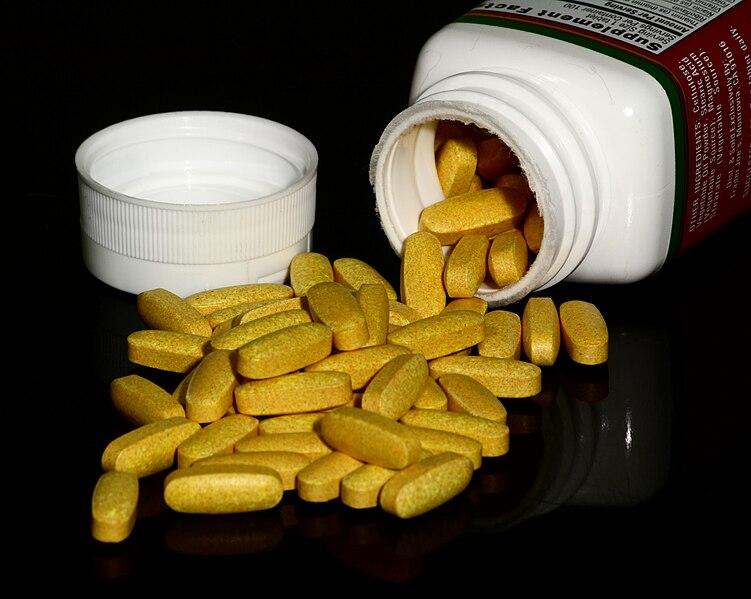
Vitamins are necessary for nearly every bodily function. Some vitamins are essential to your health: Vitamins A, C, D, E and K. You also need all of the B-vitamins including riboflavin, niacin, thiamine, biotin, folate and panthothenic acid. Too much of anything can be harmful to your health, and this holds true for vitamins as well. If you eat a well-balanced diet, you should be getting all the nutrition you need. Those who exercise strenuously on a regularly basis, body builders and runners may need a vitamin supplement. People who are limiting caloric intake and exercising to lose weight may also need a vitamin supplement. Pregnant women and women who are breastfeeding may also need to take a vitamin supplement to help prevent neural tube birth defects, like spina bifida. See your doctor if you think you need a vitamin supplement. 
An over-the-counter vitamin supplement may be necessary, especially for body builders and people who engage in frequent, vigorous exercise. Should you decide to take a vitamin supplement, consider taking a multivitamin. Choose one that does not contain ingredients that you may not need and may cause an adverse reaction. Some multivitamin supplements contain herbal extracts, which you don’t need and don’t want to take. Always read the label before taking a multivitamin. 
Consider your current health, your diet, your fitness level and how much you exercise and talk to your doctor before taking a vitamin supplement. A dietitian can help you to assess your nutrient intake from the foods you eat and help you adjust your diet to get more nutrients. 

For more information about vitamins see:

Exercise to Reduce the Risk of Varicose Veins

Photo Credit: Voyeurproject CC-BY-SA-3.0

Varicose veins are large blood vessels visible just below the skin surface. Women are particularly susceptible to developing varicose veins, but people who stand long hours at work and people with a blood relative who has varicose veins are also at risk to develop varicose veins. Contrary to popular belief, crossing your legs does not contribute to or cause varicose veins. About 80% of those who develop varicose veins inherited the condition. There is no guaranteed way to prevent varicose veins, but you can reduce your risk with regular exercise. Exercise that strengthens the leg muscles and improves circulation is the best way to reduce your risk of developing varicose veins. 
Walking is the easiest way to exercise to develop strong leg muscles and improve your cardiovascular system, including vein strength. Walk daily for at least 15 to 30 minutes. Instead of taking the elevator or escalator, try walking a few flights of stairs every day. 
Elevating your legs and pumping them as if riding a bicycle will help to strengthen the leg muscles and improve circulation in the legs. Lie down on your back and lift your bottom off the floor a few inches with your palms under your buttocks. Pump your legs forward for 20 repetitions and then reverse for 20 repetitions.  Repeat this exercise daily. 
Leg lifts also help to improve blood flow and strengthen the leg muscles. Lie on your back and place your hands, palms down, on the floor on each side of your body. Lift one leg about 12 inches off the floor and hold your leg elevated for 5 seconds. Slowly lower your leg and then repeat with the other leg. Repeat 10 times on each side.

Social Fitness

Photo Credit: www.localfitness.com.au
Do you exercise alone at home or at the gym? Sometimes belonging to a group of like-minded people can be a great motivator. Friendly competitions or simply sharing time with others can make exercise more enjoyable, strengthen friendships and increase your social circle. How can you engage your current friends and find new friends through exercise? Here are a few tips to help you get started:
Communities across the USA are starting walking groups. Join a local walking group to make new friends. Start your own walking group if you can’t find one in your area. Recruit current friends, family and co-workers. Encourage them to bring someone with them, too. Schedule walks when the most people can join in the fun and exercise. Choose start locations that are convenient to the majority of the group and have fun!
Take a dance class for the aerobic exercise and to make new friends. Dancing, like ballroom dancing or Salsa dancing, is a low-impact form of exercise that is effective and fun! You can probably find a dance class close to your home. You don’t have to have a dance partner to join a class. There are almost always partners ready to dance with you. Line dancing is a popular dance style and doesn’t require a partner. You’re sure to make new friends and get a good workout at a dance class. 
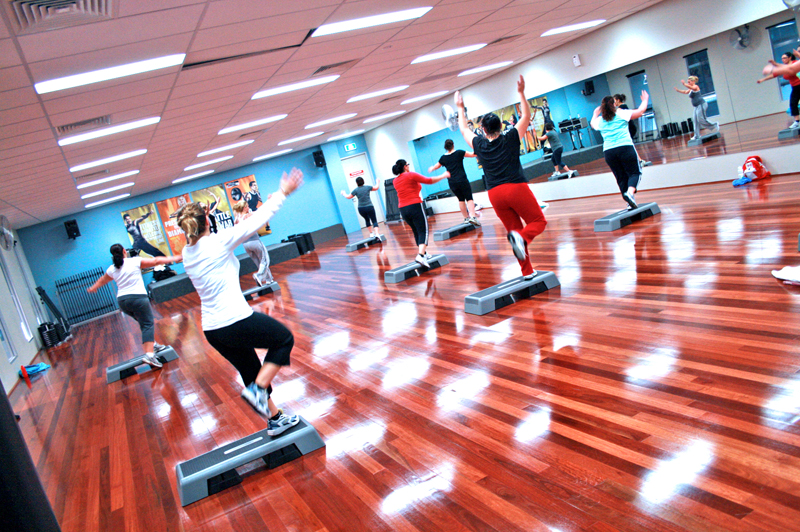
Most gyms offer group exercise opportunities, such as yoga, martial arts, Pilates and dance aerobics classes.  Join an exercise group at your local fitness center or gym to make friends and get fit at the same time. Those who need a more personal touch when it comes to exercise may consider a small-group exercise class offered by certified personal trainers. Personal trainers sometimes offer group training with 10 or fewer participants in the group. 

Plyometrics

Photo Credit: Joe Mabel CC-BY-SA-3.0

Plyometrics is exercise by jumping explosively. It was originally designed to help improve the jumping performance of Olympic athletes. This form of exercise can increase your muscle strength. According to the American Council on Exercise, plyometric training can improve leg strength, muscle power, balance, agility and improve bone health. Plyometric exercises include hopping and jumping, which targets the quadriceps to improve vertical jump power and joint strength.

Low-intensity plyometric exercises are best for beginners or people who do not exercise regularly. Hopping on one leg and then alternating or jumping up to and then down from a platform, like a step-aerobics platform, are good beginning exercises. Intermediate to advanced exercises include leaping over obstacles and jumping up and down from platforms as much as 42 inches high. 

You should not begin a program of plyometric exercise on your own. A professional fitness trainer and personal coach can help you develop a program to help you reach your goals and avoid injury. If you want to add some plyometric exercises to your regular weekly routine, see a doctor for a physical and then find a qualified fitness trainer.

Summer Vacation Workouts

Photo Credit: Mavila2  CC-BY-SA-3.0

Summer is almost here! The family vacation is an American tradition, but you don’t have to take a vacation from fitness to have fun and relax. Take advantage of your vacation to add some variety to your workouts. Whether you are going to a luxury hotel, in a cabin by the lake, hang out at the beach or go camping in the mountains, you can stay fit and energetic during your vacation while having fun. 

Many people enjoy the quiet, serene surroundings of a cabin by a lake. America offers plenty of idyllic vacation spots on lakes. You know that swimming is a great way to get a good whole body cardiovascular workout, but you’re on vacation to relax, right? Take a relaxing dip in the lake to cool off from the summer heat and get a good workout, too. Walk out in the lake until the water is under your chin and your toes touching the bottom of the lake. Tread water for 5 to 8 minutes and then walk back to waist-deep water to rest for 2 minutes. Repeat this exercise 2 times ever day of your vacation. Canoeing and rowing are excellent  ways to work out your upper body, arms, chest and back. 
For those staying in a hotel while visiting an historic town or taking the kids to a popular amusement park, you don’t have to neglect fitness. Hotels usually have pools and fitness rooms complete with exercise machines and weights. After breakfast, head down to the hotel exercise facility and workout on a treadmill, stationary bicycle or elliptical for 20 minutes and then cool off with a few laps of the pool for 10 minutes. You will feel energized and ready to take on your daily vacation agenda. 

Camping and hiking are popular family vacation activities. Mountain hiking and camping offer numerous opportunities to exercise and stay in shape on vacation. Getting to your campsite will be a great workout, but don’t just sit in the shade once you set up camp. Exercise by exploring for 15 minutes in the morning and 15 minutes in the evening. Don’t walk alone, carry your cell phone in case of emergency and a GPS device to help you find your way back to your campsite. 

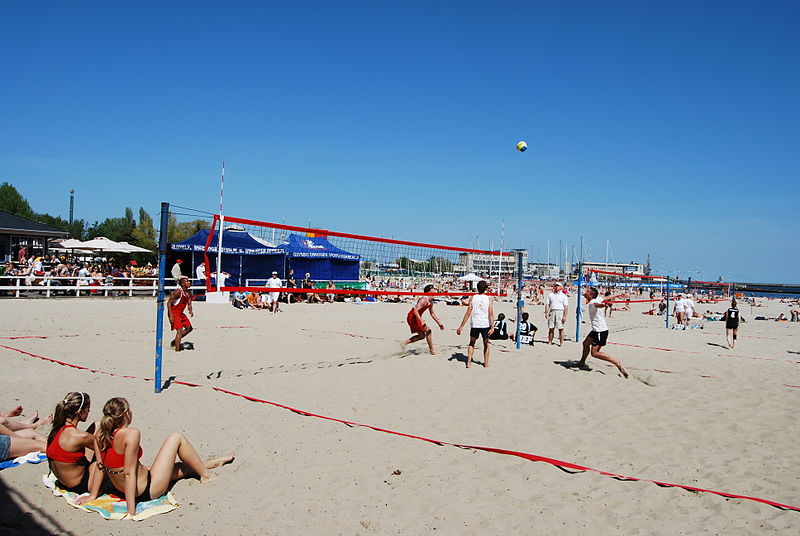
If you are vacationing at the beach, you will get a good workout just walking in the sand. The sand provides resistance that you can’t get walking on solid ground or on an exercise machine. You will definitely feel the positive effects in your shins, ankles, feet and calves. Wear a wide-brim hat, sunblock and sandals because the sand can become very hot during the day. Walk for 15 minutes in the morning and 15 minutes in the afternoon to stay fit,  while enjoying the ocean breeze and the scenery. Enjoy a game of beach volleyball and toss a Frisbee with your kids to have fun while exercising.

Fitness for Older Beginners

Photo Credit: Shustov  CC-BY-SA-3.0
It’s never too late to start a fitness program of regular exercise and a healthy diet. Older adults can benefit from beginning a fitness program at any age, even if you have been inactive for years. Walking, bicycling and swimming are good, low-impact exercises for older adults. Those who suffer from arthritis will benefit from low-impact exercise to help manage pain and keep the joints from becoming stiff. Low-impact exercises also help stimulate the metabolism, which helps with the regulation of blood sugar and cholesterol. Endorphins produced in the brain are natural mood elevators that also reduce pain. Consult with your doctor before beginning any exercise or fitness program, especially if you have been sedentary for years. In addition to walking, bicycling and swimming, exercises that are easy on the joints and help to maintain flexibility and mobility include rowing and elliptical machines and treadmills. If a gym membership is not in your budget or schedule, there are home exercise machines available at major retailers or fitness stores. Sometimes gyms sell used equipment at tremendous savings over a new machine. 

Begin your exercise program slowly and work your way up to at least 30 minutes each day. Try walking for 5 minutes every day for one week. The next week add 5 minutes for a 10 minute walk. Soon you will be walking for 30 minutes without feeling too tired. Once you can walk for 30 minutes, try speeding up your pace to a brisk walk for the same amount of time. Brisk walking is a great way to get your  heart pumping and your lungs working at maximum capacity. Walking is one of the best ways to get a good cardiovascular workout with minimum risk of injury. 
As people age they begin to lose muscle mass and their bones may lose density, becoming soft or brittle. Strength training, along with a healthy diet that includes plenty of vitamins and calcium, can help to prevent bone loss and maintain muscle tissue. Start with a 1 or 2 pound dumbbell weights when beginning strength training. Firm up your arms and keep your joints flexible by performing 5 biceps and 5 triceps exercises every other day. It’s important to let your muscles rest between strength training exercises so that they can heal and rest. When you can do 10 curls (5 biceps and 5 triceps) without feeling tired, increase the number of repetitions. As you grow stronger, add more weight (1 pound at a time). You may experience some muscle soreness, but this is normal. A mild over-the-counter pain reliever can help. Always check with your doctor before taking any over-the-counter medication, especially if you are taking prescription medications.