Foods for Healthy Skin

Did you know that your skin is the largest organ of your body? The foods we eat and the beverages we drink can have a positive or a negative effect on the appearance of our hair and skin. Our skin protects us from infections, allows us to perceive temperature changes and feel sensations like touching and it helps to regulate body temperature by sweating or shivering. Vitamin B, specifically biotin, is necessary for healthy growth of your skin and hair. Vitamin A is required for proper healing. Foods rich in antioxidants, vitamins and minerals can help maintain skin health and help maintain a youthful appearance.
Photo Credit: Jeff Kubina  CC-BY-SA-2 2005
Fruits and berries are rich in antioxidants that help stave off skin damage from free radicals in your diet. In addition to tasting great, blueberries can help prevent premature aging of your skin. Fresh, raw blueberries are best. Kiwi is also rich in nutrients to protect your skin health. Eat fresh berries and fruit plain as a snack or add fresh blueberries to a salad or a cup of yogurt for extra skin protective nutrients. Yogurt is rich in calcium, which is also needed for healthy skin, hair, teeth and bones. Nuts, like walnuts, are rich in omega-3 fatty acids and Vitamin E. Try some raw as a snack or on your favorite salad.
Spinach is one of the most nutritious of the leafy green vegetables. Among the many nutrients found in spinach are antioxidants. It also contains a generous quantity of lutein for healthy eyes. Vitamin B, Vitamin C and Vitamin E are all found in spinach. Potassium, calcium, iron and magnesium are essential minerals that you can get when you eat spinach.
Seafood, such as oysters and fresh wild salmon, are packed with zinc which is essential to cell repair. Salmon contains omega-3 fatty acids, which keep the skin from appearing dry and flaky. Selenium, also found in salmon and oysters, helps prevent skin damage from exposure to the ultraviolet rays of the sun.
Tomatoes have been promoted as a good source of the antioxidant lycopene. Lycopene is absorbed into the body more easily from cooked or processed tomatoes than from eating raw tomatoes. Drink tomato juice and  enjoy tomato sauce over whole wheat pasta, which is a tasty way to nourish and protect your skin, hair and nails.
The easiest way to protect your skin and maintain a healthy, youthful appearance is to drink plenty of water and eat a balanced diet. Eat lots of fresh fruits and vegetables, whole grains and seafood to ensure you are getting all the nutrition you need to keep your skin young and glowing.
For more information see:
American Academy of Dermatology (2007, November 9). What To Eat For Glowing Healthy Skin. ScienceDaily. Retrieved December 15, 2011,

Exercise and Nutrition for the Vegetarian

Photo Credit: Gila Brand CC-BY-2.5 2007
A vegetarian diet consists primarily of plants. Some vegetarians consume a few animal products, but no meat. Animal foods that a vegetarian may consume include eggs, milk and cheese. Vegetarians may also eat fish, but no vegetarian will eat pork, beef or chicken. Vegans, on the other hand, consume only plants and no animal products at all. There are many reasons why a person may choose a vegetarian or vegan lifestyle. Their health and nutrition does not have to be compromised by removing meat and animal products from their diet. A vegetarian or vegan can live a healthy, strong life without meat and other animal products. If you choose a vegetarian or vegan diet, be aware that you may not get enough Vitamin B, Vitamin D, zinc, iron and protein in your diet. You can get these nutrients from plant and non-meat sources. Exercise requires carbohydrates for energy and protein for muscle and other tissue regeneration. Be sure to get enough nutrients in your diet if you are vegetarian or vegan.
Protein is essential to muscle development, cell repair and muscle growth and regeneration. Vegetarians can get enough protein from foods such as peanuts and peanut butter, whole grain breads, dried beans and peas, whole grain brown rice, corn breads and cheese. Milk, soy protein and eggs can supplement all the protein needs for the body for day-to-day functions, including regular exercise. 
Good sources of iron, which is essential for the efficient movement of oxygen by the blood, includes prunes, prune juice, whole grains, spinach and dried fruits like raisins. Some whole grain cereals and fruit juices may be fortified with an iron supplement. Iron is critical to normal bodily functions, but too much iron like too little iron, can be very harmful. Never take iron supplement without seeing your doctor first. A blood test is necessary to determine if you are getting enough iron in your diet. Your doctor or dietitian can help you develop an eating plan to get enough iron or prescribe a supplement.
Before exercising, it is important that the vegetarian and vegan eat enough carbohydrates and drink enough water to sustain their energy and hydration levels. During exercise, everyone should drink a cup of water ever 20 to 30 minutes.  Good sources of carbohydrates for vegans and vegetarians include all fruits and vegetables, whole grains, fruit juices and tofu. About 2 hours before exercising, eat some cooked whole grain wild rice, beans and sweet potatoes so that your body has enough carbohydrates and protein to sustain your energy levels and nutrition requirements for exercise.
After exercising, have a snack of fruit, whole grain wheat crackers, hard cheese, yogurt or nuts. Remember to drink water and avoid caffeinated drinks and sports drinks. Mangoes, raisins, prunes, bananas and apricots are nutritious choices to replenish depleted carbohydrate supplies. 

Pre-Workout Fuel

It is critical to keep your body well nourished and fueled to get the most benefit from your workouts. But what should you eat and when should you eat it? What and when you eat depends on the kind of exercise you are going to do. 
People who exercise in the morning should rise early enough to eat a healthy breakfast before running, jogging, walking or other exercise. You will need to replenish your blood sugar and hydrate your body. Drinks some water when you first wake up and eat a variety of fresh fruits and whole grain foods. Eat breakfast about 2 hours before you plan to start your morning exercise routine. If you are going to eat 1 hour or less prior to exercising, eat a light breakfast of fresh fruit like bananas or grapefruit, orange juice and whole wheat toast.  
Photo Credit: Aleph CC-BY-SA-2.5 2007
Many people like to take advantage of their company fitness center during their lunch break. Before heading to the fitness center or gym on your lunch break, eat a small whole-grain pasta salad and drink a glass of water no sooner than 2 hours prior to working out. If you don’t have time to digest a light lunch before your workout, eat a snack of whole wheat crackers and hard cheeses or fruit and yogurt before exercise. These foods can provide the complex carbohydrates and other nutrients your body needs. Carbohydrates are essential for energy, so don’t skip a snack before a workout. For late afternoon workouts, add some protein to your pre-workout meal. Natural peanut butter, turkey, white meat chicken or beans are a good source of protein. 
Avoid eating a heavy meal less than 3 hours before working out. The less time between the time you eat and the time you plan to begin your workout, the less you should eat. If you’re in a rush, grab some fresh fruit, cheese and whole grain crackers. Carbohydrate-rich foods are easy to digest and provide all the energy your body needs for stamina. Drink plenty of water before, during and after your workout to avoid dehydration.

Get Lean & Strong with Pilates

Pilates exercises develop lean, strong muscles and a strong core. A strong abdomen, hips and lower back area result in better posture and overall improvement in balance. The goal of a Pilates workout is to increase endurance, strength and flexibility. This method of exercise requires concentration, breathing control and stretching. Try a few easy mat exercises as an introduction to Pilates.
Photo Credit: J. Vílchez, Public Domain
Stretch your spine and strengthen your lower back by doing the Pilates spine stretch exercise. Sit on your bottom and press your hip bones against the floor. Stretch your legs straight out and point your toes toward the ceiling. Try to keep your shoulders relaxed while extending your spine, so that your head is lifting toward the ceiling. Breathe in deeply, stretch your arms out toward your toes and drop your chin toward your chest. Your body should form a “C” shape. Keep your arms at the same height as your shoulders. Exhale when you reach the full extension of the stretch. Breathe in and use your ab muscles to pull your body back to an upright position. 
Try the spine twist next since you are in the sitting position. Tighten your abdominal muscles and point your toes toward the ceiling. Stretch your arms out to your sides, keeping them even with your shoulders and with your palms down. Stretch your spine upward until you are sitting as tall as possible. Breathe in deeply and twist your body from your waist. Exhale halfway through the twist, and then continue to twist your upper body, then finish your exhale. Inhale on the return and then repeat by twisting in the other direction. Keep your buttocks firmly on the floor and your lower body as straight as possible. 

The side plank position is an excellent exercise to strengthen the abdominal muscles, arms and legs. From a sitting position, stretch your legs out to one side of your body so that your right hand is on the floor and your left arm is resting on your thigh. Put the top foot in front of the lower foot on the floor. Place the hand on the floor under your shoulder. Spread your fingers a bit for support and stability. Breathe in deeply, tighten your abdominal muscles and press your body upward with your right arm. Extend your left arm toward the ceiling. Support the weight of your body with your abdominal muscles and your shoulder. The front of your body should be perpendicular to the floor. Squeeze your legs together and keep your abs tight for stability. Hold the position for 3 to 5 seconds, breathe out and relax back to the floor. Repeat this exercise on the other side. 
For more information about Pilates exercises, see:

WebMD, Pilates and Yoga: Are They Good Exercise?, by Jodi Helmer, reviewed by Michael W. Smith, MD. 2011

WebMD, The Benefits of Pilates, by Barbara Russi Sarnataro, reviewed by Brunilda Nazario, MD. 2009

Stretch for Flexibility

Warming up your muscles by stretching prior to exercise can help you improve your flexibility and avoid injury. Muscle strains and tears can be painful. A torn muscle or ligament may take weeks to heal, and in some cases, may even require surgery and rehabilitation. Take care of your muscles before exercising by performing about 10 minutes of stretching exercises. Stretching after a workout is a good way to cool down and relax your muscles.
Sit on the floor and spread your legs slightly. Keep your back straight and your chin down as you reach forward toward  your left foot. Hold the stretch for 30 seconds. Slowly return to an upright position and repeat on the right side. Next, stretch the muscles of your upper back by pulling your knees toward your chest. Lie on your back and put your feet flat on the floor by bending your knees. Grab one knee with your hands and gently pull your knee toward your chest. Stop when you feel the muscles in your lower back stretching. Hold the stretch for 20 to 30 seconds and then repeat with the other knee. 
Photo Credit: José Vílchez, CC-BY-SA-3.0 2008
Stretch your calf muscles by standing parallel to a wall or holding onto a sturdy chair. Put your left foot behind the right and keep your right foot flat on the floor. Keep your back straight and then slowly bend your right knee to lower your body toward the floor a few inches. Bend your knee as far as you can without causing pain and hold the position for up to 30 seconds. Switch sides and repeat the stretch. 
Playing golf, tennis, handball and racquetball can result in a torn rotator cuff if you over-exert. A rotator cuff injury is painful and may require weeks of rehabilitative exercise to repair. You may avoid a rotator cuff injury by warming up with some shoulder stretches prior to exercise. To stretch your shoulder and increase flexibility, cross your right arm over your chest and hold it with your left hand just above the elbow. Gently pull your arm toward the left side of your body until you feel the muscles stretch. Hold for 15 to 20 seconds and repeat with the other arm. 
Improve your posture, increase the flexibility and strengthen the muscles in your upper back by stretching your shoulders. Stand up straight with your legs apart about shoulder width. Keep your arms relaxed at your side and the squeeze your shoulder blades together. Pull your arms back and bend your elbows slightly. Hold the stretch for 25 to 30 seconds, then relax. Repeat this stretch two or three times.
Leg muscles are susceptible to muscle and tendon injury if you run or jog. Stretch your hamstrings by lying on the floor with your feet near a wall.  Raise your right leg and put your heel against the wall. Keep your right knee slightly bent. Push against the wall to straighten out your right leg. You should feel the hamstring along the back of your thigh stretch. Hold the position for 20 seconds and then switch sides. Next, stretch the quadriceps muscles of your legs. Lean against a wall or hold onto a sturdy chair or table with one hand. Grab your ankle with the other hand and pull your foot toward your buttocks until you feel the muscles in the front of your thigh begin to pull and stretch. Keep your upper body straight and try to avoid slouching or leaning forward. Squeeze your abdominal muscles to help keep your body erect. Return to a standing position after about 30 seconds and then stretch the other leg.
Stretching should not cause pain. If you feel pain during a stretch, reduce the intensity of the stretch and see a doctor if soreness or swelling occur. 
For more information and stretching exercises, see:
Mayo Clinic, Stretching: Focus on Flexibility, February 2011.

Outdoor Exercise and Cold Weather

Runners and joggers should take a few extra safety precautions when exercising outdoors during cold weather. Snow, ice and sleet increase the likelihood of a fall and injury. Running outdoors in cold temperatures can result in breathing difficulties. Runners and joggers are in danger of frostbite on the face, fingers and toes when the temperature drops below freezing. You can safely exercise outdoors if you take a few precautions. 
Photo Credit: Sebastian Ballard CC-BY-SA-2.0
Wear several layers of clothing instead of one bulky layer. The air between layers of clothing serve to insulate your body against heat loss. Remove a layer of clothing if you begin to overheat and put it back on if you start to get cold. Protect your hands and feet from cold or injury from frostbite in extremely cold weather by layering socks and gloves. Put on a pair of gloves and then a pair of mittens over the gloves to protect your fingers. If your hands begin to sweat, you can remove the mittens. Wear two pairs of socks to protect your feet and toes. You may need to wear running shoes a half size larger to accommodate bulky socks. Always wear a warm hat when outside during cold weather. A lot of body heat is lost through the head. Wear ear muffs or a thermal headband to protect your ears from the cold. 
When the temperature is below 0 degrees Fahrenheit or if there is a very cold wind chill factor, consider indoor exercise. If you choose to exercise outdoors during extremely cold weather, take extra precautions to protect your body from heat loss and frostbite. Wear a ski mask to protect your face from the cold and wind burn. Wear thermal undergarments when the weather is extremely cold (below 0 degrees Fahrenheit) and the wind is blowing.

Drink plenty of water during cold weather exercise. You may not notice that your body is becoming dehydrated when the air is cold. Run a little slower than you would in warm weather to help avoid sweating which can lead to chills. Running or jogging at a slower pace is also important to help avoid falls due to slick ice covered paths and sidewalks. Avoid exercising outside during rain and sleet because wet clothing can cause your body to lose heat. 

For more information and safety tips, see:

Essential Nutrients for Every Body

The path to fitness requires not only regular exercise but also a nutrition rich, healthy diet. Dietary supplements, such as vitamins and mineral tablets or drinks, can help fill in the gaps in your diet, but most people can get all the nutrients they need from food. Making healthy food choices is easy when you know what your body needs to function and stay healthy.
Adults need calcium to help maintain bone health, blood pressure and healthy body weight. Most people can consume enough calcium every day by eating a variety of dairy and calcium-enriched foods. Milk is a good source of natural calcium. Low-fat milk is often enriched with Vitamin D and additional calcium. Yogurt, hard cheeses and soy beverages are also a good source of calcium and magnesium. Orange juice is rich in calcium and is also a good source of potassium. 

Photo Credit: J. Smith CC-BY-SA-3.0

Magnesium is an important mineral that helps promote bone strength and boosts your immune system. It is an essential nutrient for normal heart and nerve functions. Whole grain foods are rich in magnesium. Include some cracked wheat and quinoa in your diet. Almonds, dried beans and pumpkin seeds are a good source of this essential mineral. Quinoa and whole wheat are also rich in fiber and calcium.

You probably know that Vitamin C helps promote your immune system, but did you know that Vitamin C is also critical to maintaining healthy collagen? Collagen is the connective tissue that keeps your bones, skin and muscles healthy.

Fresh fruits and vegetables are an excellent source of Vitamin C. Raw kiwi, oranges, strawberries and broccoli are good sources of this nutrient. Broccoli is also a good source of Vitamin A. Carrots, spinach, sweet potatoes and cantaloupe are good choices for Vitamin A, Vitamin E and magnesium. Sweet potatoes and dried beans also provide potassium which is essential to maintaining a healthy blood pressure

Don’t Forget Your Feet!

Walking, jogging and running can take a toll on your feet. If you have tired, achy feet make sure your shoes support your feet properly and try some foot strengthening exercises. Foot strengthening and flexibility exercises can help to relieve foot pain when you exercise. Strong, flexible feet can help improve your balance and posture too. See a doctor if you have persistent pain in your feet. 


Improve the flexibility of your feet by lifting objects with your toes. Sit in a comfortable chair and remove your shoes. Place a small napkin or a sock on the floor and try to pick it up with your toes. Release the napkin or sock and pick it up again. Do this exercise daily 10 times with each foot to increase the flexibility and strength in you toes and upper foot.


Photo Credit:  Miss Otilia Luther CC-BY-SA-2.5,2.0,1.0


To strengthen your toes and increase flexibility in your feet practice toe lifts. Sit down and then pace your bare feet flat on the floor. Begin with your big toe on the right foot and lift it up toward the ceiling, but keep all other toes flat on the floor. Lift each toe on the right foot one at a time and then do the same exercise with the left foot. It will be difficult to lift only one toe at a time, but with practice your toes will become more flexible and the exercise will be easier to perform.
Another way to increase foot flexibility is to walk around on your toes and heels. Take off your shoes and walk on your tip-toes for 15 to 20 seconds and then stand for 5 seconds with your feet flat on the floor. Repeat tip-toe walking-resting 5 times. Next, walk around on your heels for 15 to 20 seconds.  Repeat the tip-toe and heel walk 5 times each day.
Stretch tired feet by standing on the edge of the stairs in your feet. Place your toes and the ball of your foot on the stair. Allow your heels to hang over the edge. Steady yourself by holding the hand-rail or leaning against the wall. Let your heels drop down until you feel the tendons in the back of your lower legs begin to stretch. Hold this position for 10 to 15 seconds and the lift your body up using your toes and the balls of your feet.

Busy Schedule Workouts


Photo Credit: LocalFitness.com.au


The holidays can be a busy time with work, family gatherings, office parties and other social commitments. You may have to modify your fitness routine to accommodate your busier schedule, but don’t let your exercise program fall to the wayside during this time of year. You will feel better and look better during and after the holidays if you stay on track. A high intensity thirty-minute working once each day can keep your muscles toned and stimulate your metabolism to burn fat. A personal trainer can help you develop your fast workout and keep you motivated to succeed.
Begin your half hour of strengthening and toning exercises with squats. Squats are a highly effective way to keep your thighs and buttocks trim and toned. Beginners can perform squats by pressing the back against a wall and sliding down to a squat position and then sliding back up the wall to a standing position. Try to complete at least 10 squats.
Follow squats with 10 lunges with each leg. Stand up straight with your feet slightly apart. Keep your hands at your sides and take a big step forward with one leg but keep your other foot planted firmly on the floor. Do 10 lunges on the right side and then switch sides for 10 more lunges. To increase the effectiveness of your lunges hold a 5-pound dumbbell in each hand.
Perform 10 bridge exercises to strengthen your core, hamstrings and tighten up your buttocks. Lie down on the floor with your hands at your sides.  Place your palms on the floor and bend your knees. Keep your feet on the floor and lift your lower body off the floor. Hold this position for 3 to 5 seconds and relax. Repeat this exercise 10 times. 
After completing 10 bridge exercises, begin a set of 10 crunches. Place your hands behind your head and bring your knees toward your chest. Lift your upper body off the floor and try to bring your elbows to your knees. Perform this exercise 10 times and then switch to a bicycle crunch. Stretch your legs out straight and lie back on the floor with your hands behind your head. Lift your left leg toward your right elbow while bringing your right elbow toward your left knee. Do this exercise 10 times for each side. 
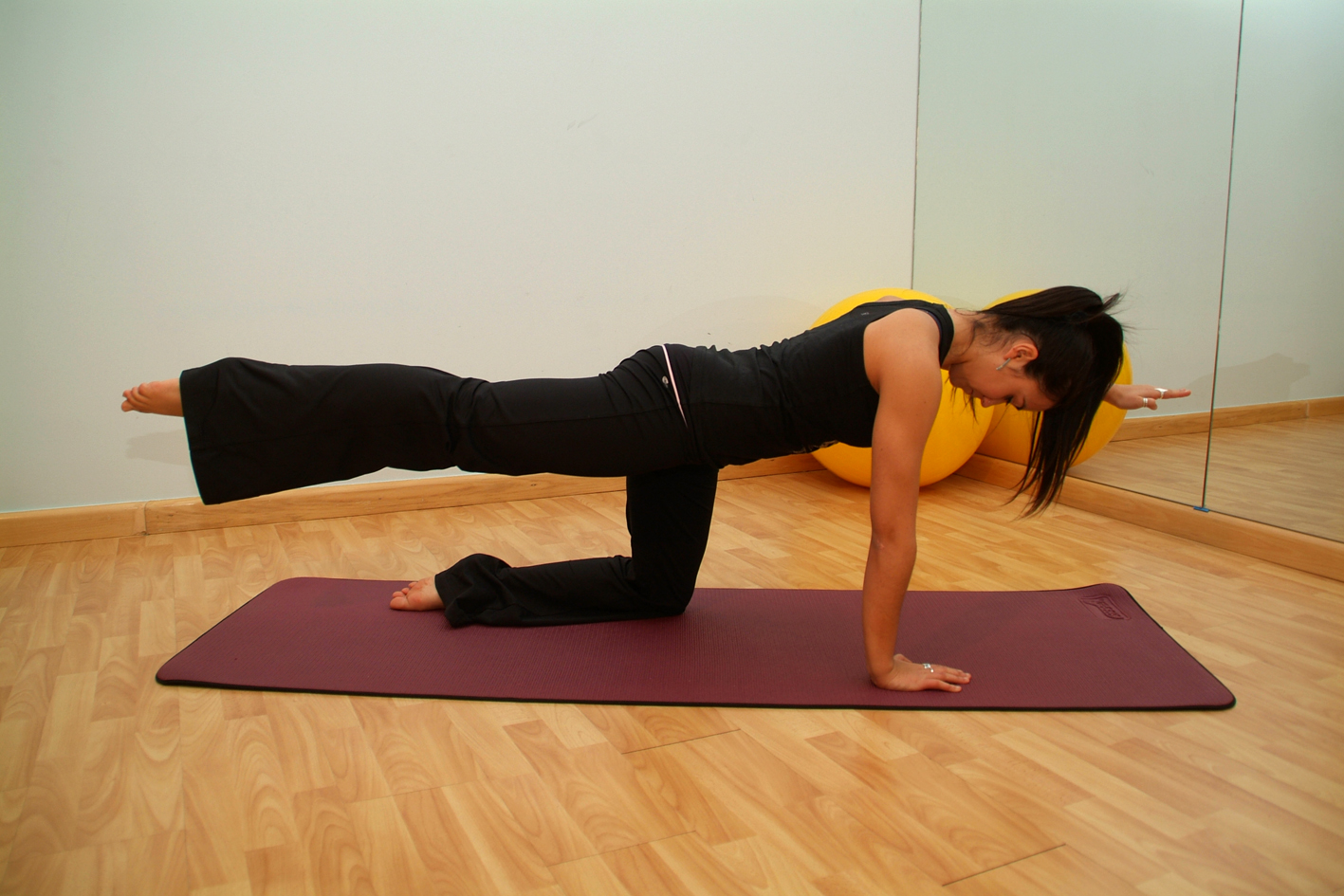
Finish your routine with some plank exercises. The plank will strengthen your abdominal muscles and help slim your waist. Lie on one side of your body with your feet together. Bend your elbow and place your forearm on the floor parallel to your body. Bend your other elbow and place your hand behind your head for stability. Lift your body off the floor and hold the position for a 5 seconds. Lower your body and repeat the exercise 10 times. Switch sides and do 10 more repetitions.
You can increase the effectiveness of any exercise by adding hand weights, using an exercise ball or doing more repetitions. Check with your doctor if you are beginning an exercise program or if you have any joint or other medical conditions. A personal trainer can help you develop a fast, effective workout plan to help keep you on track.

Flatter Abs by Christmas

Do you want to looks slimmer, feel better and fit into that special outfit for the holiday? You can achieve a flatter stomach, a stronger core and a leaner shape by eating health foods and performing a few easy-to-do abdominal exercises every other day. Start now and you should start to see results in about 3 to 4 weeks. See your doctor for a complete check-up before starting any exercise program. You can achieve a slimmer waist and stronger abs by eating nutritious foods and regular exercise. A personal trainer can help you set realistic goals, develop a plan to achieve your goals and help keep you motivated. 


Photo Credit: Localfitness.com.au
Begin your flatter abs program by adjusting your eating habits. Most people eat three large meals each day and a couple of snacks between meals. Some people tend to over-eat when meals are hours apart. To avoid hunger and still get all the nutrition you need, eat smaller, more frequent meals. Frequent smaller meals will keep your metabolism working and your blood sugar stable. Start with breakfast that includes natural grains and fruits. Enjoy a mid-morning snack of granola, nuts or sliced fruit. Avoid fast food for lunch if possible. Bring a salad with low-fat dressing, peanut butter sandwiches on whole wheat bread and yogurt. An afternoon snack of  fruit and nuts will give your body a boost of energy and nutrition that will help prevent fatigue and hunger. Lean meats, whole grain pastas, rice, fresh vegetables and dried beans are a great choice for dinner to supply your body’s protein, vitamin and energy needs. A vegetable or fruit smoothie a couple of hours after dinner can help you avoid the urge to eat something before bed.

Exercise your abdominal muscles in the morning or evening at home or on your lunch break at work. Take advantage of your company’s fitness center if it has one or join a gym near your work. Start your ab program with a few belly roll exercises in the morning. Sit on the floor and bend your knees. Keep your feet flat on the floor and stretch your arms in front of you palms toward the floor. Breathe out and roll your body back onto the floor. Keep your feet flat on the floor. Breathe in and roll back up. Repeat this exercise 20 times and increase to up to 50 times as you grow stronger.


Belly curls will slim your abs and strengthen your core. Lie on the floor with your knees bent toward your chest. Raise your feet off the floor and gently lift your bottom. Roll back so that your upper back and shoulders are touching the floor. Hold the position for about 2 seconds and then return to the start position. Perform this exercise 10 times. Gradually increase the number of repetitions until you can do 20 belly curls.


You can slim your waist by doing crunches. Lie down on the floor and bend your knees. Put your hands behind your head and inter-lace your fingers. Point your elbows toward the ceiling. Lift your left shoulder off the floor and try to touch your right knee with your left elbow. Relax and repeat the exercise on the other side. Start with 10 repetitions and build to 20 repetitions.


A personal trainer can help you learn to make healthy food choices and develop an exercise plan to achieve a slimmer, stronger and flatter abs!