Want to Lose Weight? Eat More!

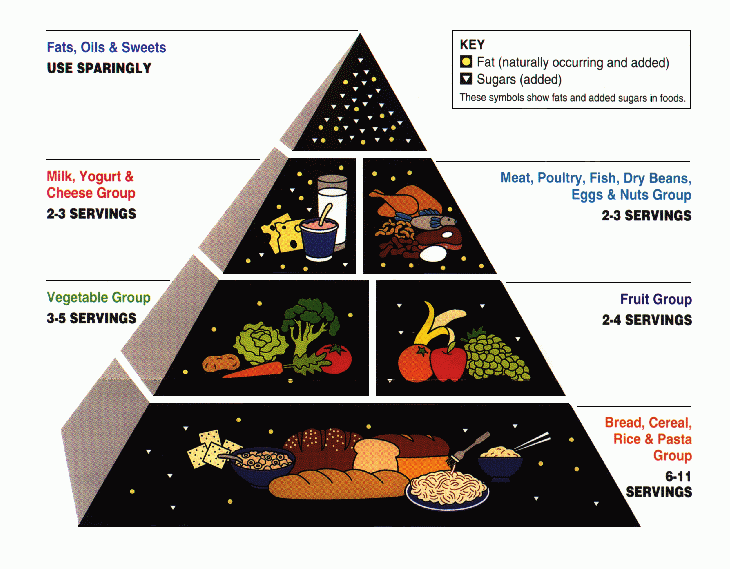
If you have been on the diet roller coaster, you know how difficult it can be to lose weight and keep it off. There is no magic pill. You might think cutting calories alone is enough, but it isn’t. A healthy diet combined with exercise is the best recipe  for permanent weight loss. You should not sacrifice nutrition for weight loss. The average person needs about 2000 calories per day, but what are you getting from those calories? Don’t deprive yourself of nutrition or energy, but change your eating habits for weight loss.  You can eat more food without packing on the pounds — if you eat the right foods. In addition to eating more fruits and vegetables, eat more often. Instead of 3 big meals each day, eat 5 smaller meals. More frequent eating stimulates your metabolism to keep your body burning calories all day long.

Fruits and vegetables are powerhouses of nutrition. These delicious foods contain vitamins, trace minerals and fiber, which helps you feel fuller faster and longer.  An apple contains about 4 grams of fiber, as well as vitamin C and potassium. Green beans are loaded with fiber and vitamin C, too. Sweet potatoes can help satisfy a sweet tooth while providing your body with more than 200% of the daily recommended amount of vitamin A. You’ll also get some vitamin C, vitamin E and the trace elements iron and magnesium. You get all this nutrition (not to mention delicious flavor) at the cost of about 100 calories. Strawberries have 3 grams of fiber and a full day’s dose of vitamin C. Eat more whole grains, too, and switch from white flour processed pasta and bread to whole grains. You can eat more of your favorite grain foods without adding more calories. You’ll enjoy the benefits of more fiber, too.

When snacking between meals causes you to add the pounds, trade your chocolate, cookies and cheese crackers for fresh or dried fruits. Avoid canned fruits which are often packed in high-calorie syrup. Grapes, raspberries, strawberries, blackberries and blueberries contain plenty of fiber, vitamins and cell-saving antioxidants.  You can also take fresh or dried fruits to work for a snack during breaks. Check the labels on dried fruits to make sure that they are natural without sugar and preservatives.

Beware of liquid calories! You probably don’t realize how many calories you add to your day in beverages. Plain coffee has only 2 calories but adding only one teaspoon of whipping cream adds more than 50 calories. One teaspoon of table sugar has 49 calories. Half and half is an addition 20 calories. Even fat free milk adds 5 calories. Have a look at the WebMD website to see how many calories your favorite beverage adds to your diet. Opt for flavored drinks, unsweetened tea and plain coffee instead of sweet drinks and soft drinks.

8 Foods to Boost Energy

Photo credit: Vi Cult CC-BY-SA-3.0

The saying, “You are what you eat” rings so true for many of us, and who doesn’t want more energy on a daily basis? This article highlights 8 readily available foods to keep energy levels up and spirits high.

WATER

Though technically not a food, water is our number one essential life force! Did you know that at the first moment of thirst, our bodies are already in dehydration mode? Thirst is the body’s signal of a desperate need to hydrate. Water helps to carry nutrients to your cells, and many of us are lacking hydration on a daily basis. At the first sign of sluggishness, drink a large glass of water. Chances are, you’ll perk up! You will always feel best when you are properly hydrated.

FRESH FRUIT

Fruits contain carbohydrates and sugar, both of which turn to glucose and all of which have gotten a bad wrap in recent years. But in proper doses, they are essential for your body to function energetically. Glucose is easily metabolized into quick energy, making fruits a great pre-workout snack. Some great choices include bananas, grapes, apples, citrus fruits and dates.

NUTS

Nuts contain great healthy protein, fats and fiber that help keep you full. They contain an array of vitamins and minerals such as vitamin E, and are high in omega-3s. Nuts also contain magnesium, which helps the body convert nutrients into energy.  A small handful (about ¼ cup) packs a powerful energy punch.

EGGS

There’s a reason why eggs have been a staple breakfast food for centuries. Eggs are full of amino acids such as leucine, which plays an integral role in how muscles use glucose. Eggs also contain B vitamins such as riboflavin, folate, B12 and B6, vitamins all essential for energy production. Because of this, eggs are said to be helpful with endurance training.

Having a proper breakfast also jump-starts your metabolism for the rest of the day, so eat those eggs!

QUINOA

Quinoa is one of “nature’s perfect foods” and boasts itself as one of the most protein rich foods that we can eat. It is a complete protein on its own, meaning that it contains all 9 essential amino acids. Quinoa is high in Riboflavin (Vitamin B2), which helps in the production of energy within our cells. B2 also improves energy metabolism within brain and muscle cells, and helps cells release energy from carbohydrates, fats and proteins.

DARK LEAFY GREENS

Green leafy vegetables are true nutritional powerhouses and are some of the most nutrient-dense foods in existence. They are packed with vitamins and minerals that contribute to stable blood sugar levels that in turn help maintain energy levels. Dark leafy greens are also full of iron, which is essential in maintaining red blood cell health throughout the body. Red blood cells are full of oxygen, and iron allows for them to move around at maximum potential. Greater oxygen distribution leads to more alertness and higher concentration capabilities. Popeye was definitely onto something!

KOMBUCHA

Kombucha is a fermented tea drink that has amazing detoxifying and probiotic properties. These detoxifying effects allow for your body as a system to function to its greatest potential. This means that on a cellular level, things are running smoothly and your body can use its energy sources efficiently. In short, this means more energy for you!

DARK CHOCOLATE

We’re talking the good stuff here. In small amounts, dark chocolate with higher cacao content can have some positive effects on your energy levels. Besides containing a small (and safe) amount of caffeine, it contains vitamins and a stimulant similar to caffeine called theobromine. When choosing a bar, the darker the better. If you can also keep the ingredient list to a minimum, this ensures whole ingredients that are less processed and easier for your body to process and reap the benefits.


3 Pilates Exercises for Your Abs

Stretch for Flexibility

Photo Credit: José Vílchez

Getting and keeping a firm, toned abdomen can become increasingly difficult as we age. Some increase in belly fat may be due to aging, but a more sedentary lifestyle combined with high calorie diets can also pack on the pounds around your waist. When women reach middle age, hormonal changes mean that excess calories are stored as fat around your belly, on your hips and on your thighs. Weight gain and an increased waist line is not inevitable. Staying active, exercising and cutting calories can help get you trim and keep you fit. Pilates is a good way to work your abs while strengthening your arms and legs.

The toe dip Pilates move will work all of your abs, especially your obliques and lower abs. Lie on your back and bend your knees. Lift your legs, with your knees bent, until your thighs are straight and your calves are parallel to the floor. Place your hands on the floor on each side of your thighs with your palms down. Squeeze your belly and breathe in. Point your toes and lower one foot toward the floor. Keep your knees bent. Stop just an inch or two inches above the floor. Hold the position for 2 to 3 seconds and then exhale as you bring your leg back to the start position. Repeat 10 times on each side. You can do 10 repetitions with one leg and then 10 more with the other leg, or alternate legs until you do 10 repetitions on each side.

Leg circles work all of your ab muscles while strengthening your legs. Lie on the floor with your legs stretched out. Raise one leg toward the ceiling and point your toes. Make sure your hands are placed palms down on either side of your thighs. Make 10 small circles with your toes toward the left and then 10 small circles to the right. Bring your leg back to the floor and repeat on the other side.

Finish off your Pilates ab workout by doing a set of leg kicks. Lie on one side of your body with your legs straight out. Place one leg on top of the other and support your upper body on your elbow. Lift your ribs off the floor. Place your other hand (the one that is not supporting your weight) on the floor in front of your tummy to support your body and provide stability. Raise your top leg a few inches and point your toes. Swing your leg forward in front of your body as far as is comfortable for you. Hold the position for 2 seconds and then swing your leg back to the starting position. Do 10 repetitions on each side.

Beachbody

Exercise Band Workouts for Your Hips and Thighs

The hips and thighs are difficult to slim and trim, second only to trimming belly fat. You can squat, lunge and extend and still have not get the results you want. Adding an elastic exercise band to your workout might be just the thing that helps improve your workout. Adding extra resistance to your exercise routine improves the effectiveness of your workout. To burn fat, you have to reduce your calories and do aerobic exercise, such as running, jogging, swimming or bicycling.  Do strength training exercises to improve your muscle tone and to add lean muscle mass while strengthening your muscles.

You can find exercise bands in most sporting goods stores or even at your local gym.  They are generally inexpensive, compared to other exercise equipment, and come in a variety of strengths. Beginners should start using bands that offer the least resistance and gradually move to more resistant bands as your strength increases. You can find bands that have handles or no handles. You can attach them to a door frame or a permanent wall anchor. Circular bands that wrap around your ankles or thighs are great for working your lower body while leaving your hands free.

Wrap a circular band around your ankles and lie down on the floor to do band leg extensions. Lie on your back with your legs extended. Squeeze your abs and lift one leg straight up toward the ceiling, stretching the band as you lift your leg. Hold for 2 to 3 seconds and then lower your leg back to the floor. Do 10 to 15 repetitions on each side. As your legs grow stronger, hold the lift up to 10 seconds or do more repetitions. Increase the resistance or the number of repetitions when you can do 12 repetitions without experiencing muscle failure.

Increase the effectiveness of your regular set of squats by adding a medium resistance exercise band. You can use two bands, one secured to each leg, or stand on one long band and hold each end in your hands. Move to your squat position and hold the handles of the exercise band with your palms up (or wrap the band around your hands) until there is slight tension on the bands. Push yourself up from the squat but keep your hands about waist level with your elbows bent and your palms upward. This exercise will not only add resistance to your lower body workout, it is also a great way to strengthen your arms and shoulders. Do 10 to 15 repetitions and then rest for one minute before doing another set of 10 to 15 squats.

Have a seat for this next exercise that will work your inner and outer thighs. Sit in a sturdy chair without arms and wrap an exercise band around your legs just above your knees. Keep your feet flat on the floor and your back straight. Spread your knees apart pushing against the resistance band. Hold the position for 2 seconds and then relax. Repeat for 10 to 12 repetitions.

Depression, Anxiety & Exercise

We all know that exercise is good for our bodies, but did you know that exercise may help you manage anxiety and reduce the effects of depression? People who exercise regularly enjoy a greater feeling of well-being and may experience less anxiety and depression than people who do not exercise. According to the Mayo Clinic, exercise causes the brain to release neurotransmitters and endorphins that help ease the symptoms of depression. In addition to the feel-good brain chemicals (endorphins and neurotransmitters), exercise increases your body temperature which, according to the Mayo Clinic, may help to calm you. Exercise also reduces the immune system chemicals in your body that can exacerbate symptoms of depression.  Once you begin to see the physical benefits of exercise, such as strengthening your muscles and losing weight, you will also feel better about your physical appearance which will also help to lessen some types of anxiety and depression.

Exercise doesn’t mean you have to go to the gym or work out on the treadmill or elliptical. Any physical activity that gets your blood pumping and causes you to break a sweat is good exercise. Even mowing the law, gardening and other types of yard work, such as raking leaves or shoveling snow, counts as exercise. Even casual exercise, such as walking for 30 minutes every other day, may help you realize less anxiety and improvement in your depression. Improving your diet to include healthy foods such as vegetables and low-fat foods and exercising three to five days each week may have a significant effect on your physical appearance as well as your mood. You don’t have to exercise for a full 30 minutes at any one time. You can exercise in short 10- to 15-minute intervals 2 to 3 times in a day.

Finally, select activities that you enjoy. If you like to play sports,   join your company’s softball or bowling league. Finding a friend for 20 to 30 minutes of handball, racquetball, basketball or tennis two times each week can be a tremendous boost to your mood. You’ll also enjoy the companionship and socializing associated with team sports. Nature lovers might enjoy a walk in a park or for the more adventurous, hiking a nature trail. Swimming is a good way to get exercise and lessen the impact on your joints. Whatever you decide to do, do something fun and stick with it. Soon you should begin to enjoy the many benefits of exercise.

6 Ways to Lose Weight Quickly

Photo Credit: Michael L. Baird CC-BY-2.0

There are healthy and unhealthy ways to losing weight quickly. Relying on quick fixes like appetite suppressants, liquid diets, herbal formulas and weight loss supplements will not produce long-term healthy weight loss. Although these methods might help a little, the best approach is make some big changes to your exercise and eating habits. As you begin your healthy weight loss journey, it’s imperative that you stay focused, consistent, motivated and disciplined to reap the best weight loss results.

Lose weight quickly by first eliminating foods that are high in sodium, fat and sugar, such as white flour products, deep fried foods, processed meats, fast foods, candy, chips, commercial baked goods and high-fat dairy products. Instead, select foods that are abundant in nutrients like lean meats, vegetables, whole grains, fish, nuts, fruits, seeds and beans.

Reduce your total caloric intake and increase your activity level to lose weight fast. To lose one pound of body fat, you need to cut 3,500 calories per week through diet and exercise. For example, you could burn 250 calories through exercise and then cut 250 calories from your diet per day. The key is to reduce your daily intake by 500 calories to lose one pound per week. Safe weight loss is one to two pounds per week. Losing more than that is not healthy because more than likely you’re losing muscle and/or water weight. And if you lose weight too quickly by not consuming enough calories, it can cause your body to go into starvation mode, causing your metabolism to slow down and store more fat.

Avoid high calorie, sugar-laden beverages, such as sweetened tea, sodas, flavored coffee drinks, milk shakes, and fruit juices. Liquid calories can add up fast and can easily sabotage your weight loss efforts. Instead, drink water and other healthy beverages like green tea or vegetable juice.

Eat more often to burn extra calories throughout the day. Every two to three hours during the day, eat a small, well-balanced meal. Combine a healthy balance of complex carbs and protein, and make sure you eat breakfast every morning. For example, a bowl of oatmeal with blueberries is an ideal way to start your day. Add soy milk, walnuts and yogurt for an extra dose of balanced nutrition.

Boost your metabolism and burn more calories all day long by building lean muscle. You will burn calories even while you’re at rest because muscle is metabolically active tissue. Weightlifting workout routines that target all of your major muscle groups will help you to build muscle. For example, you can do chest presses, back rows, shoulder presses, bicep curls, triceps dips, squats, hamstring curls and calf raises. Start with one set of 12 to 15 repetitions, two to three non-consecutive days a week.

Lastly, do some calorie-blasting cardio interval training to really ramp up your weight loss efforts. The harder you push yourself, the more calories you will burn. First, do a 5-10 minute warm up and then begin your workout. Here’s an example of a 20 minute cardio interval routine on a bike: 1 minute of pedaling as fast as possible, and then 2 minutes of slow, recovery pedaling. Continue this pattern for a complete 20-minute workout routine. Finish by cooling down for 5-10 minutes. Do your cardio routine 3 non-consecutive days a week. For example, you can do your cardio on Monday, Wednesday and Friday and your weight training on Tuesday and Thursday. Choose a form of exercise that you enjoy such as cycling, walking, running, swimming, stair stepping, jumping rope or elliptical training.

5 Best Ways to Lose Body Fat and Keep It Off

Barbell_Group_Fitness_Class2

Credit: LocalFitness.com.au

Reducing your body fat can provide many health benefits. Not only will you improve your physical appearance and energy levels, but also decrease your chance of developing chronic inflammatory diseases such as heart disease, diabetes and high blood pressure. As you read this article, remember that positive lifestyle changes take time to implement, so take it one step at a time and soon you’ll be on your way to a healthier, lighter you!  


Increase Lean Muscle

Tackle weight loss head on by incorporating both cardio and resistance training into your daily fitness routine. Many people overlook the fact that you can increase your metabolism and burn more calories all day long by simply increasing your lean body mass with regular resistance training. According to the American Council on Exercise, muscle tissue will burn nearly 10 calories daily per pound, but fat only burns about 3 calories daily per pound. Staying consistent with both cardio and strength training along with a healthy eating plan will definitely help you reach fat loss goals for the long-term.

Make Your Cardio Sessions More Intense

Another common mistake people make when trying to burn body fat is taking the time to exercise but not using that time wisely. They decide to do 60 to 90 minutes of cardio every day, but then they spend the whole time cycling on an exercise bike or walking at an easy pace on the treadmill without putting any real effort in. This results in very limited weight loss and very unproductive cardio workouts.

So if you’ve made the commitment to cardio, make sure you’re giving it your all during every session and working out to the best of your ability. If you’re not sweating and not feeling physically tired, then you’re not trying hard enough and need to increase the intensity. Remember: the harder you push yourself, the more calories you’ll burn for greater fat loss results, and you won’t have to increase your workout times. 

Spice Up Your Meals

Adding a little spice to your meals will help to increase the amount of body fat you burn because spices contain thermogenic properties, which will raise your body’s temperature and require the body to burn additional calories to regulate. So if spices aren’t currently part of your diet, start adding them to some of your meals today and give your fat loss efforts a small but notable boost.

Decrease Processed Food Intake

Processed foods are not only bad for your health but they generally contain a lot more calories than nutrient-dense whole foods such as dark green leafy vegetables, fruits, whole grains, beans, lean meat, fish, nuts and seeds. Another reason to avoid processed food is they contain harmful chemicals, preservatives and fats, such as food coloring agents, trans-fats, nitrites, excess sodium and sodium compounds that preserve and enhance flavor. Therefore, by reducing your processed food intake and consuming natural foods the majority of the time, you’ll cut down substantially on your total caloric intake and improve your health without having to decrease the amount of food you’re eating.

Reduce the Calories You Drink

Many people unknowingly sabotage their weight loss efforts by drinking too many liquid calories. Therefore, if you’re serious about losing weight, make an effort to stick to natural low-calorie drinks such as water, black tea, green tea, yerba mate tea or vegetable juice. In fact, many studies have shown that green tea and yerba mate tea are very beneficial for weight loss. Sticking to low or zero calorie beverages can instantly cut hundreds or even thousands of calories from your daily intake and have a hugely positive effect on your overall fat loss.

These five fat loss tips may seem simple but they’re highly effective. So if you’ve been struggling to lose weight for some time, make sure you start implementing them today and watch the pounds melt away.


Further reading:

American Council on Exercise: One of the more common perceptions in some fitness circles is that strength training individuals lose weight because one pound of muscle can burn approximately 30-50 calories per day. Is this claim valid?

http://www.acefitness.org/fitnessqanda/fitnessqanda_display.aspx?itemid=358


5 Tips to Improve Your Cardiovascular Fitness

Improving your cardiovascular fitness offers many health benefits, such as better circulation, increased metabolic rate, more energy, greater strength and endurance, protection against chronic disease and much more. Therefore, my goal here is to help you enjoy all these benefits and more by providing you with five tips to improve your cardio fitness.

Play A Sport

Sports are an excellent way to boost your cardiovascular fitness for a number of reasons. They’re a lot of fun, they allow you to socialize with your friends and meet new friends and they generally have a regular schedule, which guarantees that you get consistent cardiovascular exercise. Furthermore, the nature of sports means that you’ll have periods where you’re working at an all-out intensity and periods where you’re exercising at an easier, slower pace. This kind of variety will give your cardiovascular fitness an enormous boost.

Participate is a High Intensity Exercise Class

High intensity exercise classes are another very beneficial way to increase your cardiovascular fitness. Your instructor will not only help you to stay on track, but also make sure that you put in your best effort and not give up. Also, when you participate in a high-intensity exercise group, you will see everyone else working hard and encourage you to do the same. Following a weekly class schedule can also help you to work on your cardiovascular fitness on a regular basis.

Do Cardio Whenever You Can

While it’s a good idea to have scheduled cardiovascular activities such as exercise classes or sports in your routine, you should also look for opportunities during the day where you can spontaneously do some extra cardio.

Walking is probably the easiest way to fit extra cardio into your day and by taking the stairs or leaving the car at home, you can easily add lots of additional walking to your routine. However, if you’re feeling particularly adventurous, you can go beyond walking and do sprints, jumping jacks, burpees or more whenever you have some time to spare.

Do High Intensity Cardio Intervals

No matter what form of cardio you choose to do, you should try to add in some high- intensity intervals into your workout routine. Exercising at high intensity will test your current cardiovascular fitness to its limits and build up your lungs and heart in the process, which results in improved cardiovascular fitness every time you work out. In addition, you will burn more calories than fat, which means that you will expend more calories for greater fat loss down the road.

In a nutshell, you’ll end up in better physical condition with less body fat and better overall health. All very good reasons to add high intensity training into your exercise sessions.

Consistency Is Key

The four tips above are all tremendous ways to develop your cardiovascular fitness. However, if you’re not consistent with your cardio training, they’ll yield limited results. Therefore, to get the most out of these tips, make sure you’re doing some scheduled cardio training at least three to four times per week and including spontaneous cardio exercises into your routine every day.

So, if you find yourself having to catch your breath after walking up the stairs or rushing to catch a bus, now is the time to give your cardiovascular fitness a kick. Simply implement the five top tips from this article and you’ll start to see your cardiovascular fitness rapidly increase and enjoy all its health benefits.

Stay Cool & Hydrated During Summer Workouts

Bibikoff CC-BY-2.0

The summer heat is sizzling but you can still enjoy outdoor exercise if you take a few precautions. When it’s hot outside your body sweats to help you cool off and stay cool by evaporating and taking heat away as your sweat evaporates. High humidity can prevent your sweat from evaporating. That’s one of the reasons you feel so miserable on high humidity days. Make sure that you drink enough water to stay hydrated. You can’t rely on how thirsty you feel to stay hydrated, so make sure you drink plenty of water before, during and after your workout.

Drink 2 eight ounce cups of water before you start exercising outdoors on hot days. Drink another 8 ounces every 15 to 20 minutes during your workout. Carry a bottle of water if you are biking, walking, jogging or running. When you finish your outdoor workout, drink another 8 ounces of water. You can drink other types of fluids if you get bored with water. Dilute some fruit juice with water or try a sports drink in your favorite flavor. Juice and sports drinks can not only keep you hydrated but also replenish carbohydrates, minerals and electrolytes. Many sports drinks increase your blood sugar which can become depleted during exercise. Avoid energy drinks that contain caffeine as these can actually increase dehydration and increase your heart rate.

Don’t push yourself too hard when the temperature reaches 80 degrees Fahrenheit or higher. Exercise indoors in an air conditioned gym if the weather is too hot or humid. Learn the warning signs of heat illness. Muscle cramps, headache, dizziness and fatigue may be signs of serious heat illness. Stop exercising, rest and re-hydrate your body. See a doctor if symptoms persist.

Fight Fat With Food!

Photo: qoo monster

When you are trying to lose weight and build muscle, it’s important to get plenty of exercise and to eat foods that support your weight loss goals while providing good nutrition. You can’t build muscle without the raw materials provided by the foods you eat. Cutting calories and exercise will help you lose weight, but don’t sacrifice nutrition to drop those extra pounds. There are many foods that are high in nutrition but low in calories and fat. Eat several small meals throughout the day, including healthy snacks, to keep your metabolism revved up throughout the day.

Greek yogurt is a delicious food that has twice as much muscle-building protein as other types of yogurt. Protein is also slower to digest than other nutrients so you feel fuller, longer. Feeling full is a great way to help you avoid sugary snacks and high calorie munchies between meals. Add an extra nutritional punch to your Greek yogurt by stirring in some fresh fruits, such as blueberries, raspberries or slices of strawberry. Berries are high in fiber which can also help you feel full. Plus you will get a good dose of antioxidants. Snack on apple and pear slices between meals for a quick boost of energy from natural sugars, proteins and fiber. Grapefruit isn’t a magical fat-burning food, but you will feel fuller longer because it is loaded with water-soluble fiber and nutrients.

Whole grains, including quinoa, wheat and oats, should be part of every person’s diet even if you are not trying to lose weight. Whole grains contain protein, fiber and are loaded with vitamins and trace minerals that your cells need to function normally. Replace your processed flour pasta with whole grain pastas to cut calories while still enjoying the foods you love. Beans and brown rice are excellent sources of fiber and muscle building protein. You can also spice up your fat fighting diet by eating hot peppers! Hot peppers contain a natural compound called capsaicin that curbs your appetite and boosts your metabolism. You can also get the protein and nutrients you need from eggs. One egg has 7 grams of protein but only about 75 calories. If you have high cholesterol, check with your doctor about the number of eggs you should eat each week.