Get Lean With Cardio

Photo Credit: Meagan E. Klein USN PD
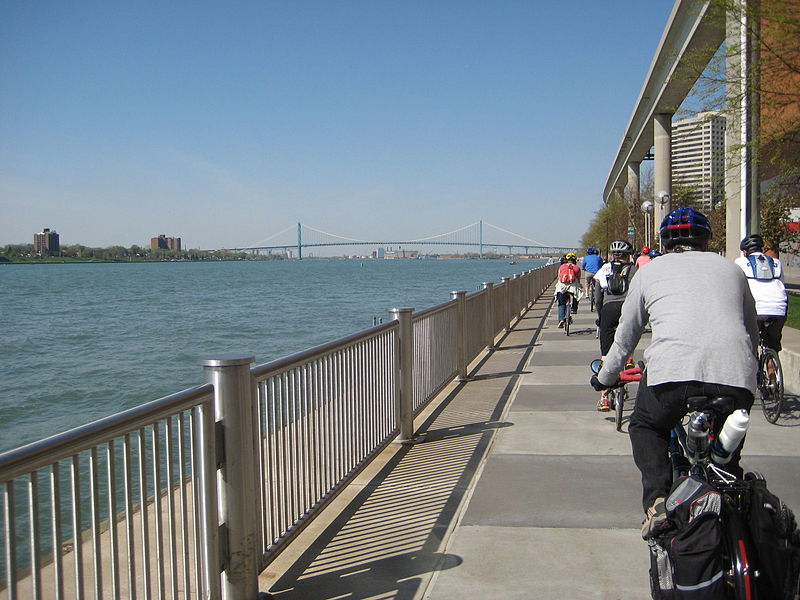
A cardiovascular workout, or just cardio, is the best way to burn fat, strengthen muscle and lose weight. Cardio is any exercises that increases your heart and breathing rates. Your metabolism will kick in and burn calories while strengthening muscle. Most people are familiar with running and jogging for cardiovascular exercise, but any exercise that gets your heart pumping and your body sweating is a cardio workout. Brisk walking, swimming, bicycling, step aerobics and aerobic dance classes burn fat and strengthen the entire body. Cardiovascular workouts help reduce the risk of heart disease and improve overall heart and lung function. Your bones are also strengthened by cardio workouts. Cardio will help lower your bad cholesterol levels and increase muscle mass. Make sure to check with your doctor and get moving today! 
Running and jogging are the best way to burn calories and lose fat. It doesn’t matter if you run outdoors in a park, around the block or on a treadmill. If you get your heart pumping, your lungs working harder and your body sweating, you are doing aerobic cardiovascular exercise that burns fat. Get at least 20 minutes to 30 minutes of cardiovascular exercise every day. If you are a beginner, start with 5 minutes to 10 minutes and gradually increase the cardio exercise time to about 50 minutes to 60 minutes as you grow stronger and more fit. Running and jogging put a lot of stress on the joints of your feet and legs. Make sure you wear shoes with support and adequate cushioning to protect and support your feet. When running or jogging outdoors, select a route with an even surface without obstacles. Many city parks have walking-running paths. If you are obese or have not exercised in years, start slowly by walking for about 10 minutes every day. 

Did you play jump rope with your friends as a kid? Jumping rope is a powerful cardiovascular workout that can burn more than 300 calories in half an hour! Wear some supportive shoes and start jumping rope. If you are a beginner, try to jump rope for 5 minutes at a time until you build up your strength. Gradually add 5 minutes of jumping every day until you can jump rope steadily for a full 30 minutes. 

Cool Down & Get In Shape With Water Aerobics

Photo Credit: Jorge Royan CC-BY-SA-3.0

Many people enjoy a refreshing swim or just splashing around in a pool on hot summer days. Swimming or just playing in a pool is a good aerobic workout. Water aerobic exercises are a safe alternative to regular aerobic exercise for some people. Those who have joint problems, such as arthritis, are overweight, pregnant and most older people, can benefit from water aerobics. Water aerobic exercises are extremely low impact. The water provides resistance, so just walking back and forth across a swimming pool is a good workout. Gyms and community centers often provide water aerobics classes complete with weights, floats and other exercise equipment, as well as trained fitness experts to help you get the greatest, safest benefit from your workout. 
Some of the benefits of water aerobics include improved endurance. The water resistance forces you to work your muscles without the danger of injury associated with weight bearing or high-impact exercises. Simply walking in the pool or swimming will improve your core strength as you engage your abdominal muscles to move against the resistance of the water. The water supports the weight of your body, which makes water aerobics a good exercise for pregnant women. You will stay cool during your workout, too.
Even though water aerobics is generally safe for most everyone, be sure to take some common sense precautions before beginning a water aerobics fitness program. Be sure to see your doctor for a complete physical checkup and tell your doctor that you want to start water aerobics. Make sure that there is a trained and certified lifeguard on duty at the pool where you will be exercising. Remember to drink plenty of water before and after your workout. Stretch your muscles before entering the pool to prepare for exercise. Be very careful walking around in bare feet on the wet area around the pool. Don’t forget the sunblock if you exercise in an outdoor pool. 

Walking Poles

Photo Credit: Anwi CC-BY-2.5-IT

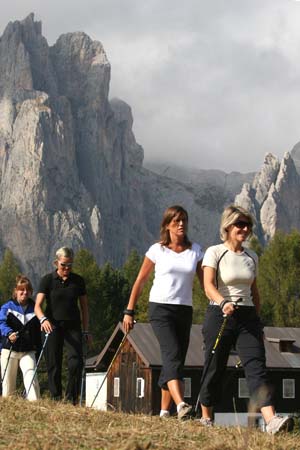
Walking using walking poles, called Nordic walking, is a great way to exercise your arms, shoulders, back and chest muscles during a walk. Nordic walking turns a leisurely walk into a full-body workout. The arm movements when Nordic walking gets your heart pumping for aerobic fat burning. In addition to increasing the intensity of your walk, using walking poles also helps improve your balance and provides points of stability when walking on uneven trails. When you use walking poles, your posture is improved and your back muscles get a good workout while you walk. 
Using walking poles can seem a bit cumbersome at first, but once you get the hang of it, Nordic walking will feel natural. Start out by holding the poles in your hands close to your body with the wrist strap loosely around your wrist. Grip the pole with a relaxed hand so that the poles can swing forward. Allow the poles to swing from your wrist while in your hand. Think about how your arms swing naturally when you walk. When your right foot is forward, your right arm swings toward your back and your left arm swings forward. When your lead foot touches the ground, swing the opposite pole forward and allow it to touch the ground parallel to the heel of your lead foot. As you step forward, push back on the lead pole and simultaneously bring the other pole toward the front in time with your stride. Keep your arms relaxed when walking. The goal is to swing the poles in rhythm with your stride. 

30 Minute Lunch Break Workout

Photo Credit: Alchaemia CC-BY-3.0 2010


Is it really practical to work out during your lunch break at work? Lunch break workouts can be highly effective and energize you for the rest of the work day. It will take a little bit of planning ahead, but you can make the most of your break with an in-office workout for your whole body. Take a lunch break workout every other day, such as Monday, Wednesday and Fridays.  If you have access to a gym and showers at your place of work or a gym nearby, take advantage of the opportunity. If the nearest gym is too far away or too expensive, you can still get a pretty good workout right in your office.
Pack a light lunch of fruits and vegetables on the days you plan to workout and bring some comfortable exercise clothing. Change into your workout clothes and take a brisk walk to a nearby park or ride a bicycle for 30 minutes. When the weather does not permit outdoor exercise, stay in and work out in your office or in the company fitness center. Some exercises you can do right in your office or in the company break room are squats, leg stretches, isometric wall push exercises, push-ups, sit-ups and stretches. Exercise for 20 to 30 minutes, three times each week, if you have an hour break. Exercise for 15 minutes if your break is only a half hour. Spend 5 minutes warming up with some stretches and use the last 5 minutes to cool down with some stretches.
Many city parks provide bike and walking trails where you can get a good workout by taking a brisk walk, a power walk, jog for 20 minutes or ride a bicycle. During warm weather, you can exercise for 30 minutes and then enjoy a healthy lunch in the park. If your line of work or inconvenient location prevents you from getting exercise during your lunch break, take 30 minutes immediately after work to exercise. You will feel more energized and less tired, even after a long day at work.


Social Fitness

Photo Credit: www.localfitness.com.au
Do you exercise alone at home or at the gym? Sometimes belonging to a group of like-minded people can be a great motivator. Friendly competitions or simply sharing time with others can make exercise more enjoyable, strengthen friendships and increase your social circle. How can you engage your current friends and find new friends through exercise? Here are a few tips to help you get started:
Communities across the USA are starting walking groups. Join a local walking group to make new friends. Start your own walking group if you can’t find one in your area. Recruit current friends, family and co-workers. Encourage them to bring someone with them, too. Schedule walks when the most people can join in the fun and exercise. Choose start locations that are convenient to the majority of the group and have fun!
Take a dance class for the aerobic exercise and to make new friends. Dancing, like ballroom dancing or Salsa dancing, is a low-impact form of exercise that is effective and fun! You can probably find a dance class close to your home. You don’t have to have a dance partner to join a class. There are almost always partners ready to dance with you. Line dancing is a popular dance style and doesn’t require a partner. You’re sure to make new friends and get a good workout at a dance class. 
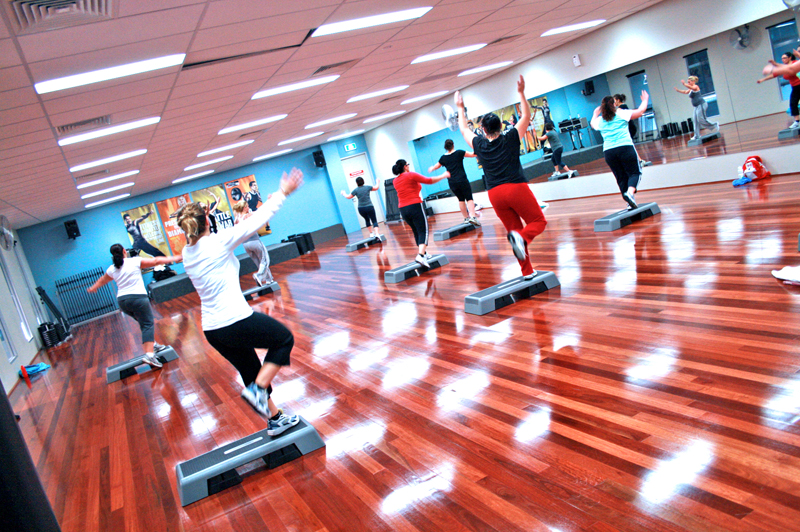
Most gyms offer group exercise opportunities, such as yoga, martial arts, Pilates and dance aerobics classes.  Join an exercise group at your local fitness center or gym to make friends and get fit at the same time. Those who need a more personal touch when it comes to exercise may consider a small-group exercise class offered by certified personal trainers. Personal trainers sometimes offer group training with 10 or fewer participants in the group. 

Summer Vacation Workouts

Photo Credit: Mavila2  CC-BY-SA-3.0

Summer is almost here! The family vacation is an American tradition, but you don’t have to take a vacation from fitness to have fun and relax. Take advantage of your vacation to add some variety to your workouts. Whether you are going to a luxury hotel, in a cabin by the lake, hang out at the beach or go camping in the mountains, you can stay fit and energetic during your vacation while having fun. 

Many people enjoy the quiet, serene surroundings of a cabin by a lake. America offers plenty of idyllic vacation spots on lakes. You know that swimming is a great way to get a good whole body cardiovascular workout, but you’re on vacation to relax, right? Take a relaxing dip in the lake to cool off from the summer heat and get a good workout, too. Walk out in the lake until the water is under your chin and your toes touching the bottom of the lake. Tread water for 5 to 8 minutes and then walk back to waist-deep water to rest for 2 minutes. Repeat this exercise 2 times ever day of your vacation. Canoeing and rowing are excellent  ways to work out your upper body, arms, chest and back. 
For those staying in a hotel while visiting an historic town or taking the kids to a popular amusement park, you don’t have to neglect fitness. Hotels usually have pools and fitness rooms complete with exercise machines and weights. After breakfast, head down to the hotel exercise facility and workout on a treadmill, stationary bicycle or elliptical for 20 minutes and then cool off with a few laps of the pool for 10 minutes. You will feel energized and ready to take on your daily vacation agenda. 

Camping and hiking are popular family vacation activities. Mountain hiking and camping offer numerous opportunities to exercise and stay in shape on vacation. Getting to your campsite will be a great workout, but don’t just sit in the shade once you set up camp. Exercise by exploring for 15 minutes in the morning and 15 minutes in the evening. Don’t walk alone, carry your cell phone in case of emergency and a GPS device to help you find your way back to your campsite. 

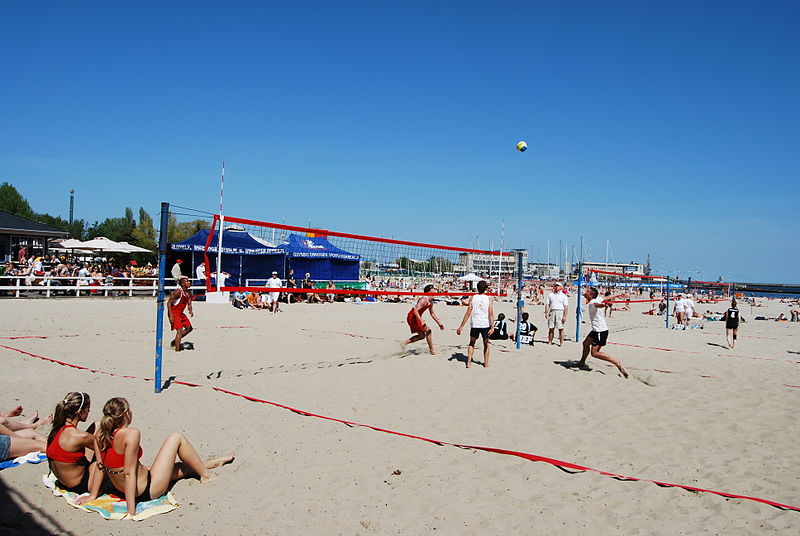
If you are vacationing at the beach, you will get a good workout just walking in the sand. The sand provides resistance that you can’t get walking on solid ground or on an exercise machine. You will definitely feel the positive effects in your shins, ankles, feet and calves. Wear a wide-brim hat, sunblock and sandals because the sand can become very hot during the day. Walk for 15 minutes in the morning and 15 minutes in the afternoon to stay fit,  while enjoying the ocean breeze and the scenery. Enjoy a game of beach volleyball and toss a Frisbee with your kids to have fun while exercising.

Smart Workouts

Photo Credit: Kelly Gary USDOD PD
There are many myths about exercise. Despite the infomercials and wild promises, losing weight and getting in shape requires regular exercise and a healthy diet. There is no “magic” pill or overnight miracle exercise. You can make the most of your exercise program to shed more pounds faster and avoid injury. Make the most of the time you do have for exercise by working out smarter, not harder.
You’ve probably heard the expression “no pain, no gain.” Exercise shouldn’t cause pain. You may experience some mild soreness in your muscles if you are a beginner or if you try a new exercise, but persistent or sharp pain may indicate an injury. Mild soreness in the muscle tissue may be expected after a vigorous workout, especially if you try a new routine. Soreness that lasts for more than a couple of days, especially if accompanied by swelling or discoloration of the skin may indicate an injury that requires medical attention. If you feel any sudden, sharp or severe pain during exercise, stop immediately. See your doctor if the pain persists. 
One way to exercise smarter and help avoid injury is to warm-up before and cool-down after exercise by stretching your body. Many people don’t take the time to warm-up and to cool-down because of busy lifestyles and little time. Warm-up and cool-down for about 5 to 10 minutes. The warm-up will help prepare your muscles for more strenuous exercise to help you avoid injury. The cool-down will help your muscles begin to repair any tiny tears in the tissue, which causes muscle soreness. 
To get the most out of your workout each week, balance the three types of exercise: strength training, aerobic exercise and flexibility. Strength training includes resistance band exercises, weight lifting and isometric exercises that use your own body weight to strengthen muscles, such as push-ups and planks. Any exercises that gets your heart rate up is an aerobic exercise. Walking, running, swimming, riding a bicycle or playing a high-intensity game like tennis or basketball will get your heart pumping and your body sweating. Stretching and balance exercises help improve your flexibility. Yoga, tai chi, balance board exercises or just stretching out your muscles by reaching and bending can help improve your flexibility. 
You don’t have to work out for extended periods of time. You can spread it out over the day in 10-minute intervals. Spreading out your exercise throughout the day is a smart way to workout. Everyone should strive to get about 150 minutes of moderate aerobic exercise every week. You can cut the time spent exercising in half by getting 75 minutes of vigorous aerobic exercise weekly. Exercise daily to keep your metabolism up and your body in fat-burning mode. Exercise for 10 minutes in the morning, 10 minutes midday and 10 minutes in the late afternoon or early evening to get the minimum of 150 minutes of moderate exercise each week. 

Water Exercise

Photo Credit: Orgullomoore CC-BY-SA-3.0-migrated
Swimming is one of the most effective whole body exercises you can do. You don’t have to be an expert swimmer or even know how to swim to take advantage of exercising in water. Exercise in a pool can provide a hardcore aerobic workout for your whole body, including your heart and lungs. The water will support your body, take pressure off your joints and muscles while providing resistance to help strengthen  your muscles. If you are not a strong swimmer or you don’t know how to swim, wear a flotation device and make sure the lifeguard at the pool knows you do not know how to swim. Gyms that have a pool and organizations like the YMCA frequently offer water aerobics and water exercise classes for groups if you aren’t sure how to begin or don’t want to invest in water weights. Membership fees for community organizations are usually reasonable. Gym prices vary, but most offer programs at a reasonable cost. 
The easiest water exercise to do is to walk around in the pool. Enter the pool and walk to a point where the water reaches your waist. Walk back and forth across the pool in the waist-deep water to give your legs a good workout. Swing your arms naturally as you would when walking on land. Walk using a normal gait. Avoid pushing off with your toes and don’t lean forward.  Squeezing your abdominal muscles while walking will also give your abs a good isometric workout and help keep you from leaning forward. Walk across the shallow water 15 to 20 times. When  you can do 20 laps in the shallow water without becoming exhausted, try increasing the number of laps or walking in deeper water, up to your chest. 
Incorporate some weight lifting into your water exercise by using water weights. Water weights are like foam dumbbells. They create a lot of resistance in the water. Hold the water weights in your hands with your palms facing up and raise the weights up to the level of the water to exercise your biceps. Hold the weights with your palms facing the bottom of the pool and push the weights through the water toward your back to work your triceps. Try to perform 15 to 20 each of the biceps and triceps curls or until you are tired.  
Finish your water exercise with a few laps of the pool. Even if you don’t know how to swim, you should be able to do a few laps while wearing a flotation vest. If you are uncomfortable in deep water, swim back and forth across the pool in water no deeper than your waist. 

Stability Ball Exercises for a Strong, Toned Back

The stability ball, also called an exercise ball, is a superb way to improve your strength, flexibility and muscle tone. You can focus on your whole body or work specific muscle groups. Warm spring days are just around the corner and so are backless, short-sleeve and sleeveless fashions. You will want your shoulders, upper back and arms to be toned and firm for spring and summer fashions and trips to the beach. Try these three upper body strengthening and toning stability ball exercises to get you in shape fast.
Performing push-ups using a stability ball adds an extra dimension of strengthening and toning to the regular push-up.  Begin with the stability ball underneath your body with your hands and feet on the floor. Keep your palms flat on the floor directly under your shoulders. Breathe in and squeeze your abdominal muscles. Walk your body backward until the stability ball is under your stomach and extend your legs out, but keep your toes on the floor. Place your palms on the stability ball underneath your shoulders. Squeeze the ball with your hands and press upward with your arms to lift your body off the ball. Hold the position for a few seconds and then lower your body back toward the ball. Exhale when pushing upward and inhale when lowering your body back down. Keep your spine in a straight line from the top of your head to your heels. 
Photo Credit:  LocalFitness.com.au
Leg extensions strengthen your chest, arms and upper back. Start by draping your body over a stability ball placed under your stomach. Place your hands palms down on the floor under your shoulders. Breathe out and tighten your abdominal muscles. Lift your feet off the floor and try to keep your legs together. Make a straight line with your body from your head to  your heels. Point your toes for maximum extension. Hold this position for a few seconds. The longer you can  hold the position, the better. Exhale, relax and then repeat the extension. 

Concentrate on your back and shoulders with a shoulder extension workout. Position yourself on the stability ball with it in the middle of your body and your hands and feet on the floor. Stretch out your legs, but keep your toes on the floor. Walk backward until the ball is directly underneath your stomach and both legs are stretched out straight with your toes on the floor. Stretch your arms straight out in front of your body. Try to keep your body straight and avoid arching your back. Slowly bring your arms back until you form a Y shape. Continue bringing  your arms back until they are straight out from the shoulder and form a T shape. Hold this position for a few seconds and then bring your arms back to the start position. Breathe out and repeat the exercise. 

Different Kinds of Fitness: Which Is Right For You?

Photo Credit: Fishtoes2000 at en.wikipedia CC-BY-3.0

When you lead an active life that includes exercise and a healthy diet, you look better and you feel better. Your are at a lower risk for disease, including heart attack, diabetes, some types of cancer, stroke and high blood pressure. Exercise can also help you feel better emotionally by improving self-esteem and creating a sense of well-being. Sometimes it can be hard to find the time to exercise or to find a type of exercise you not only enjoy doing but one that will be right for you. There are so many ways to exercise, but how do you know what kind of exercise program will work for you? Choose the type of exercise that fits your lifestyle and will help you reach your fitness goals. 
Muscle strengthening is a type of exercise where the focus is on stronger muscles and building muscle tissue. Stronger muscles can help you lift heavier objects or to work and exercise longer before tiring. Muscle strengthening exercises include push-ups, sit-ups, isometric exercises and lifting weights. 

Aerobic exercise helps improve your lungs and your heart. Aerobic exercise increases the amount of oxygen to the cells of your body, especially to your muscles. Exercise that increases your breathing and heart rate is aerobic exercise. Aerobic exercise is most effective when you sweat and exercise for 30 minutes or more. Examples of aerobic exercise include dancing, running, jogging and bicycling. 
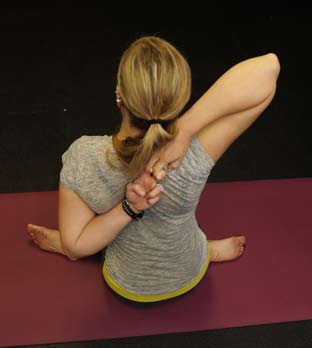
Flexibility is important to help you avoid injury and remain active without becoming sore and stiff. Stretching exercises help to improve flexibility. Stretching before exercise can help you to avoid injury during your workout. Stretching after a vigorous workout helps your body cool down and may help you avoid sore muscles.
Balance exercises help improve your posture as well as  your balance. Good balance can help you avoid injury during exercise. Poor posture can lead to back pain.Examples of balance exercises include standing on one leg for 30 seconds or longer, standing on your toes, balancing your body on your heels and standing on a balance board or a foam stability mat.  
The best fitness program will include all four types of exercise. Some activities, like swimming, bicycling, sports and yard work, include aerobic, strength, flexibility and balance exercise. When you choose activities or select an exercise program, do what you enjoy. You will be more likely to make exercise a habit if you have fun doing it.