Plyometrics

Photo Credit: Joe Mabel CC-BY-SA-3.0

Plyometrics is exercise by jumping explosively. It was originally designed to help improve the jumping performance of Olympic athletes. This form of exercise can increase your muscle strength. According to the American Council on Exercise, plyometric training can improve leg strength, muscle power, balance, agility and improve bone health. Plyometric exercises include hopping and jumping, which targets the quadriceps to improve vertical jump power and joint strength.

Low-intensity plyometric exercises are best for beginners or people who do not exercise regularly. Hopping on one leg and then alternating or jumping up to and then down from a platform, like a step-aerobics platform, are good beginning exercises. Intermediate to advanced exercises include leaping over obstacles and jumping up and down from platforms as much as 42 inches high. 

You should not begin a program of plyometric exercise on your own. A professional fitness trainer and personal coach can help you develop a program to help you reach your goals and avoid injury. If you want to add some plyometric exercises to your regular weekly routine, see a doctor for a physical and then find a qualified fitness trainer.

Lose Weight Without Dieting

Photo Credit: Evan Swigart CC-BY-2.0
One of the most difficult things about dieting is feeling deprived. Starvation diets don’t work. In fact, they have the opposite effect because deprivation causes the metabolism to slow down so that your body stores more food as fat instead of burning it for energy. Fad diets can be dangerous because you may not get all the nutrients you need from the food you are permitted to eat while on the diet. The best way to lose weight without depriving yourself, or endangering your health, is to eat smaller portions, avoid sugars and fats and exercise. Some minor changes in your lifestyle and in your eating habits can make all the difference in weight loss.
Eat home-cooked meals at least 5 to 6 days each week. Some restaurants provide calorie and fat content information for menu items, but most do not. Use fresh vegetables if possible, but frozen vegetables are just as nutritious. Those with a busy lifestyle can cook on weekends to prepare meals for the upcoming week. Frozen dinners often contain large amounts of sodium, sugars, fats and preservatives. Even frozen diet meals may contain too much salt. Cook your own meals from fresh ingredients to avoid hidden calories in your meals. Slow down and eat more slowly. Savor your food instead of gobbling it down in a hurry. When you eat fast, your brain and stomach do not have time to communicate with each other, which can lead to overeating.
Serve more vegetables with each of your meals. If you normally eat one vegetable side dish at dinner, add a second vegetable. The high fiber content of most vegetables will fill you up faster without adding calories. Avoid adding cream or cheese sauces, which adds fat and calories to your food. Cook with herbs and seasonings instead of sauces. 
Switch your white bread and rolls for high fiber, calorie busting whole grains instead. The next time you reach for a soda, pour yourself a glass of water or tea. Replacing one soda with a glass of water each day can help you avoid about 10 teaspoons of sugar every day. Add lemon, fresh strawberries or lime juice to your water for flavor. 

Stronger, Trimmer Inner Thighs

Photo Credit: Exey Panteleev CC-BY-2.0
Short pants and skirts weather is here! Are you unhappy with the appearance of your inner thighs and want to trim and tone your muscles? It’s difficult to “spot train,” but you can “target” muscle groups with specific exercises. Do each of the following exercises for 20 to 30 repetitions each day to help trim and strengthen your inner thighs. 
Normal squats strengthen the upper thighs, calves, hamstrings, back and abdominal muscles. Take a wide stance when performing squats to strengthen and tone your inner thighs, too. Stand with your feet a couple of inches wider than your shoulder width. Point your toes outward. Keep your spine straight from the top of your head to your tailbone and slowly lower your body to a “sitting” position. Hold the position for 2 seconds and then push with your legs back to a standing position. Place your hands comfortably on your hips or hold on to a sturdy chair for balance, if necessary. Try to do this exercise without holding a chair for maximum effectiveness. Increase the effectiveness of squats by placing a ball between your legs. Hold the ball between your legs above your knees and squeeze it as your lower your body into the squat. 
Inner thigh pushes will really tighten up your inner thighs! Lie on the floor on your right side and support your upper body with  your right elbow and forearm on the floor. Stretch your right leg out straight. Bend your left knee and place your left foot on the floor in front of your right knee. Raise your right leg upward toward the ceiling. Lift until your feel your inner thigh begin to tighten and hold the position for 2 to 3 seconds, and then lower your leg to within 1 inch of the floor. Repeat with the other leg. 

Summer Vacation Workouts

Photo Credit: Mavila2  CC-BY-SA-3.0

Summer is almost here! The family vacation is an American tradition, but you don’t have to take a vacation from fitness to have fun and relax. Take advantage of your vacation to add some variety to your workouts. Whether you are going to a luxury hotel, in a cabin by the lake, hang out at the beach or go camping in the mountains, you can stay fit and energetic during your vacation while having fun. 

Many people enjoy the quiet, serene surroundings of a cabin by a lake. America offers plenty of idyllic vacation spots on lakes. You know that swimming is a great way to get a good whole body cardiovascular workout, but you’re on vacation to relax, right? Take a relaxing dip in the lake to cool off from the summer heat and get a good workout, too. Walk out in the lake until the water is under your chin and your toes touching the bottom of the lake. Tread water for 5 to 8 minutes and then walk back to waist-deep water to rest for 2 minutes. Repeat this exercise 2 times ever day of your vacation. Canoeing and rowing are excellent  ways to work out your upper body, arms, chest and back. 
For those staying in a hotel while visiting an historic town or taking the kids to a popular amusement park, you don’t have to neglect fitness. Hotels usually have pools and fitness rooms complete with exercise machines and weights. After breakfast, head down to the hotel exercise facility and workout on a treadmill, stationary bicycle or elliptical for 20 minutes and then cool off with a few laps of the pool for 10 minutes. You will feel energized and ready to take on your daily vacation agenda. 

Camping and hiking are popular family vacation activities. Mountain hiking and camping offer numerous opportunities to exercise and stay in shape on vacation. Getting to your campsite will be a great workout, but don’t just sit in the shade once you set up camp. Exercise by exploring for 15 minutes in the morning and 15 minutes in the evening. Don’t walk alone, carry your cell phone in case of emergency and a GPS device to help you find your way back to your campsite. 

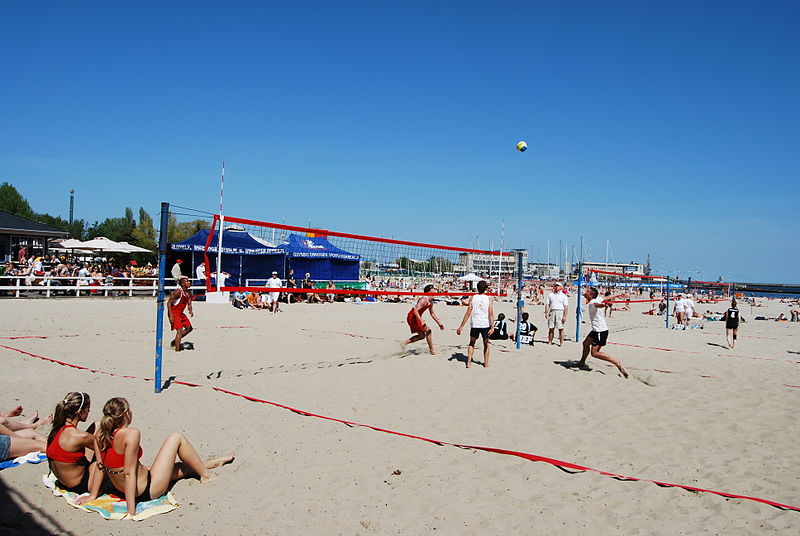
If you are vacationing at the beach, you will get a good workout just walking in the sand. The sand provides resistance that you can’t get walking on solid ground or on an exercise machine. You will definitely feel the positive effects in your shins, ankles, feet and calves. Wear a wide-brim hat, sunblock and sandals because the sand can become very hot during the day. Walk for 15 minutes in the morning and 15 minutes in the afternoon to stay fit,  while enjoying the ocean breeze and the scenery. Enjoy a game of beach volleyball and toss a Frisbee with your kids to have fun while exercising.

Fitness for Older Beginners

Photo Credit: Shustov  CC-BY-SA-3.0
It’s never too late to start a fitness program of regular exercise and a healthy diet. Older adults can benefit from beginning a fitness program at any age, even if you have been inactive for years. Walking, bicycling and swimming are good, low-impact exercises for older adults. Those who suffer from arthritis will benefit from low-impact exercise to help manage pain and keep the joints from becoming stiff. Low-impact exercises also help stimulate the metabolism, which helps with the regulation of blood sugar and cholesterol. Endorphins produced in the brain are natural mood elevators that also reduce pain. Consult with your doctor before beginning any exercise or fitness program, especially if you have been sedentary for years. In addition to walking, bicycling and swimming, exercises that are easy on the joints and help to maintain flexibility and mobility include rowing and elliptical machines and treadmills. If a gym membership is not in your budget or schedule, there are home exercise machines available at major retailers or fitness stores. Sometimes gyms sell used equipment at tremendous savings over a new machine. 

Begin your exercise program slowly and work your way up to at least 30 minutes each day. Try walking for 5 minutes every day for one week. The next week add 5 minutes for a 10 minute walk. Soon you will be walking for 30 minutes without feeling too tired. Once you can walk for 30 minutes, try speeding up your pace to a brisk walk for the same amount of time. Brisk walking is a great way to get your  heart pumping and your lungs working at maximum capacity. Walking is one of the best ways to get a good cardiovascular workout with minimum risk of injury. 
As people age they begin to lose muscle mass and their bones may lose density, becoming soft or brittle. Strength training, along with a healthy diet that includes plenty of vitamins and calcium, can help to prevent bone loss and maintain muscle tissue. Start with a 1 or 2 pound dumbbell weights when beginning strength training. Firm up your arms and keep your joints flexible by performing 5 biceps and 5 triceps exercises every other day. It’s important to let your muscles rest between strength training exercises so that they can heal and rest. When you can do 10 curls (5 biceps and 5 triceps) without feeling tired, increase the number of repetitions. As you grow stronger, add more weight (1 pound at a time). You may experience some muscle soreness, but this is normal. A mild over-the-counter pain reliever can help. Always check with your doctor before taking any over-the-counter medication, especially if you are taking prescription medications. 

Eat for Energy

Photo Credit: Kander PD

Would you be surprised if someone told you to eat to lose weight? Your metabolism is the process by which your body converts the food you eat into energy. Your metabolic rate is the rate at which your body turns food into fuel. The metabolic rate is different for each person and generally slows down as you age. This is why some people get what is called “middle age spread” around the abdomen or hips. When the metabolic rate slows, but caloric intake does not decrease, you can gain weight. Depriving yourself of food is not the answer to maintaining a healthy weight. Your body needs food for energy and will slow your metabolic rate in response to a lack of energy. Starvation diets are not only dangerous, but counter-productive since the body responds to deprivation by slowing down metabolism. To maintain a healthy weight or to lose weight, keep your metabolic rate at peak efficiency by eating more often. 
When you eat food, your body responds by releasing hormones and enzymes that convert food to energy that can be used by your cells. If you wait too long between meals, the metabolism slows down. Skipping breakfast or lunch and then eating a large evening meal may cause your body to store more food as fat in order to compensate for the lack of food earlier in the day. Your body stores up fat for energy use. The problem is the body is storing more fat than you are using for energy. In order to avoid this cycle of starvation and weight gain and keep your metabolism functioning at peak efficiency, eat several small, high-fiber meals everyday. 
Eat a healthy, high-fiber breakfast, followed by a mid-morning snack. Fresh fruits, vegetables, yogurt and whole grain crackers are ideal choices. Don’t forget to eat lunch, and then enjoy a late-afternoon snack. Dinner should include foods from all the food groups. At least 1/2 of your plate should be filled with vegetables, fruits and grains. Drink plenty of water throughout the day to help your body digest food and remain hydrated. Green tea may also help to increase your metabolism because it contains an antioxidant called epigallocatechin gallate (EGCG), which may help boost your body’s fuel burning power. 

Smart Workouts

Photo Credit: Kelly Gary USDOD PD
There are many myths about exercise. Despite the infomercials and wild promises, losing weight and getting in shape requires regular exercise and a healthy diet. There is no “magic” pill or overnight miracle exercise. You can make the most of your exercise program to shed more pounds faster and avoid injury. Make the most of the time you do have for exercise by working out smarter, not harder.
You’ve probably heard the expression “no pain, no gain.” Exercise shouldn’t cause pain. You may experience some mild soreness in your muscles if you are a beginner or if you try a new exercise, but persistent or sharp pain may indicate an injury. Mild soreness in the muscle tissue may be expected after a vigorous workout, especially if you try a new routine. Soreness that lasts for more than a couple of days, especially if accompanied by swelling or discoloration of the skin may indicate an injury that requires medical attention. If you feel any sudden, sharp or severe pain during exercise, stop immediately. See your doctor if the pain persists. 
One way to exercise smarter and help avoid injury is to warm-up before and cool-down after exercise by stretching your body. Many people don’t take the time to warm-up and to cool-down because of busy lifestyles and little time. Warm-up and cool-down for about 5 to 10 minutes. The warm-up will help prepare your muscles for more strenuous exercise to help you avoid injury. The cool-down will help your muscles begin to repair any tiny tears in the tissue, which causes muscle soreness. 
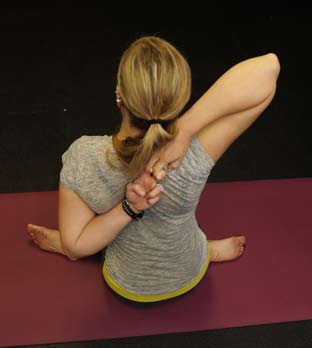
To get the most out of your workout each week, balance the three types of exercise: strength training, aerobic exercise and flexibility. Strength training includes resistance band exercises, weight lifting and isometric exercises that use your own body weight to strengthen muscles, such as push-ups and planks. Any exercises that gets your heart rate up is an aerobic exercise. Walking, running, swimming, riding a bicycle or playing a high-intensity game like tennis or basketball will get your heart pumping and your body sweating. Stretching and balance exercises help improve your flexibility. Yoga, tai chi, balance board exercises or just stretching out your muscles by reaching and bending can help improve your flexibility. 
You don’t have to work out for extended periods of time. You can spread it out over the day in 10-minute intervals. Spreading out your exercise throughout the day is a smart way to workout. Everyone should strive to get about 150 minutes of moderate aerobic exercise every week. You can cut the time spent exercising in half by getting 75 minutes of vigorous aerobic exercise weekly. Exercise daily to keep your metabolism up and your body in fat-burning mode. Exercise for 10 minutes in the morning, 10 minutes midday and 10 minutes in the late afternoon or early evening to get the minimum of 150 minutes of moderate exercise each week. 

Exercise to Strengthen Hip Joints

Photo Credit: USMC PD
Hip joint pain can interfere with almost every activity. Sitting down, standing up, climbing stairs, bending and walking require flexible hip joints. You can keep your hip joints strong and flexible by riding a bicycle, swimming and walking regularly. Make sure you get enough calcium and vitamin D in your diet to avoid bone loss and weak joints, which can result in injury. There are some easy-to-do exercises that you can do every day to help strengthen your hips, pelvic area, legs and lower back. 
The pelvic tilt is a great exercise to strengthen your pelvic muscles, strengthen your spine and your hips. Lie on your back on the floor and bend your knees. Place your feet flat on the floor about hip-width apart. Place your palms on the floor beside your hips. Tighten your abdominal muscles and move your lower back downward until it touches the floor. Hold this position for 10 to 15 seconds and then relax. Repeat this exercise for 10 repetitions.
Hip flexes will stretch the muscles of your hips and improve joint flexibility. Stand up straight. Drop your shoulders and look straight ahead. Hold onto a sturdy chair or place your palm on the wall if you need help balancing on one foot. Lift your left leg off the floor and bend your knee until your thigh is parallel to the floor and your leg makes a 90 degree angle. Hold this position for 10 seconds and then slowly lower your leg back to the floor. Repeat this exercise 10 times for each leg. 

Leg lifts strengthen your hip joint as well as the muscles of your legs and hips. Lie on your left side. Bend your left leg in a 45 degree angle. Stretch your left leg out. Support your upper body on your forearm with your elbow below your shoulder. Tighten your abdominal muscles and then lift your left leg 12 to 24 inches toward the ceiling. Hold the position for 5 seconds and then slowly lower  your leg to the start position. Do 10 repetitions. Repeat this exercise with the other leg. 

Exercises for Shoulders Strength

Photo Credit: Carine06  CC-BY-SA-2.0
Shoulder injuries usually result from overuse of the muscles and joints. Bursitis and tendinitis are common injuries for those who use their arms in an overhead motion like swimmers, tennis players or baseball players. These injuries cause pain in the joint and radiating down the arm. Shoulder injuries are especially painful when the arm is raised over the head. Strengthening the muscles in the shoulder area may help to prevent shoulder injuries. Inchworm crawls and raised-leg push-ups will strengthen your chest and shoulders as well as your abs and legs. Keep your spine straight while doing these exercises and resist the urge to bow your back upward. 
Begin by standing with your feet about hip-width apart. Squeeze your abdominal muscles and then bend forward until your palms are on the floor in front of your feet. Keep your knees straight. Your body should form an inverted “V” shape. Walk forward on your hands until the heels of your feet lift off the floor. Hold this position for a couple of seconds and breathe. Continue walking forward on your hands and lowering your body until you are in a sit-up position. Keep your spine in a straight line from your head to your heels. Do a couple of push-ups and then slowly lower your entire body straight down until your chest touches the floor. You can allow your elbows to extend outward from your body during this part of the exercise. Finish the exercise by slowly walking your feet toward your hands. Take small steps on your toes until you return to the inverted “V” position. Repeat this exercise until you have moved about 20 yards. 

Push-ups are another exercise that will help to strengthen your shoulders. The raised-leg variation on the push-up is a more advanced push-up that will strengthen the shoulder and abdominal muscles. Begin in the standard push-up position with your hands beneath your shoulders, arms straight and body forming a straight line from your head to your heels. Rest your lower body weight on your toes. Before beginning the downward phase of the push-up, raise one leg toward the ceiling. Lift your leg about 6 to 8 inches above your other leg and point your toes. Perform 10 to 15 push-ups and then lower your leg. Raise your other leg and repeat. 

Lifestyle Changes for Better Fitness

Photo Credit: Tuomas Työrinoja CC-BY-3.0

Losing weight and getting in shape can be challenging, especially if you’ve been sedentary for years. You need to exercise to lose weight, but your calorie intake has to be adjusted as well. Many people exercise every other day, sometimes daily, but the pounds just aren’t coming off. Exercise alone can’t help you take off those extra pounds. You have to burn more calories than you take in to lose weight effectively. This requires a balance of diet and exercise. If you are exercising and the pounds just won’t come off, a personal fitness trainer can help you develop a diet and exercise plan that may work for you.
One of the biggest enemies of weight loss is underestimating the number of calories and the amount of food you actually consume. Burning 1,000 calories won’t help you lose weight if you consume 1,000 calories right after your workout. Cutting back on calories and exercising regularly are only part of a total fitness program. Going to the gym for 30 minutes three times each week will help you build muscle and improve your overall fitness, but if you are sitting down the other 4 days each week you won’t see much progress in weight loss. The most effective way to get fit, lose weight and stay fit is to lead an active lifestyle. Even if you work 8 to 10  hours a day in an office sitting in front of a computer, there are things you can do to be more active. 
Move your body to help burn calories and get fit. If you drive to work park your car a couple of blocks from work and walk. Take the stairs instead of the elevator. Stand up and stretch your body every hour. Walk to the water cooler for a drink every hour instead of sipping on a high-calorie soda. Eat a low-calorie, high fiber breakfast each morning and take nutritious snacks to work. Drink plenty of water during the day. Increase the amount of vegetables and fruits in your diet. Include whole grains, rice and legumes in your diet. Reduce the amount of red meat in your diet. Eat more fish and poultry if you don’t want to give up meat. Avoid keeping snacks in front of the television or replace chips and popcorn with dried fruits and nuts. You will eat more than you think when watching television. Keep going to the gym but stay active every day.