Fitness for Older Beginners

Photo Credit: Shustov  CC-BY-SA-3.0
It’s never too late to start a fitness program of regular exercise and a healthy diet. Older adults can benefit from beginning a fitness program at any age, even if you have been inactive for years. Walking, bicycling and swimming are good, low-impact exercises for older adults. Those who suffer from arthritis will benefit from low-impact exercise to help manage pain and keep the joints from becoming stiff. Low-impact exercises also help stimulate the metabolism, which helps with the regulation of blood sugar and cholesterol. Endorphins produced in the brain are natural mood elevators that also reduce pain. Consult with your doctor before beginning any exercise or fitness program, especially if you have been sedentary for years. In addition to walking, bicycling and swimming, exercises that are easy on the joints and help to maintain flexibility and mobility include rowing and elliptical machines and treadmills. If a gym membership is not in your budget or schedule, there are home exercise machines available at major retailers or fitness stores. Sometimes gyms sell used equipment at tremendous savings over a new machine. 

Begin your exercise program slowly and work your way up to at least 30 minutes each day. Try walking for 5 minutes every day for one week. The next week add 5 minutes for a 10 minute walk. Soon you will be walking for 30 minutes without feeling too tired. Once you can walk for 30 minutes, try speeding up your pace to a brisk walk for the same amount of time. Brisk walking is a great way to get your  heart pumping and your lungs working at maximum capacity. Walking is one of the best ways to get a good cardiovascular workout with minimum risk of injury. 
As people age they begin to lose muscle mass and their bones may lose density, becoming soft or brittle. Strength training, along with a healthy diet that includes plenty of vitamins and calcium, can help to prevent bone loss and maintain muscle tissue. Start with a 1 or 2 pound dumbbell weights when beginning strength training. Firm up your arms and keep your joints flexible by performing 5 biceps and 5 triceps exercises every other day. It’s important to let your muscles rest between strength training exercises so that they can heal and rest. When you can do 10 curls (5 biceps and 5 triceps) without feeling tired, increase the number of repetitions. As you grow stronger, add more weight (1 pound at a time). You may experience some muscle soreness, but this is normal. A mild over-the-counter pain reliever can help. Always check with your doctor before taking any over-the-counter medication, especially if you are taking prescription medications. 

Eat for Energy

Photo Credit: Kander PD

Would you be surprised if someone told you to eat to lose weight? Your metabolism is the process by which your body converts the food you eat into energy. Your metabolic rate is the rate at which your body turns food into fuel. The metabolic rate is different for each person and generally slows down as you age. This is why some people get what is called “middle age spread” around the abdomen or hips. When the metabolic rate slows, but caloric intake does not decrease, you can gain weight. Depriving yourself of food is not the answer to maintaining a healthy weight. Your body needs food for energy and will slow your metabolic rate in response to a lack of energy. Starvation diets are not only dangerous, but counter-productive since the body responds to deprivation by slowing down metabolism. To maintain a healthy weight or to lose weight, keep your metabolic rate at peak efficiency by eating more often. 
When you eat food, your body responds by releasing hormones and enzymes that convert food to energy that can be used by your cells. If you wait too long between meals, the metabolism slows down. Skipping breakfast or lunch and then eating a large evening meal may cause your body to store more food as fat in order to compensate for the lack of food earlier in the day. Your body stores up fat for energy use. The problem is the body is storing more fat than you are using for energy. In order to avoid this cycle of starvation and weight gain and keep your metabolism functioning at peak efficiency, eat several small, high-fiber meals everyday. 
Eat a healthy, high-fiber breakfast, followed by a mid-morning snack. Fresh fruits, vegetables, yogurt and whole grain crackers are ideal choices. Don’t forget to eat lunch, and then enjoy a late-afternoon snack. Dinner should include foods from all the food groups. At least 1/2 of your plate should be filled with vegetables, fruits and grains. Drink plenty of water throughout the day to help your body digest food and remain hydrated. Green tea may also help to increase your metabolism because it contains an antioxidant called epigallocatechin gallate (EGCG), which may help boost your body’s fuel burning power. 

Smart Workouts

Photo Credit: Kelly Gary USDOD PD
There are many myths about exercise. Despite the infomercials and wild promises, losing weight and getting in shape requires regular exercise and a healthy diet. There is no “magic” pill or overnight miracle exercise. You can make the most of your exercise program to shed more pounds faster and avoid injury. Make the most of the time you do have for exercise by working out smarter, not harder.
You’ve probably heard the expression “no pain, no gain.” Exercise shouldn’t cause pain. You may experience some mild soreness in your muscles if you are a beginner or if you try a new exercise, but persistent or sharp pain may indicate an injury. Mild soreness in the muscle tissue may be expected after a vigorous workout, especially if you try a new routine. Soreness that lasts for more than a couple of days, especially if accompanied by swelling or discoloration of the skin may indicate an injury that requires medical attention. If you feel any sudden, sharp or severe pain during exercise, stop immediately. See your doctor if the pain persists. 
One way to exercise smarter and help avoid injury is to warm-up before and cool-down after exercise by stretching your body. Many people don’t take the time to warm-up and to cool-down because of busy lifestyles and little time. Warm-up and cool-down for about 5 to 10 minutes. The warm-up will help prepare your muscles for more strenuous exercise to help you avoid injury. The cool-down will help your muscles begin to repair any tiny tears in the tissue, which causes muscle soreness. 
To get the most out of your workout each week, balance the three types of exercise: strength training, aerobic exercise and flexibility. Strength training includes resistance band exercises, weight lifting and isometric exercises that use your own body weight to strengthen muscles, such as push-ups and planks. Any exercises that gets your heart rate up is an aerobic exercise. Walking, running, swimming, riding a bicycle or playing a high-intensity game like tennis or basketball will get your heart pumping and your body sweating. Stretching and balance exercises help improve your flexibility. Yoga, tai chi, balance board exercises or just stretching out your muscles by reaching and bending can help improve your flexibility. 
You don’t have to work out for extended periods of time. You can spread it out over the day in 10-minute intervals. Spreading out your exercise throughout the day is a smart way to workout. Everyone should strive to get about 150 minutes of moderate aerobic exercise every week. You can cut the time spent exercising in half by getting 75 minutes of vigorous aerobic exercise weekly. Exercise daily to keep your metabolism up and your body in fat-burning mode. Exercise for 10 minutes in the morning, 10 minutes midday and 10 minutes in the late afternoon or early evening to get the minimum of 150 minutes of moderate exercise each week. 

Exercise to Strengthen Hip Joints

Photo Credit: USMC PD
Hip joint pain can interfere with almost every activity. Sitting down, standing up, climbing stairs, bending and walking require flexible hip joints. You can keep your hip joints strong and flexible by riding a bicycle, swimming and walking regularly. Make sure you get enough calcium and vitamin D in your diet to avoid bone loss and weak joints, which can result in injury. There are some easy-to-do exercises that you can do every day to help strengthen your hips, pelvic area, legs and lower back. 
The pelvic tilt is a great exercise to strengthen your pelvic muscles, strengthen your spine and your hips. Lie on your back on the floor and bend your knees. Place your feet flat on the floor about hip-width apart. Place your palms on the floor beside your hips. Tighten your abdominal muscles and move your lower back downward until it touches the floor. Hold this position for 10 to 15 seconds and then relax. Repeat this exercise for 10 repetitions.
Hip flexes will stretch the muscles of your hips and improve joint flexibility. Stand up straight. Drop your shoulders and look straight ahead. Hold onto a sturdy chair or place your palm on the wall if you need help balancing on one foot. Lift your left leg off the floor and bend your knee until your thigh is parallel to the floor and your leg makes a 90 degree angle. Hold this position for 10 seconds and then slowly lower your leg back to the floor. Repeat this exercise 10 times for each leg. 

Leg lifts strengthen your hip joint as well as the muscles of your legs and hips. Lie on your left side. Bend your left leg in a 45 degree angle. Stretch your left leg out. Support your upper body on your forearm with your elbow below your shoulder. Tighten your abdominal muscles and then lift your left leg 12 to 24 inches toward the ceiling. Hold the position for 5 seconds and then slowly lower  your leg to the start position. Do 10 repetitions. Repeat this exercise with the other leg. 

Exercises for Shoulders Strength

Photo Credit: Carine06  CC-BY-SA-2.0
Shoulder injuries usually result from overuse of the muscles and joints. Bursitis and tendinitis are common injuries for those who use their arms in an overhead motion like swimmers, tennis players or baseball players. These injuries cause pain in the joint and radiating down the arm. Shoulder injuries are especially painful when the arm is raised over the head. Strengthening the muscles in the shoulder area may help to prevent shoulder injuries. Inchworm crawls and raised-leg push-ups will strengthen your chest and shoulders as well as your abs and legs. Keep your spine straight while doing these exercises and resist the urge to bow your back upward. 
Begin by standing with your feet about hip-width apart. Squeeze your abdominal muscles and then bend forward until your palms are on the floor in front of your feet. Keep your knees straight. Your body should form an inverted “V” shape. Walk forward on your hands until the heels of your feet lift off the floor. Hold this position for a couple of seconds and breathe. Continue walking forward on your hands and lowering your body until you are in a sit-up position. Keep your spine in a straight line from your head to your heels. Do a couple of push-ups and then slowly lower your entire body straight down until your chest touches the floor. You can allow your elbows to extend outward from your body during this part of the exercise. Finish the exercise by slowly walking your feet toward your hands. Take small steps on your toes until you return to the inverted “V” position. Repeat this exercise until you have moved about 20 yards. 

Push-ups are another exercise that will help to strengthen your shoulders. The raised-leg variation on the push-up is a more advanced push-up that will strengthen the shoulder and abdominal muscles. Begin in the standard push-up position with your hands beneath your shoulders, arms straight and body forming a straight line from your head to your heels. Rest your lower body weight on your toes. Before beginning the downward phase of the push-up, raise one leg toward the ceiling. Lift your leg about 6 to 8 inches above your other leg and point your toes. Perform 10 to 15 push-ups and then lower your leg. Raise your other leg and repeat. 

Lifestyle Changes for Better Fitness

Photo Credit: Tuomas Työrinoja CC-BY-3.0

Losing weight and getting in shape can be challenging, especially if you’ve been sedentary for years. You need to exercise to lose weight, but your calorie intake has to be adjusted as well. Many people exercise every other day, sometimes daily, but the pounds just aren’t coming off. Exercise alone can’t help you take off those extra pounds. You have to burn more calories than you take in to lose weight effectively. This requires a balance of diet and exercise. If you are exercising and the pounds just won’t come off, a personal fitness trainer can help you develop a diet and exercise plan that may work for you.
One of the biggest enemies of weight loss is underestimating the number of calories and the amount of food you actually consume. Burning 1,000 calories won’t help you lose weight if you consume 1,000 calories right after your workout. Cutting back on calories and exercising regularly are only part of a total fitness program. Going to the gym for 30 minutes three times each week will help you build muscle and improve your overall fitness, but if you are sitting down the other 4 days each week you won’t see much progress in weight loss. The most effective way to get fit, lose weight and stay fit is to lead an active lifestyle. Even if you work 8 to 10  hours a day in an office sitting in front of a computer, there are things you can do to be more active. 
Move your body to help burn calories and get fit. If you drive to work park your car a couple of blocks from work and walk. Take the stairs instead of the elevator. Stand up and stretch your body every hour. Walk to the water cooler for a drink every hour instead of sipping on a high-calorie soda. Eat a low-calorie, high fiber breakfast each morning and take nutritious snacks to work. Drink plenty of water during the day. Increase the amount of vegetables and fruits in your diet. Include whole grains, rice and legumes in your diet. Reduce the amount of red meat in your diet. Eat more fish and poultry if you don’t want to give up meat. Avoid keeping snacks in front of the television or replace chips and popcorn with dried fruits and nuts. You will eat more than you think when watching television. Keep going to the gym but stay active every day. 

Water Exercise

Photo Credit: Orgullomoore CC-BY-SA-3.0-migrated
Swimming is one of the most effective whole body exercises you can do. You don’t have to be an expert swimmer or even know how to swim to take advantage of exercising in water. Exercise in a pool can provide a hardcore aerobic workout for your whole body, including your heart and lungs. The water will support your body, take pressure off your joints and muscles while providing resistance to help strengthen  your muscles. If you are not a strong swimmer or you don’t know how to swim, wear a flotation device and make sure the lifeguard at the pool knows you do not know how to swim. Gyms that have a pool and organizations like the YMCA frequently offer water aerobics and water exercise classes for groups if you aren’t sure how to begin or don’t want to invest in water weights. Membership fees for community organizations are usually reasonable. Gym prices vary, but most offer programs at a reasonable cost. 
The easiest water exercise to do is to walk around in the pool. Enter the pool and walk to a point where the water reaches your waist. Walk back and forth across the pool in the waist-deep water to give your legs a good workout. Swing your arms naturally as you would when walking on land. Walk using a normal gait. Avoid pushing off with your toes and don’t lean forward.  Squeezing your abdominal muscles while walking will also give your abs a good isometric workout and help keep you from leaning forward. Walk across the shallow water 15 to 20 times. When  you can do 20 laps in the shallow water without becoming exhausted, try increasing the number of laps or walking in deeper water, up to your chest. 
Incorporate some weight lifting into your water exercise by using water weights. Water weights are like foam dumbbells. They create a lot of resistance in the water. Hold the water weights in your hands with your palms facing up and raise the weights up to the level of the water to exercise your biceps. Hold the weights with your palms facing the bottom of the pool and push the weights through the water toward your back to work your triceps. Try to perform 15 to 20 each of the biceps and triceps curls or until you are tired.  
Finish your water exercise with a few laps of the pool. Even if you don’t know how to swim, you should be able to do a few laps while wearing a flotation vest. If you are uncomfortable in deep water, swim back and forth across the pool in water no deeper than your waist. 

Kickboxing Your Way to a Fitter You

Photo Credit: ashs CC-BY-3.0


Kickboxing has become more popular in recent years with gyms offering classes and people lining up to kick their way to a leaner, stronger body. There are instructional videos on the Internet and available for purchase. Many late night infomercials offer variations of kickboxing workouts to sleepless viewers. Many of the most popular kickboxing-style exercise DVDs and gym programs combine a high-intensity aerobic workout with punching, kicking and blocking m moves. These exercises help to build strength, flexibility, endurance and confidence. Kickboxing style exercise is not for everyone, but it couldn’t hurt to give it a try. A kickboxing class at a gym is a fun way to get fit in a group with a competent fitness instructor to guide you all along the way. 

Most routines in kickboxing are designed to be against an imaginary opponent, but some classes are designed where the members spar with each other or kick a heavy bag. You can burn more than 400 calories per hour in a kickboxing class. Get a checkup at your doctor’s office and tell him or her that you want to take a kickboxing class. If your doctor gives you a green light, join a class for beginners. Introduce yourself to the instructor and get a list of equipment you may need for the class. Come prepared to get a serious workout that will leave you feeling exhausted but confident. 

Fat-Fighting Foods

Fruits and vegetables are not only an excellent source of vitamins and minerals, but also help fight body fat. According to the Centers for Disease Control, a diet that includes plenty of fruits and vegetables may also help to reduce your risk of some types of cancers. Substitute fruits and vegetables in place high calorie foods like macaroni and cheese or white flour pastas. Fruits are especially good at helping you to fight fat and lose weight. They are loaded with flavor, fiber and nutrients but low in calories. Fruits can help you feel full, but will not add significantly to your caloric intake. Fruits contain water and fiber that can help you feel more full so that  you eat less. 
Photo Credit: Forest & Kim Starr CC-BY-3.0
Grapefruit is rich in soluble fiber, which takes longer to digest. This helps you feel fuller for a longer period of time. Grapefruit is low in calories but high in nutrients. Try a glass of grapefruit juice with the pulp before dinner to help you feel fuller before you eat. Watermelon is another fruit that can help you feel fuller. Watermelon contains lots of fiber, plenty of water and is rich in lycopene, an important antioxidant. Pears and apples also contain plenty of natural fiber, nutrients and water. Eat pears and apples with the peels to get extra fiber and more flavor. Hot peppers contain capsaicin, which may help curb your appetite and boost your metabolism. People tend to eat less when their food is spicy. Try some hot peppers in your favorite dish for extra flavor and a dose of fat-fighting capsaicin. Several studies indicate that green tea may help stimulate the body to burn fat, especially belly fat. Several compounds in green tea, notably catechins, may stimulate the metabolism to help your body burn fat. Drink 2 to 3 cups of hot green tea every day, especially before a meal. 
There is no magic bullet when it comes to weight loss. A healthy diet combined with exercise is the best way to avoid weight gain and to lose weight. Reduce the amount of calories you eat and get at least 30 minutes of exercise every other day. Walk every day, if you can, and avoid sugary snacks and sodas between meals to help reduce the amount of calories you consume. 

Make Exercise A Habit

Photo Credit: LocalFitness.com.au

Daily exercise does not have to be a chore. It can be a fun part of your daily routine, which can help you lose weight and get fit. You don’t have to stick to a strict schedule, but you should try to incorporate physical activity into your daily routine. You don’t need expensive equipment or a pricey gym membership. Even a few minutes of exercise every day can make a big difference when it comes to feeling fit and losing weight. Make exercise a habit by making it part of your life.


Exercise by doing things that you enjoy and commit to your exercise time. If you enjoy the park, walk or ride a bicycle in the park two or three times each week. Involve others in your exercise time. Take the kids to the park with you and play a game of touch football. Commit to taking your kids or a friend to the park every week. You will spend valuable time with your friends and family and get the physical exercise you need to stay fit. Your commitment to physical exercise should be a priority in your life. Don’t reschedule your exercise time to do something else. Schedule other events around your exercise time.

Exercise in the morning before everyone else is awake. People who have small children or school age children know how hectic mornings can be. Once the kids are awake you may not have time to exercise or it will slip your mind as you try to help your teen find her favorite pair of shoes before school. It’s easy to make excuses and find reasons not to exercise when the house is buzzing with activity. Take some quiet time early in the morning just for yourself and do some sit-ups, push-ups, stretches, Pilates or yoga. Invest in some free weights, resistance bands, an exercise ball, a treadmill or a stationary bicycle so that you have your own mini gym at home. 

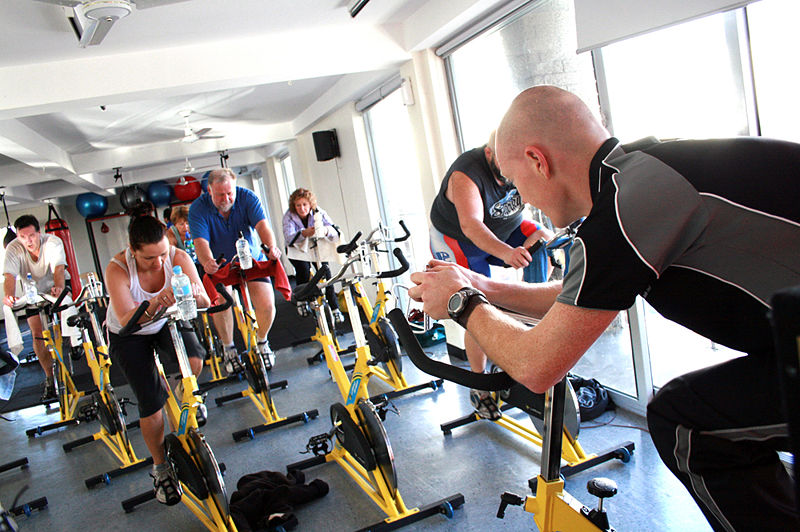
Make exercise after work part of your daily routine. On your way home from work, stop at the gym for a 30 minute workout or half an hour on the treadmill. Once you get home, it will be more difficult to convince yourself to go out again. Simply make that stop at the gym a normal part of your day. You may be tired after work, but exercise can help you feel more energized and the endorphins released by your brain will improve your sense of well-being. You will leave the gym feeling better than when you walked in after work.