Water Exercise

Photo Credit: Orgullomoore CC-BY-SA-3.0-migrated
Swimming is one of the most effective whole body exercises you can do. You don’t have to be an expert swimmer or even know how to swim to take advantage of exercising in water. Exercise in a pool can provide a hardcore aerobic workout for your whole body, including your heart and lungs. The water will support your body, take pressure off your joints and muscles while providing resistance to help strengthen  your muscles. If you are not a strong swimmer or you don’t know how to swim, wear a flotation device and make sure the lifeguard at the pool knows you do not know how to swim. Gyms that have a pool and organizations like the YMCA frequently offer water aerobics and water exercise classes for groups if you aren’t sure how to begin or don’t want to invest in water weights. Membership fees for community organizations are usually reasonable. Gym prices vary, but most offer programs at a reasonable cost. 
The easiest water exercise to do is to walk around in the pool. Enter the pool and walk to a point where the water reaches your waist. Walk back and forth across the pool in the waist-deep water to give your legs a good workout. Swing your arms naturally as you would when walking on land. Walk using a normal gait. Avoid pushing off with your toes and don’t lean forward.  Squeezing your abdominal muscles while walking will also give your abs a good isometric workout and help keep you from leaning forward. Walk across the shallow water 15 to 20 times. When  you can do 20 laps in the shallow water without becoming exhausted, try increasing the number of laps or walking in deeper water, up to your chest. 
Incorporate some weight lifting into your water exercise by using water weights. Water weights are like foam dumbbells. They create a lot of resistance in the water. Hold the water weights in your hands with your palms facing up and raise the weights up to the level of the water to exercise your biceps. Hold the weights with your palms facing the bottom of the pool and push the weights through the water toward your back to work your triceps. Try to perform 15 to 20 each of the biceps and triceps curls or until you are tired.  
Finish your water exercise with a few laps of the pool. Even if you don’t know how to swim, you should be able to do a few laps while wearing a flotation vest. If you are uncomfortable in deep water, swim back and forth across the pool in water no deeper than your waist. 

Kickboxing Your Way to a Fitter You

Photo Credit: ashs CC-BY-3.0


Kickboxing has become more popular in recent years with gyms offering classes and people lining up to kick their way to a leaner, stronger body. There are instructional videos on the Internet and available for purchase. Many late night infomercials offer variations of kickboxing workouts to sleepless viewers. Many of the most popular kickboxing-style exercise DVDs and gym programs combine a high-intensity aerobic workout with punching, kicking and blocking m moves. These exercises help to build strength, flexibility, endurance and confidence. Kickboxing style exercise is not for everyone, but it couldn’t hurt to give it a try. A kickboxing class at a gym is a fun way to get fit in a group with a competent fitness instructor to guide you all along the way. 

Most routines in kickboxing are designed to be against an imaginary opponent, but some classes are designed where the members spar with each other or kick a heavy bag. You can burn more than 400 calories per hour in a kickboxing class. Get a checkup at your doctor’s office and tell him or her that you want to take a kickboxing class. If your doctor gives you a green light, join a class for beginners. Introduce yourself to the instructor and get a list of equipment you may need for the class. Come prepared to get a serious workout that will leave you feeling exhausted but confident. 

Fat-Fighting Foods

Fruits and vegetables are not only an excellent source of vitamins and minerals, but also help fight body fat. According to the Centers for Disease Control, a diet that includes plenty of fruits and vegetables may also help to reduce your risk of some types of cancers. Substitute fruits and vegetables in place high calorie foods like macaroni and cheese or white flour pastas. Fruits are especially good at helping you to fight fat and lose weight. They are loaded with flavor, fiber and nutrients but low in calories. Fruits can help you feel full, but will not add significantly to your caloric intake. Fruits contain water and fiber that can help you feel more full so that  you eat less. 
Photo Credit: Forest & Kim Starr CC-BY-3.0
Grapefruit is rich in soluble fiber, which takes longer to digest. This helps you feel fuller for a longer period of time. Grapefruit is low in calories but high in nutrients. Try a glass of grapefruit juice with the pulp before dinner to help you feel fuller before you eat. Watermelon is another fruit that can help you feel fuller. Watermelon contains lots of fiber, plenty of water and is rich in lycopene, an important antioxidant. Pears and apples also contain plenty of natural fiber, nutrients and water. Eat pears and apples with the peels to get extra fiber and more flavor. Hot peppers contain capsaicin, which may help curb your appetite and boost your metabolism. People tend to eat less when their food is spicy. Try some hot peppers in your favorite dish for extra flavor and a dose of fat-fighting capsaicin. Several studies indicate that green tea may help stimulate the body to burn fat, especially belly fat. Several compounds in green tea, notably catechins, may stimulate the metabolism to help your body burn fat. Drink 2 to 3 cups of hot green tea every day, especially before a meal. 
There is no magic bullet when it comes to weight loss. A healthy diet combined with exercise is the best way to avoid weight gain and to lose weight. Reduce the amount of calories you eat and get at least 30 minutes of exercise every other day. Walk every day, if you can, and avoid sugary snacks and sodas between meals to help reduce the amount of calories you consume. 

Make Exercise A Habit

Photo Credit: LocalFitness.com.au

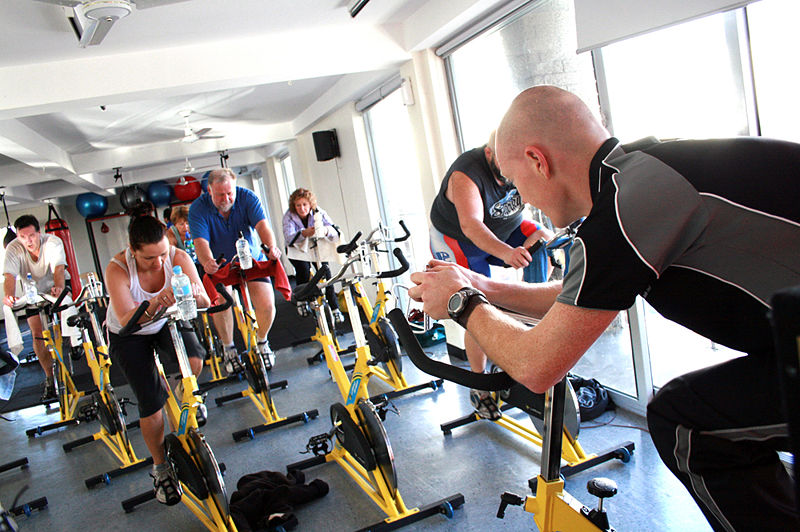
Daily exercise does not have to be a chore. It can be a fun part of your daily routine, which can help you lose weight and get fit. You don’t have to stick to a strict schedule, but you should try to incorporate physical activity into your daily routine. You don’t need expensive equipment or a pricey gym membership. Even a few minutes of exercise every day can make a big difference when it comes to feeling fit and losing weight. Make exercise a habit by making it part of your life.


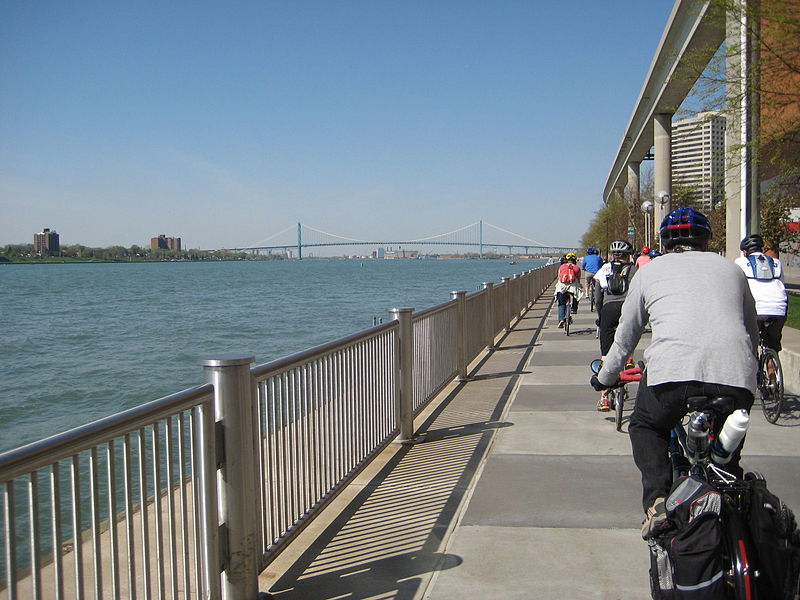
Exercise by doing things that you enjoy and commit to your exercise time. If you enjoy the park, walk or ride a bicycle in the park two or three times each week. Involve others in your exercise time. Take the kids to the park with you and play a game of touch football. Commit to taking your kids or a friend to the park every week. You will spend valuable time with your friends and family and get the physical exercise you need to stay fit. Your commitment to physical exercise should be a priority in your life. Don’t reschedule your exercise time to do something else. Schedule other events around your exercise time.

Exercise in the morning before everyone else is awake. People who have small children or school age children know how hectic mornings can be. Once the kids are awake you may not have time to exercise or it will slip your mind as you try to help your teen find her favorite pair of shoes before school. It’s easy to make excuses and find reasons not to exercise when the house is buzzing with activity. Take some quiet time early in the morning just for yourself and do some sit-ups, push-ups, stretches, Pilates or yoga. Invest in some free weights, resistance bands, an exercise ball, a treadmill or a stationary bicycle so that you have your own mini gym at home. 

Make exercise after work part of your daily routine. On your way home from work, stop at the gym for a 30 minute workout or half an hour on the treadmill. Once you get home, it will be more difficult to convince yourself to go out again. Simply make that stop at the gym a normal part of your day. You may be tired after work, but exercise can help you feel more energized and the endorphins released by your brain will improve your sense of well-being. You will leave the gym feeling better than when you walked in after work. 


Treadmill Workouts

Photo Credit: Brandon.wiggins CC-BY-SA-3.0

Cold, rainy or snowy weather does not mean you have to postpone your daily walk, run or jog. Treadmills are a great way to exercise at the gym or at home when walking, jogging or running outdoors is not an option. A treadmill workout doesn’t have to be boring. Treadmills can be used in a variety of ways to get a good workout. You can walk, jog, run, climb an incline or any combination of these exercises. If you have never used a treadmill before, find a personal fitness trainer for instructions on proper use of the equipment. Used properly, a treadmill is a safe way to get a good workout. 
Many treadmills can be programmed for interval training. Program your treadmill for a 30 minutes of a high intensity interval workout. Start your treadmill workout with a warm-up. Walk slowly with the treadmill not inclined for about 5 minutes and gradually increase the speed until you are walking at a moderately fast pace for 5 minutes. Slowly increase the incline until your heart rate and breathing increase. Now it’s time to pick up the pace and run 5 minutes. Slow the pace to a jog for another 5 minutes. Power walk for 5 minutes and then increase the incline on the treadmill and climb walk for 5 minutes. Cool down by walking at a relaxed pace for the final 5 minutes. Increase the amount of time spent on each interval as your endurance increases. 

Resistance Band Workouts for Beginners

Photo Credit: Velislav Panchev CC-BY-SA-3.0,2.5,2.0,1.0

Resistance bands can be used to exercise the whole body, arms, legs, back, abs, shoulders, and chest. There are some basic exercises that beginners should master before moving on to more strenuous resistance band workouts. A personal fitness trainer can help you choose a set of bands that will work for you and instruct you on how to use resistance bands effectively. Resistance bands are easier to use than exercise machines or even free weights. The level of the workout depends on how much effort you apply in stretching the band. You can also be more creative in your workouts using resistance bands. You can pull resistance bands from different directions and use with the arms, feet and legs. A great exercise for the biceps and forearm is to stand on the band with one foot and curl your bicep by stretching the band upward. Attach the resistance band to a door, a wall or to a heavy piece of exercise equipment, and use with the legs or to push down with the triceps. Resistance bands are versatile and effective for strength training. Before using resistance bands, warm up with a few minutes of cardio and some stretches. 
Perform a few chest presses with your resistance bands by looping resistance bands around a stable object or attaching them to a wall mount. Hold the handles in each hand with your elbows bent, back toward the wall and your forearms parallel to the floor. Step away from the wall just enough to take up the slack in the bands. Tighten your chest muscles and then press your arms out in front of you in a straight line. Relax and bring  your elbows back to your sides. Avoid locking your elbow. Do about 10 to 15 repetitions. Don’t forget to breathe out when you push forward and breathe in when you return to the start position. 
Bicep curls are performed using a resistance band by standing on the band with both feet and pulling the band using the handles. It may be easier for beginners to stand on the band using only one foot. Grasp the resistance band handles with your palms facing upward. Curl your arms up just as you would if you were using dumbbells. You can alternate curling one arm and then the other or both at the same time.  
Do some squats using resistance bands by standing on the band and holding the handles near your shoulders with your elbows bent and close to your sides. Begin with a medium resistance band and advance to a heavy resistance band, if the medium band does not offer enough resistance. Lower your body to a squat position and hold it for a few seconds. Return to a standing position, but keep your hands at your shoulders, grasping the handles of the bands. The band will offer resistance against your legs as your stand up and help increase the strength of your arms. Do 10 to 15 repetitions and increase the number of repetitions as you grow stronger. 

After-Baby Exercise

Photo Credit: Robert Whitehead CC-BY-2.0

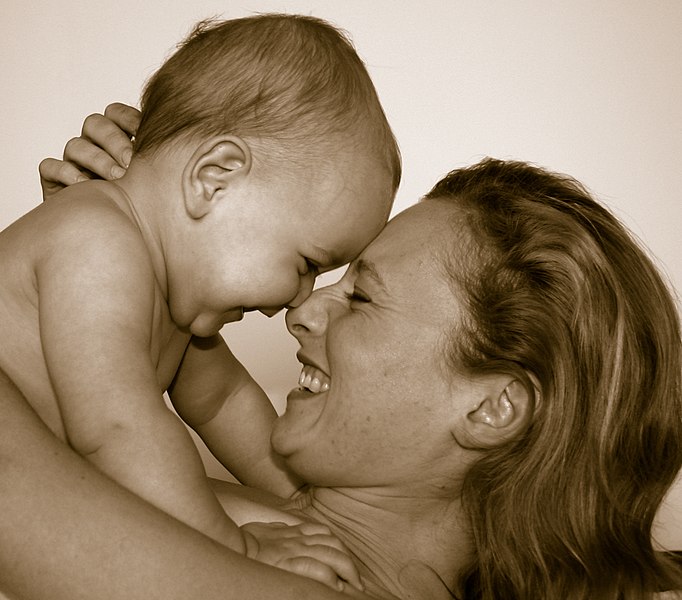
The American College of Obstetrics and Gynecology suggests that women who exercised before and during pregnancy should be able to return to their pre-pregnancy level of fitness training after about 6 weeks. The changes that occurred in a woman’s body during pregnancy will persist for as long as 6 weeks, sometimes longer. Women who have had a Cesarean section delivery may need to wait a few additional weeks to begin fitness training again, because a C-section delivery is major surgery. Every woman’s body responds differently to the dramatic physical and hormonal changes that accompany pregnancy. The American College of Obstetrics and Gynecology states that physical exercise has been associated with a lower risk of postpartum depression. Your doctor can tell you when it’s safe to begin exercising again.When a new mother is ready to begin exercise again, start slowly and focus on core strength, muscle strength training and low-impact aerobic exercise for cardiovascular conditioning. 
Pelvic tilts are an excellent, low-impact exercise that helps to strengthen the muscles of the lower back and the abdominal muscles. The movement of the pelvic tilt is subtle, but effective. To perform the pelvic tilt exercise, lie on the floor on your back with your knees bent, feet flat on the floor and your hands at your sides palms down. Inhale and then gently, and slowly, lift your pelvis back toward your abdomen until your lower back presses against the floor. Do not allow your buttocks to lift off the floor. Hold the lift for 5 to 10 seconds. Exhale and lower your pelvis back to the beginning, relaxed position. Try to do 10 pelvic tilts each day. Increase the length of time you hold the tilt. 
Aerobic exercise gets your heart pumping and your body sweating. It is a great way to condition your heart and lungs while burning calories to lose weight. After delivery of a baby, return to aerobic exercises slowly. Don’t try to run 2 miles after having a baby, even if you did so before you were pregnant. Walking is a perfect way to get a low-impact, cardiovascular workout for your whole body. Put baby in a stroller and go for a long walk in the park every other day. Swimming and bicycling are ideal, low-impact aerobic exercises. Remember to start slowly, exercising 10 to 15 minutes at a time and gradually increase the amount of time doing aerobic exercise until you return to your pre-pregnancy condition.  
When you think you are ready to return to the gym, avoid high-impact activities or lifting heavy weights. Strength training does not have to include lifting weights. Isometric exercises using your own body weight or resistance bands can help increase your muscle strength and burn fat. For example, push-ups strengthen your abs, chest, arms and upper back muscles. Exercise balls are great to help increase your strength and improve balance. Balance ball squats can help increase leg and abdominal strength. Stand up straight with your back to the wall and an exercise ball between your lower back and the wall. Lean against the ball slightly and slowly lower your body to a sitting position by bending you knees and rolling the ball up your back. You may be able to only lower your body to a half-sitting position the first few times you do this exercise after having your baby, but soon you will be able to do a full squat. Do 10 to 15 repetitions, if you can. Increase the number of repetitions as your strength returns.
Prop the ball against a wall and position it behind your lower-mid back.  Walk the feet out a bit so that you’re leaning against the ball, feet about hip-distance apart.  Bend the knees and lower into a squat, going as low as you can (no lower than 90 degrees) and keeping the knees behind the toes.  Push through the heels to come back up and repeat for 15 reps.

Diet Survival Tips for 4th of July Cookouts

Outdoor barbecues are a tradition on Independence Day. Grills will fire up in backyards around the country. Everything from hot dogs, hamburgers, steaks, ribs, smoked sausages, chicken, vegetables and even shrimp and fish are cooked on outdoor grills. Side dishes may include potato salad, cole slaw, pickles and  macaroni salad. Of course, what 4th of July celebration would be complete without apple pie and ice cream? It can be difficult to stay on a diet and avoid fatty foods at a backyard cookout when so many people around you are enjoying the savory open-grilled flavor, and the smell gets your mouth to watering. You can enjoy a delicious backyard barbecue without  regretting it the next day. You can enjoy all the flavor of a 4th of July grilled fare without all the calories and fat.
Photo Credit: Silar CC-BY-SA-3.0
Host your own backyard barbecue celebration where you select the cuts and types of meat and side dishes. Skip the processed meats like hot dogs and ground beef. These meats products are often loaded with preservatives, fats and sodium. Turkey hot dogs and ground lean steak are much better choices. Grill kabobs including white meat chicken or shrimp, mixed vegetables, like peppers, pearl onions and cherry tomatoes. Sea bass, cod and tilapia work well on a grill if you use a little foil and a light vegetable or olive oil. Spritz talapia with fresh lime for a delicious meal. Try some cajun blackening spices and blacken your fish on the grill. 
There are loads of calories, fats and sodium in side dishes and condiments. Condiments including barbecue sauce, mayonnaise, ketchup and ranch salad dressing contain lots of calories and sodium. Offer low-sodium or salt-free alternatives. Use more spices when cooking food on the grill so that condiments are not really necessary. Potato and pasta salads that include mayonnaise may contain as many as 400 calories per serving. Offer a tossed pasta salad using whole grain pasta and a light vinaigrette dressing. Include some diced tomatoes, cucumbers and bell peppers mixed in with the pasta for extra flavor and a boost of healthy vitamins and minerals. 

Beer and soda often flow freely at backyard barbecues. Offer your guests a variety of flavored sparkling water, lite beer and low-sugar sodas in addition to regular soda and beer. Drink sensibly and in moderation. Drink an 8 ounce glass of water between each alcoholic drink to help you avoid over-indulging and dehydration. 

Is Fitness Boot Camp For You?

Photo by www.localfitness.com.au

Fitness boot camps are usually an outdoor group class that combines strength training, interval training, running and traditional calisthenic type exercises for fast weight loss and building muscle. There are many different types of boot camps, however. Some are very intense and should be attempted by those who are in top physical condition. Other boot camps are designed for beginners or those at an intermediate level of fitness. All fitness boot camps have one thing in common: fitness trainers push you to reach your goals and keep you motivated to succeed. Boot camps can last from a few days to several weeks or longer, depending on the program. Before signing up for a fitness boot camp, see your doctor for a complete physical and tell your doctor you want to take part in a fitness boot camp during your check up.
A fitness boot camp may involve hours of aerobic exercise and body weight exercises. Other boot camps focus more on strength training. Other camps may use a martial arts style workout. You may also use fitness equipment and even free weights for a total body workout and cardiovascular conditioning. Boot camp improves your endurance, strength and overall level of fitness. A typical whole body conditioning and strength training boot camp will typically consist of 30 to 45 minutes of exercise per day. Exercises include stretches, balance exercises, push-ups, squats, lunges, abdominal and core strengthening exercises, running, obstacle courses, team exercises and competitions. 
Fitness boot camp can be a fun and invigorating experience. If you enjoy competing, working out with a group and challenging yourself, consider signing up for a few days of a fitness boot camp. It’s a great way to get in shape, burn calories and lose weight while having fun and meeting new people.

For more information and exercise ideas, see:
ACE Fitness, Drop and Give Me 20!, by John Porcari, Ph.D, et al.

Different Kinds of Fitness: Which Is Right For You?

Photo Credit: Fishtoes2000 at en.wikipedia CC-BY-3.0

When you lead an active life that includes exercise and a healthy diet, you look better and you feel better. Your are at a lower risk for disease, including heart attack, diabetes, some types of cancer, stroke and high blood pressure. Exercise can also help you feel better emotionally by improving self-esteem and creating a sense of well-being. Sometimes it can be hard to find the time to exercise or to find a type of exercise you not only enjoy doing but one that will be right for you. There are so many ways to exercise, but how do you know what kind of exercise program will work for you? Choose the type of exercise that fits your lifestyle and will help you reach your fitness goals. 
Muscle strengthening is a type of exercise where the focus is on stronger muscles and building muscle tissue. Stronger muscles can help you lift heavier objects or to work and exercise longer before tiring. Muscle strengthening exercises include push-ups, sit-ups, isometric exercises and lifting weights. 

Aerobic exercise helps improve your lungs and your heart. Aerobic exercise increases the amount of oxygen to the cells of your body, especially to your muscles. Exercise that increases your breathing and heart rate is aerobic exercise. Aerobic exercise is most effective when you sweat and exercise for 30 minutes or more. Examples of aerobic exercise include dancing, running, jogging and bicycling. 
Flexibility is important to help you avoid injury and remain active without becoming sore and stiff. Stretching exercises help to improve flexibility. Stretching before exercise can help you to avoid injury during your workout. Stretching after a vigorous workout helps your body cool down and may help you avoid sore muscles.
Balance exercises help improve your posture as well as  your balance. Good balance can help you avoid injury during exercise. Poor posture can lead to back pain.Examples of balance exercises include standing on one leg for 30 seconds or longer, standing on your toes, balancing your body on your heels and standing on a balance board or a foam stability mat.  
The best fitness program will include all four types of exercise. Some activities, like swimming, bicycling, sports and yard work, include aerobic, strength, flexibility and balance exercise. When you choose activities or select an exercise program, do what you enjoy. You will be more likely to make exercise a habit if you have fun doing it.