Healthiest Fast Food Breakfasts

Photo Credit: H M Bascom © 2011
You know how important it is to eat a healthy breakfast. What if you are running late for work and don’t have time to prepare  your own meal? Busy people can find healthy fast food breakfast foods. Some fast food breakfast menus offer nutritional items that are high in fiber and protein, but may still be loaded with saturated fats and sugar. Many fast food restaurants make nutrition information available to their patrons by printing the information on the food packaging or providing nutrition information leaflets. Take the time to do a little research and you will be prepared to make wise fast food choices on the run.
McDonald’s is a popular fast food stop for people on the go. The fast food giant offers a wide variety of breakfast foods. According to  Elaine Magee, MPH, RD, writing for the WebMD website, the Egg McMuffin is the best McDonald’s breakfast choice with 300 calories, 12 grams of fat and 2 grams of fiber. The McMuffin does contain more than 800 mg of sodium. The hotcakes at McDonald’s is the next best fast food breakfast choice. If you skip the margarine and syrup, your hotcakes breakfast contains about 350 calories, 3 gram of fiber and 590 milligrams of sodium. 
Burger King offers some fast food menu items that contain fewer calories than the McDonald’s choices. The King’s ham omelet sandwich contains only 290 calories, but 13 grams of fat and 870 milligrams of sodium. The French toast stick breakfast contains fewer calories, about 240 but it has 13 grams of fat and 2.5 grams of saturated fat. These tasty breakfast goodies have zero cholesterol, 250 milligrams of sodium and only 1 gram of fiber.  
Dunkin’ Doughnuts offers some delicious breakfast bagels. The sweets specialist offers customers wheat, blueberry and honey bran raisin muffins. The blueberry and wheat bagel contain about 330 calories. The honey bran raisin muffin has more calories and sodium, about 40 milligrams of each, and 15 grams of fat. The blueberry bagel has 600 milligrams of sodium but is lower in fat than the other healthier breakfast options. 
It is important that you always eat breakfast. Don’t skip breakfast unless you cannot avoid it. Your body needs the nutrients and energy to function. If you have no time to make breakfast or stop for a meal, drink some juice on your way out the door. Drink a glass of orange juice or low-fat milk instead of coffee if you have to opt for a fast food breakfast.
For more information about fast food breakfasts, see:

WebMD, Best and Worst Fast-Food Breakfast, by Elaine Magee, MPH, RD, reviewed by Louise Chang, MD, 2011
Food Pyramid or Food Plate?

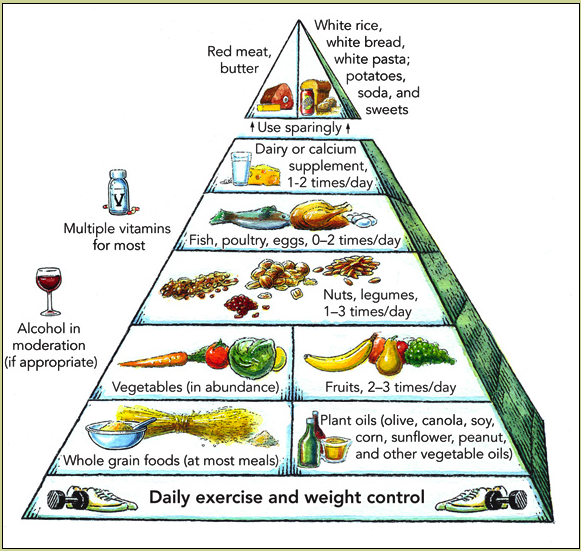
Photo Credit: Harvard Food Pyramid Public Domain 
A healthy diet includes a variety of foods. Fruits, vegetables, grains, dairy, meats, and nuts are all part of a nutritious diet. How much should you eat from each food group? Should you use the old “pyramid” to guide your food choices or is the new “my plate” a better choice? Your dietary choices should be made based on nutrition. Other factors to consider are your goals and primary objective, such as weight loss, muscle mass, lowering cholesterol or maintaining bone strength. The key to any diet plan is getting all the vitamins, minerals and other nutrients that your body needs to stay healthy. 
Your diet should include enough protein to maintain healthy muscles and bones. Meat is one option for protein. Plant-based proteins can be found in beans, rice, nuts, eggs and dairy. Meat and animal proteins usually contain more fat and cholesterol than plant proteins. If you are trying to lower your cholesterol, consider substituting meat protein for soy products or other vegetable protein sources. Whether you follow the food pyramid or food plate, you should make food choices based on nutritional value and your personal needs. A doctor or dietitian can help you create a diet that works for you.

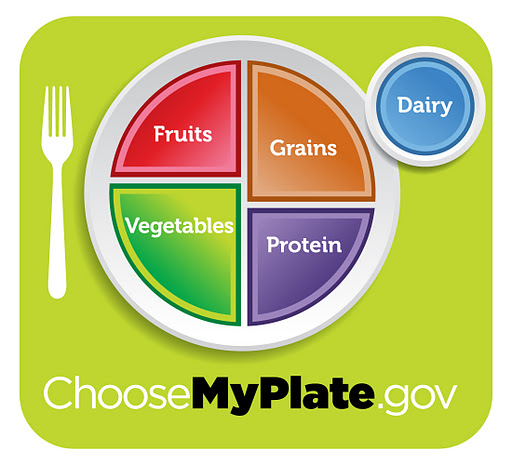
The food plate diagram recommends one half of each meal consist of fruits and vegetables. Healthy oils like olive oil and canola oil are included in the vegetable section, but not fatty oils like butter and oils that contain trans fats. French fries do not count as a vegetable. Choose a variety of vegetables of all colors and flavors to keep meals interesting as well as nutritious.

Photo Credit: USDA Public Domain

The other side of the food plate consists of healthy proteins and whole grain foods. Healthy proteins include fish, poultry, beans, peas, nuts and small portions of lean red meat. Avoid sandwich meats, bacon, sausage, hot dogs and other processed meat products. Whole grains include whole wheat bread, unprocessed oats, whole grain pasta, grits, bulgur wheat, cornmeal muffins and brown rice. Avoid pasta and bread made with bleached white flour and white rice. Dairy should be limited to one serving per meal. Drink an 8 ounce glass of whole Vitamin D enriched milk or water and a serving of fresh yogurt or cheese. Those who are lactose intolerant can substitute vitamin enriched soy milk for dairy products. 

Whether you choose to follow the food pyramid, food plate or your own diet plan, choose healthy foods and eat a variety of foods every day. Avoid too much caffeine found in coffee, tea and most sodas. Limit your sugar intake and get plenty of exercise. 

Pre-Workout Fuel

It is critical to keep your body well nourished and fueled to get the most benefit from your workouts. But what should you eat and when should you eat it? What and when you eat depends on the kind of exercise you are going to do. 
People who exercise in the morning should rise early enough to eat a healthy breakfast before running, jogging, walking or other exercise. You will need to replenish your blood sugar and hydrate your body. Drinks some water when you first wake up and eat a variety of fresh fruits and whole grain foods. Eat breakfast about 2 hours before you plan to start your morning exercise routine. If you are going to eat 1 hour or less prior to exercising, eat a light breakfast of fresh fruit like bananas or grapefruit, orange juice and whole wheat toast.  
Photo Credit: Aleph CC-BY-SA-2.5 2007
Many people like to take advantage of their company fitness center during their lunch break. Before heading to the fitness center or gym on your lunch break, eat a small whole-grain pasta salad and drink a glass of water no sooner than 2 hours prior to working out. If you don’t have time to digest a light lunch before your workout, eat a snack of whole wheat crackers and hard cheeses or fruit and yogurt before exercise. These foods can provide the complex carbohydrates and other nutrients your body needs. Carbohydrates are essential for energy, so don’t skip a snack before a workout. For late afternoon workouts, add some protein to your pre-workout meal. Natural peanut butter, turkey, white meat chicken or beans are a good source of protein. 
Avoid eating a heavy meal less than 3 hours before working out. The less time between the time you eat and the time you plan to begin your workout, the less you should eat. If you’re in a rush, grab some fresh fruit, cheese and whole grain crackers. Carbohydrate-rich foods are easy to digest and provide all the energy your body needs for stamina. Drink plenty of water before, during and after your workout to avoid dehydration.

Essential Nutrients for Every Body

The path to fitness requires not only regular exercise but also a nutrition rich, healthy diet. Dietary supplements, such as vitamins and mineral tablets or drinks, can help fill in the gaps in your diet, but most people can get all the nutrients they need from food. Making healthy food choices is easy when you know what your body needs to function and stay healthy.
Adults need calcium to help maintain bone health, blood pressure and healthy body weight. Most people can consume enough calcium every day by eating a variety of dairy and calcium-enriched foods. Milk is a good source of natural calcium. Low-fat milk is often enriched with Vitamin D and additional calcium. Yogurt, hard cheeses and soy beverages are also a good source of calcium and magnesium. Orange juice is rich in calcium and is also a good source of potassium. 

Photo Credit: J. Smith CC-BY-SA-3.0

Magnesium is an important mineral that helps promote bone strength and boosts your immune system. It is an essential nutrient for normal heart and nerve functions. Whole grain foods are rich in magnesium. Include some cracked wheat and quinoa in your diet. Almonds, dried beans and pumpkin seeds are a good source of this essential mineral. Quinoa and whole wheat are also rich in fiber and calcium.

You probably know that Vitamin C helps promote your immune system, but did you know that Vitamin C is also critical to maintaining healthy collagen? Collagen is the connective tissue that keeps your bones, skin and muscles healthy.

Fresh fruits and vegetables are an excellent source of Vitamin C. Raw kiwi, oranges, strawberries and broccoli are good sources of this nutrient. Broccoli is also a good source of Vitamin A. Carrots, spinach, sweet potatoes and cantaloupe are good choices for Vitamin A, Vitamin E and magnesium. Sweet potatoes and dried beans also provide potassium which is essential to maintaining a healthy blood pressure

Delicious & Healthy Holiday Desserts

It isn’t going to be easy to resist all the delicious desserts and tasty candies during the holidays. You can still enjoy tasty sweets like cakes, cookies and pies without all the extra calories and fat that will undermine your diet.

Photo Credit: Steven Depolo CC-BY 2.0

If you enjoy cheesecake and chocolate but worry about the calories, substitute one half of the cream cheese with low fat cottage cheese. Reduce the amount of melted chocolate in the recipe and substitute cocoa powder for rich chocolaty flavor. Top the finished cheesecake with fresh raspberries and a light raspberry sauce. Omit the cocoa and chocolate and top with fresh strawberries or blueberries for a more traditional cheesecake minus all the extra calories.

Oatmeal cookies are always a favorite. Substitute refined white sugar with coarse brown sugar and add some crushed pecans or walnuts for extra flavor. Use whole wheat flour instead of refined white flour. Raisins can also be used to sweeten the cookies. Gingerbread cookies are generally low in sugar and calories. Decorate the cookies with raisin or pecan eyes and buttons using a dab of frosting to hold the raisins and pecans in place. 
Mix together fresh fruits for a deliciously healthy fresh fruit salad. Peel and cut into bite-size pieces some mangoes, oranges, bananas, kiwis, seedless grapes, blueberries and tangerines. Include some strawberries and raspberries, if they are available. Mix together 1/4 cup of apple juice and 1 tablespoon of orange zest. Bring to a boil. Allow the juice and zest to cool. Strain the juice over the fresh fruit for a tangy, sweet flavor. Drizzle bowls of fruit salad with low fat yogurt for extra flavor.
For recipes and more information, see: The Food Network, Healthy Holiday Desserts

Flatter Abs by Christmas

Do you want to looks slimmer, feel better and fit into that special outfit for the holiday? You can achieve a flatter stomach, a stronger core and a leaner shape by eating health foods and performing a few easy-to-do abdominal exercises every other day. Start now and you should start to see results in about 3 to 4 weeks. See your doctor for a complete check-up before starting any exercise program. You can achieve a slimmer waist and stronger abs by eating nutritious foods and regular exercise. A personal trainer can help you set realistic goals, develop a plan to achieve your goals and help keep you motivated. 


Photo Credit: Localfitness.com.au
Begin your flatter abs program by adjusting your eating habits. Most people eat three large meals each day and a couple of snacks between meals. Some people tend to over-eat when meals are hours apart. To avoid hunger and still get all the nutrition you need, eat smaller, more frequent meals. Frequent smaller meals will keep your metabolism working and your blood sugar stable. Start with breakfast that includes natural grains and fruits. Enjoy a mid-morning snack of granola, nuts or sliced fruit. Avoid fast food for lunch if possible. Bring a salad with low-fat dressing, peanut butter sandwiches on whole wheat bread and yogurt. An afternoon snack of  fruit and nuts will give your body a boost of energy and nutrition that will help prevent fatigue and hunger. Lean meats, whole grain pastas, rice, fresh vegetables and dried beans are a great choice for dinner to supply your body’s protein, vitamin and energy needs. A vegetable or fruit smoothie a couple of hours after dinner can help you avoid the urge to eat something before bed.

Exercise your abdominal muscles in the morning or evening at home or on your lunch break at work. Take advantage of your company’s fitness center if it has one or join a gym near your work. Start your ab program with a few belly roll exercises in the morning. Sit on the floor and bend your knees. Keep your feet flat on the floor and stretch your arms in front of you palms toward the floor. Breathe out and roll your body back onto the floor. Keep your feet flat on the floor. Breathe in and roll back up. Repeat this exercise 20 times and increase to up to 50 times as you grow stronger.


Belly curls will slim your abs and strengthen your core. Lie on the floor with your knees bent toward your chest. Raise your feet off the floor and gently lift your bottom. Roll back so that your upper back and shoulders are touching the floor. Hold the position for about 2 seconds and then return to the start position. Perform this exercise 10 times. Gradually increase the number of repetitions until you can do 20 belly curls.


You can slim your waist by doing crunches. Lie down on the floor and bend your knees. Put your hands behind your head and inter-lace your fingers. Point your elbows toward the ceiling. Lift your left shoulder off the floor and try to touch your right knee with your left elbow. Relax and repeat the exercise on the other side. Start with 10 repetitions and build to 20 repetitions.


A personal trainer can help you learn to make healthy food choices and develop an exercise plan to achieve a slimmer, stronger and flatter abs!