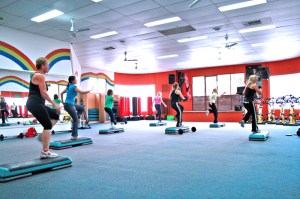
Exercise & Allergies

Photo Credit: mcfarlandmo

April showers bring May flowers — and allergies for some people. Pollen allergies can make you miserable and might interfere with your regular outdoor exercise routine. You don’t have to give up the great outdoors during allergy season. Some preparation and precautions can make exercising outdoors when  you have allergies a little more tolerable.

Keep track of pollen season on your calendar. Many weather stations and websites publish pollen alerts, which you can use to determine when you should exercise indoors or take extra precautions outdoors. If you know which pollen makes you miserable, avoid outdoor activities during peak times or take medication before you go outdoors. Ozone and other air pollutants can make allergy season worse. Avoid exercising outdoors on days when ozone and pollen counts are high.

Exercise before or after peak pollen levels. Most pollen levels peak around midday. Exercise outdoors in the morning or late afternoon to early evening to avoid the worst pollen levels. Opt for less intense exercise during peak pollen times, too. Instead of running 5 miles, jog for 2 miles or use the treadmill at the gym. Talk to your doctor about exercising outdoors during allergy season, especially if you suffer from asthma.

Hangover Help

CC-BY-SA-2.0 Dana Robinson

Hangover prevention and cures are basically myths, yet they persist. If you plan to celebrate St. Patrick’s Day with a pint, or two, remember to drink in moderation! There is little you can do to prevent a hangover except to drink in moderation. Once you’ve over-indulged and wake up the next morning with a hangover, rest, fluids and mild pain relievers are your best hope for feeling better. Some hangover remedies are not only ineffective, they may also be harmful. Think before you drink and enjoy your celebration with moderation.

Why does alcohol cause such misery? Alcohol is a diuretic, meaning it removes fluids from your body which can lead to dehydration. Re-hydrating your body with water and sports drinks can help to alleviate some of the symptoms of a hangover. Your upset stomach may also be a result of drinking too much. Alcohol irritates the lining of your stomach, which leads to nausea.  Drink a glass of water between alcohol drinks to help prevent dehydration. Drinking a glass of water between alcohol drinks also slows you down so you don’t over-indulge.

One hangover cure that won’t go away is to treat a hangover with hair of the dog.  The worst thing you can do to alleviate your hangover symptoms is to drink more alcohol. A drink in the morning might help you feel better for a little while, but soon your symptoms can return worse than before you took that drink. Drink water to re-hydrate your body or have a glass of orange juice or tomato juice — without the vodka.

Another myth that won’t go away is eat a heavy, greasy breakfast to cure a hangover. There is no medical evidence to support the claim that greasy foods, such as sausage and bacon, help cure a hangover. In fact, heavy, greasy foods or spicy sausage might irritate your already upset stomach and make you feel worse. Despite your miserable symptoms you need to re-hydrate and fuel your body after a night of partying. Eat a light breakfast of oatmeal, cereal, banana or toast.

Strong coffee won’t cure a hangover or help sober you up. If you wake up with a hangover, you might want to skip the coffee. The caffeine in coffee causes your blood vessels to constrict, which can exacerbate your headache. Regular coffee drinkers might suffer withdrawal, which can make a hangover headache worse. Drink one cup of coffee to get your morning fix and then drink water. Wait about 1 hour and if you feel okay, maybe have a second cup of coffee but no more.

Avoid a hangover completely by drinking in moderation. You may feel like laying on the sofa or staying in bed all day if you have a hangover, and that is exactly what you should do. Rest, water and time are the only things that cure a hangover.

Fat-Fighting Foods

You’ve probably heard about green tea. Claims about the benefits of green tea range from helping you to sleep to increasing metabolism to helping improve your mood. There is a basis for the metabolism claim — catechins. Catechins is a plant chemical that boosts your metabolism. To enjoy the fat-fighting benefits of green tea, drink several cups of hot tea each day. Replace your regular soda or coffee with cream and sugar with a cup of hot green tea. You will enjoy the benefits of catechins metabolism boost while cutting out extra calories from sodas and coffee additives. Hot peppers contain a chemical called capsaicin, which briefly boosts your metabolism and curbs your appetite. You might eat less when you eat spicy foods.

Grapefruit does not have a magic ingredient despite the fad diet claims from a few years ago. Grapefruit does contain plenty of soluble fiber, which takes longer to digest and may help you feel fuller longer. Raw fruits and vegetables of all kinds help you feel fuller longer and are loaded with vitamins and minerals. Raw vegetables and fruits are generally low in calories, high in fiber and loaded with nutrients your body needs. Trade potato chips and other calorie loaded snack foods for a plate of raw vegetables.

Use spices in your foods to boost flavor without added calories. Cinnamon helps to curb your appetite and may stabilize your blood sugar. Stir some cinnamon into coffee, tea, yogurt and milk drinks.

Winsor Pilates Ball Workout

Photo by José Vílchez

Photo Credit: José Vílchez

Pilates is a popular form of exercise practiced by Hollywood stars, athletes and ordinary people. Pilates isn’t a fad. It is a type of exercise developed in the early 1900s by Joseph Pilates, an athlete who designed the exercise to help improve range of motion, strength and balance. The philosophy of Pilates promotes harmony of body and mind. This type of exercise takes concentration, dedication and supervision by a trained Pilates instructor. Pilates exercise movements can be modified to include exercise equipment, such as an exercise ball. Winsor Pilates was developed by Mari Winsor, a former professional dancer and fitness expert. Mari Winsor developed her slimming style of Pilates about 20 years ago. Her form of Pilates emphasizes the slimming and toning nature of Pilates exercises. Mari Winsor trained with a Pilates expert who was trained by Joseph Pilates himself. She opened a studio in Los Angeles where she has trained celebrities as well as regular people. Mari Winsor often employs equipment, such as balls, to enhance the toning and trimming effects of Pilates exercises.

If you want a strong core, Pilates can help you get it. Pilates mat exercises using an exercise ball can help you strengthen your abdominal and back muscles. Balancing on the ball while performing Winsor Pilates exercises engages all of your core muscles. The ball provides an unstable surface which forces your abdominal muscles to continuously make small adjustments to keep your body stable and balanced. Researchers reported in a study published in the Journal of Bodywork and Movement Therapy that women who were previously sedentary developed stronger abdominal and back muscles as well as improved endurance and flexibility.

Regular Pilates workouts can help you develop better posture, too. You’ll experience greater flexibility and greater range of motion as you stretch your muscles and strengthen your joints. Strengthening your back muscles and core can also help prevent or relieve minor back pain caused by weak muscles. You can do Pilates 2 to 3 times each week as part of your strength training routine. Pilates isn’t effective for weight loss, so you still need about 150 minutes of moderate aerobic exercise each week to lose weight and maintain weight loss.

The exercise ball, also called a stability ball, can be incorporated in Pilates routines to help strengthen your core and back muscles. There are different skill levels of Winsor Pilates ball exercises to accommodate beginners to the Winsor ball expert. No matter how fit you are, you should begin with the easiest form of Winsor Pilates ball exercises until your body becomes accustomed to balancing on the unstable surface of the ball. The intermediate and advanced levels present a challenge by requiring greater coordination with multiple moves. Pilates exercises on an exercise ball include the shoulder bridge, the roll over with scissors, the twist and leg pull. Do knee folds by sitting on the ball with your feet hip-width apart on the floor. Lift one foot off the floor and hold it for 5 seconds. Repeat with the other leg.

The first thing you should think about is finding the right Pilates instructor and selecting the right size ball. Not all exercise balls are created equal. Select a ball that gives slightly when you sit on it. You should be able to sit comfortably on the ball with your knees bent at a 90 degree angle with your feet flat on the floor. Practice sitting on the ball to find your balance and adjust your core to stabilizing your body. Once you feel comfortable on the ball, try a few simple Pilates exercises, such as knee folds.

Pilates Portable Studio

Pilates is a form of exercise that helps to improve your core strength, tones and stretches your muscles and improves your overall level of fitness. You can do Pilates workouts at the gym supervised by a trained Pilates instructor or you can try it at home. The Pilates Portable Studio is designed for home use as well as gym exercises. Make sure you know how to do the exercises before you try them at home.

If you like the Pilates Reformer, you can get the same great toning, strengthening and flexibility workout at home with the Portable Studio. You don’t have to be an expert to enjoy the Portable Studio at home. It’s easy to use and comes with an illustrated exercises guide. It’s a simple piece of equipment that consists of a bar with 2 resistance bands. You can adjust the length of the bands for a more vigorous workout too. Take the time to focus on the instructional DVD so that you perform the exercises with proper form to reduce your risk of injury.

You can do dozens of effective exercises using the Portable Pilates Studio. Exercises, such as the V-sit, single leg drop and leg circles work your legs, glutes and core. You can firm and tone your arms and upper body by doing elevated curls, chest pulls and the overhead press. Elevated curls and the shoulder press are especially effective to work the triceps on the back of your arm.

The Pilates Portable Studio is effective for firming, toning and strengthening when used properly. The key is that you have to use it. It won’t work if it is gathering dust in your closet. One of the major benefits of the portable studio is it’s simple, easy-to-use design. It works like a Reformer but without the bulk. It’s easier to use than resistance bands alone because you don’t need a door frame or wall mount to stabilize the bands. You can hold the bar with the band handles looped over your feet or stand on the bar and pull the bands with your arms or legs.

Before you start pulling on the Portable Studio bands, thoroughly read the instructions. Don’t try any exercises until you are confident that you understand the moves and proper form. See your doctor for a check-up before you begin any exercise program. Stop exercising immediately if you experience pain. Seek medical attention if pain is severe or does not subside. Wear appropriate workout clothing when exercising. Drink plenty of water before, during and after exercise to avoid dehydration. Check the condition of your home exercise equipment before each use. Don’t use the Pilates Portable Studio if you notice any tears, loose connections or frayed handles. Store your equipment in a safe place away from children and pets.

Shoulder Lifts That Won’t Stress Your Ligaments

Ligaments are bands of fibrous tissue that hold your joints together and connect bone with cartilage. The joint capsule in your shoulder is a collection of ligaments that connects the upper bone of your arm to your shoulder socket. Besides being painful, shoulder ligament injuries can prevent you from being able to exercise or perform ordinary daily activities. Strengthening and improving flexibility of your shoulders can help reduce your risk of a painful shoulder ligament injury.

The most common causes of injury to a shoulder ligament are activities that involve repetitive, overhead motion, such as weightlifting, swimming and playing tennis. Under-developed or weak muscles and ligaments can contribute to shoulder ligament injuries. Shoulder separation or dislocation of the shoulder joint may occur from a fall that separates the ligaments that attach your shoulder joint to your collarbone. Increasing the strength of your shoulder muscles can help reduce your risk of injury to your ligaments and muscles.Stretching your shoulder muscles can help improve flexibility and range of motion to reduce risk of ligament injury. Resistance band exercises can strengthen your shoulder muscles and improve ligament strength and flexibility. Shoulder strengthening exercises can be done as often as 3 times each day. Do 12 repetitions of resistance band exercises daily to improve shoulder strength. Resistance exercises include external rotation, internal rotation, pull-backs and pull-downs.

Warm-up and stretch your muscles before lifting weights. A normal military press is performed by facing the weights of a machine and lifting the weight from behind your head. This position places your shoulder ligaments and joints at risk of injury. Make sure that you are not lifting more weight than you can handle. Face backward on the shoulder press machine to avoid the risky position. Lift the weights straight up from your shoulders.

The lateral raise exercise is a good exercise to improve shoulder strength without stressing your shoulder ligaments. Performing the lateral raise with your palms pointed toward the floor can stress your shoulder ligaments and muscles. Use a neutral grip with your thumbs pointed toward the ceiling when doing lateral raise exercises to reduce stress on your shoulder joints and ligaments.


Why Can’t I Lose Weight? The Truth About Weight Loss & Exercise


You’ve been exercising regularly but the weight just doesn’t seem to be dropping like you expected. The truth is exercise alone won’t help you lose weight. Exercise is critical to being healthy, but if you want to lose weight  you have to change the way you eat and watch what you eat. Exercise is only part of the equation. You have to create a calorie deficit and exercise to lose weight. Eat fewer calories and exercise more to burn more calories than you eat. Don’t sacrifice nutrition in your quest to lose weight. Cut out the empty calories, such as candy, cookies, chips and soda. Replace those snacks with healthy, low-calorie alternatives including fresh fruit, dried fruit, nuts and whole grains. Trade ice cream for fruit sorbet and drink flavored water instead of soda. Small changes in your diet can make a world of difference in your caloric intake.

You can lose weight by dieting alone, but you may regain the weight unless you exercise. Exercise combined with dietary changes can not only help you lose weight, it also helps you maintain your weight loss. Many times people lose weight only to regain it later. Stay active, exercise regularly and continue to eat a low-fat, reduced calorie diet to keep the weight off. Binge eating can undo weeks of diet and exercise. Exercising a couple of extra minutes won’t burn the calories from 2 donuts or a greasy cheeseburger and fries. People often underestimate the number of calories they consume and overestimate the amount of exercise they get. Keep a food and exercise journal to more accurately measure how much you get of both food and exercise. You might be surprised to learn that you are eating a lot more than you thought and exercising a lot less than you estimated.

Don’t rely on the calorie counter on your treadmill or exercise bike. Calorie counters are fairly accurate, but they can vary from person to person. Exercise machine calorie counters don’t take into account the calories you would burn just by breathing and other bodily functions. So you actually burn fewer additional calories than the display estimates. You need to be physically active as much as possible during the day in addition to regular workouts. To lose weight and to maintain your weight loss, you need to change your lifestyle from sedentary to active in addition to changing your diet. If you need help getting on track and staying on your weight loss plan, a personal trainer may be able to help you.

Don’t Make Excuses! Exercise!


It can be difficult to overcome excuses not to exercise. You know you should get moving. You know that people who exercise regularly are healthier and less likely to develop diseases, such as diabetes and cardiovascular disease. You have also heard that people who exercise are usually happier and sleep better than people who rarely or never exercise. You need at least 150 minutes of aerobic exercise each week. Walking, jogging, riding a bicycle or even doing work around the house, such as mowing the lawn, are good ways to exercise. What’s your excuse for not exercising? Here are some tips about overcoming excuses so you can get moving and get fitter.

You may say that you don’t have time to exercise. A busy lifestyle with work, kids, social commitments and duties does not have to prevent you from exercising regularly. A few minor adjustments to your lifestyle can help provide ample time to workout. Three days each week, trade your television time for exercise time. Instead of spending an hour in front of the television, workout for 30 minutes or go for a brisk walk before or after your favorite television program. You don’t have to exercise for 30 straight minutes. Break up your workout into three 10 minute sessions throughout the day. Ride a bicycle to work or walk if you can. Park your car a couple of blocks from work and walk. Take the stairs instead of the elevator.

You may put off exercising because you think it’s boring to trudge along on a treadmill or pedal a stationary bike for 30 minutes. Exercise does not have to be boring. Do the kinds of activities you like to do or try something new. Music lovers can take a dance class, such as salsa or ballroom dancing. Take tennis lessons or join a dance aerobics group. Start a walking group with your best friends or co-workers. Exercise doesn’t have to be boring. Working out with a group is a great way to spend time with old friends or make new friends.

You probably feel tired after a long day at work. You may be tempted to put up your feet and zone out in front of the television for a couple of hours instead of exercising. Exercise will actually help you feel stronger and more energized. Exercise increases your heart rate and your respiration to move more oxygen through your body. Your brain will release hormones called endorphins, which will help improve your mood. You will feel better physically and emotionally after a good workout.

Functional Ab Exercise


You’ve probably heard the phrase “functional training” tossed around at the gym or used by your personal trainer. Chances are you aren’t really sure what it means. Functional training is simply doing exercises that are similar to real life movements. For example, when you climb stairs, you use your legs, thighs, hips, core, back, arms and abs. Some stair stepper machines don’t work your arms or work only your lower body. Functional training uses more natural movements that simulate real life activities. Your muscles work in planes of motion that are normal. Many injuries occur when you exercise beyond the normal planes of movement. Functional training helps eliminate this risk. Functional training also strengthens your muscles, which makes every day activities easier. Your abdominal muscles stabilize your spine and hips, as well as assist in maintaining balance and lifting. A weak core impacts your overall level of fitness and endurance. Strengthen your core to be stronger, enjoy better balance and avoid back pain.

One of the best exercises to strengthen your core muscles as well as your back muscles for a stable spine is the plank. Your abdominal muscles help to stabilize your spine. The plank exercises is function in that you aren’t crunching or twisting in an unnatural manner. Your aren’t actually moving at all. The plank exercise trains your abdominal muscles, so that you develop stability and support for your spine. Keep your spine in a neutral, or straight, position when doing planks and squeeze your abdominal muscles to help keep your spine straight. Make a straight line with your body from the top of your head to your heels and hold the position for 20 to 30 seconds. It’s okay if you can hold a plank for only a few seconds in the beginning. Add 5 seconds to your hold each time you do planks and soon you will be holding the position for 30 seconds or longer without sagging your back.


5 Best Weight Loss Exercises

Running is one of the best choices for maximum calorie burning and weight loss.  Whether you choose to run on your favorite trails or on a treadmill, you will get a tremendous workout and burn A LOT of calories. You need to burn 3,500 extra calories per week to lose one pound of body fat, so if you run for one hour at 5 mph at least four to five times per week, you could burn between 600 – 800 calories, according to Mayoclinic.com. That means you can burn between 2,400 and 4,000 calories per week, which makes running a great way to start slimming down and toning up.  If you have bad knees, then the elliptical machine is the ideal low-impact alternative to running.  What’s most important, however, is choosing a cardiovascular activity that you will really enjoy to keep you enthusiastic and motivated to exercise on a regular basis.  Swimming, step aerobics, cycling, hiking, spinning, power walking and circuit training are all additional ways to help you lose weight and get in the best shape of your life.

Whatever physical activity you choose to do, the key to reaching your weight loss goals is to never allow your body to adapt to your fitness routine. Once your body adapts to your routine, you will plateau and stop seeing results. That is why it’s important to vary your routine roughly every three to four weeks. You can change the intensity or duration of your workout. Try exercising at a different time of day or change the location of your workouts, and don’t be afraid to try a new activity. Cross-training helps prevent injury and boredom, as well as keeps your body from adapting to your routine. Throw in an aerobics class or a swim class to shake things up a bit. Just remember to keep it fun, interesting and challenging. Keep pushing yourself to move to the next level and improve your fitness.

Here’s a list of some of the best weight loss exercises. You can calculate how many calories you will burn based on exercise duration and body weight using an exercise calculator, which you can find on many fitness websites, such as webmd.com or acefitness.org.
1.       Running
Running outdoors or on a treadmill is one of the best weight loss exercises you can do.  You can burn approximately 100 calories for every mile you run. You can do this activity virtually anywhere, and all you need is a good pair of running shoes. If you stay consistent and focused on your weight loss goals, you will see positive results.
2.       Elliptical Machine
If the high-impact nature of running is too much for you, then the elliptical machine will be the next best alternative. Training on the elliptical machine is easy on the joints and simulates the cardio of running with added resistance. You can also burn up to 500 calories in one hour, almost equivalent to running.
3.       Step Aerobics
You will get an intense cardio and strength workout when you do step aerobics. You will work your glutes, hips, legs and upper body. Alter step height and speed to burn more calories in less time.
4.       Swimming
Swimming works practically every muscle in your body. You will also develop endurance, strength and cardiovascular fitness. Add swimming as a cross-training option to your regular exercise routine for more variety, and to prevent injury and lessen the impact on your joints. Water therapy is also ideal for those with injuries.
5.       Bicycling
Cycling improves strength, muscle tone and cardiovascular fitness. You can ride a bike almost anywhere, and it’s relatively inexpensive. Or, you can work out on a stationary bicycle at home, at work or at a gym. If you cycle on a regular basis, you will tone and strengthen your leg muscles and improve the mobility of your knee and hip joints. Continually challenge yourself and burn more calories by changing the speed and/or resistance.