Effective Stability Ball Exercises

Photo Credit: LocalFitness.com


An exercise ball is a great way to develop your core strength, back and spine strength and improve your balance. Exercise balls can make exercise fun while you get in shape. Just sitting on an exercise ball will help develop your core strength and balance. Because the ball rolls around you are forced to engage your abdominal muscles and sit up straight to keep the ball stable. As the ball tries to roll underneath your body, you respond by moving your core and tightening your leg muscles, first the left then the right, to keep the ball stable. Try some more difficult exercise ball exercises to get a really good workout for your core, back and shoulder muscles.
Crunches on an exercise ball are moderately easy to perform but will fully engage all of your core and back muscles. Lie back on the ball with the ball under the middle of your back. Keep your feet flat on the floor, hip-width apart and your knees bent at a 90 degree angle. Cross your arms over your chest to prevent you from pulling yourself up using your hands behind your head. When you feel stable on the ball, lift your upper body up using your abdominal muscles. Avoid the urge to pull yourself up using your neck.
The bridge is an effective exercise to strengthen your back, chest, core and leg muscles. Begin by sitting on the exercise ball with your arms crossed over your chest. Slowly walk outward one step at a time while rolling the ball under your body. Roll the ball back toward your upper back until the top of your body forms a flat line from your hips to your chest. Make sure to keep your feet flat on the floor with your knees bent at a 90 degree angle. The upper leg, back and chest should form a straight line that is parallel to the floor. Hold this position for about 10 seconds and then roll back to the sitting position.
Push-ups are more effective with an exercise ball. Lie across the ball on your abdomen. Place your palms on the floor about shoulder width apart. Walk forward until the ball is resting underneath your thighs. Keep your feet together and your spine straight. Lower your upper body toward the floor by bending your elbows and then push back up.  Do 10 push-ups and increase the number of push-ups as your body grows stronger.
5 Minute Workout

Photo Credit: Larsinio Public Domain
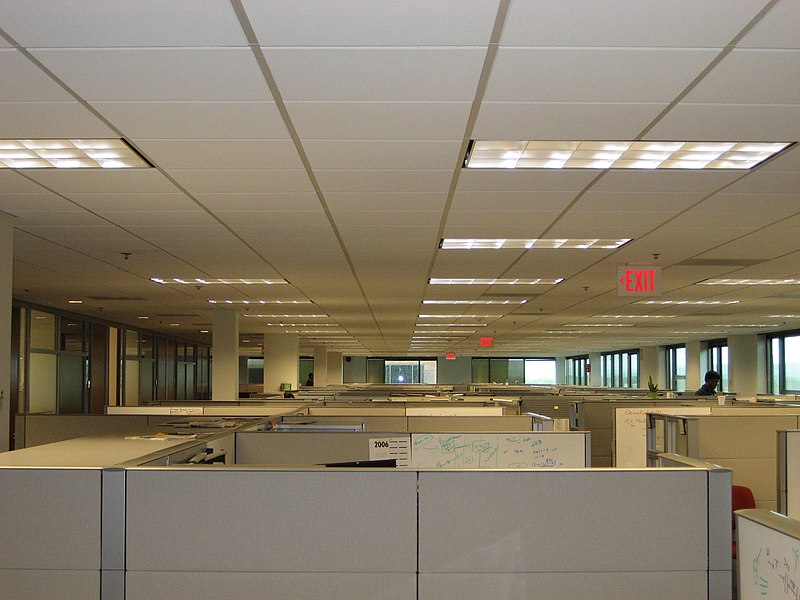
It’s difficult to find the time to workout during the day, especially if you sit at a desk all day. Commuting on the train or driving to work eats up time, too. After work you may have to shuttle the kids to and from after school activities, cook dinner and then clean up. When can a busy person find the time to work out for 30 minutes every day? You can get your full 30 minutes of exercise every day in 5 minute increments. Once each hour, take 5 minutes to do some exercises at your desk. You don’t need equipment, gym clothes or running shoes to do these exercises. Do each exercise for 1 minute. Repeat the routine every 1 1/2 hours throughout the day until you have completed 30 minutes of exercise. 
First, do some squats right at your desk. Stand up straight with your feet about hip-width apart and your arms at your sides. Drop your shoulders and squeeze your abdominal muscles. Lower your body by bending your knees. Simultaneously bring your arms around to the front of your body and hold them straight out as you lower your bottom to your chair seat. Do not put any weight on your bottom, but merely touch the chair seat and then stand up straight again as you bring your arms back to your sides. Repeat the squat for 1 minute to work your core, shoulders, chest and legs.

You can perform crunches right at your desk while sitting down. Sit up tall in your chair behind your desk and place your hands behind your head. Brace your abdominal muscles and bend forward toward your desk. Bend forward until you feel the stretch in your shoulders and abs, then return to the upright position. The desk crunches will work your abs, shoulders and core muscles.  
The next exercise works your arms, shoulders, core, back and chest muscles. Sit in a chair that has arms but does not have wheels. Sit up straight in the chair and rest your feet flat on the floor. Grasp the arms of the chair and lift your upper body off the chair. Lower your body back down but do not rest your weight on the seat of the chair. Repeatedly lift and lower your body using only your arms. 

Slide your chair back from your desk to do one minute of twisting crunches. Place your hands behind your head and sit up tall in your chair. Squeeze your abdominal muscles and then bend forward bringing your left elbow toward your right knee. Lift your right knee toward your left elbow at the same time. Repeat on the other side by bringing your right elbow and left knee toward each other. 
Finish your 5 minute workout by doing some stretches. Sit up tall in your chair and place your hands behind your lead. Interlace your fingers. Lift your arms straight up over your head with your palms toward the ceiling. Stretch your body up as tall as possible. Place your hands behind your head and twist to the right and then back to the center. Stretch to the left and then back to the center. Relax your arms on your thighs and turn your head to the left toward your left shoulder. Next, turn your head toward the right. 

You can do these 5 exercises every day to keep your body strong and increase your energy throughout the day. 

Find the Right Running Shoes

Photo Credit: Josiah Mackenzie CC-BY-2.0
Since the settlement between the Federal Trade Commission and the shoe company Sketchers, some people may be wondering if there is any shoe that lives up to fitness claims. Beware of any shoe company that claims you can lose weight, strengthen your muscles or improve your circulation if you wear their shoes. If there is one lesson to be learned from the Sketchers case, it is to always carefully evaluate the claims made by fitness equipment manufacturers. If you are a runner, it is critical that you wear a shoe that cushions and protects your foot. Running shoes are not the same as tennis shoes or sneakers. They are designed specifically to absorb shock and protect your foot. How can you select a shoe that is comfortable and protective? 
Each runner has an unique style and some run more miles more frequently than others. There is no perfect fit for everyone, but every runner needs a stable shoe that protects the foot from shock when it hits the ground. Most running shoes are designed to absorb the shock of 2 1/2 to 3 times your body weight. There should be ample cushioning in both the heel and front of the shoe. Running shoes should also be flexible, yet provide stability for your foot. The bottom of the shoe should have a tread designed to grip the ground to prevent slipping. 
Make sure that the shoe you buy has adequate arch support. Shoes are designed for high, neutral and low arches. The best way to determine which type of arch support you need is to see a podiatrist, but you can find your type of arch by simply looking at your bare foot print. Select a shoe that fits snug but comfortably and is designed for the type of terrain where you will be running.
Runner’s World has an easy-to-use shoe finder to help you find a style of shoe that can work for you. 

Protect Young Athletes from Dehydration

Photo Credit: Derrick Mealiffe CC-BY-SA-2.0
Many children play sports outdoors during the summer. Dehydration can be a risk when the weather is hot and the kids are playing. Children who engage in vigorous exercise that includes running, baseball, softball and soccer can become dehydrated quickly. Protective clothing and padding can contribute to dehydration and overheating by holding in heat and preventing the evaporation of sweat. Children who may be especially susceptible to heat-related illness include those who are overweight, rarely exercise, have a condition like diabetes and children who have recently had a cold or flu. Dehydration can increase the risk of heatstroke, heat exhaustion and heat cramps. Most team coaches are trained to prevent dehydration by providing water and drinks to restore electrolyte balance in young athletes, but don’t rely completely on your child’s coach. There are steps you can and should take to make sure your child remains hydrated during a game.
Make sure that your child drinks plenty of water before and during a game or practice session. Take your own bottled water and sports drinks to the game or practice and make sure that your child drinks a cup of water at each break in the game. Learn the warning signs of dehydration and take action immediately if you think a child may be succumbing to a heat-related illness. Dehydration symptoms include a dry mouth, headache, thirst, cramps, dizziness and fatigue. Make sure your child knows how to recognize the symptoms of dehydration and to report symptoms to the coach or to you immediately. Left untreated with water, dehydration can result in confusion and loss of consciousness. A child that appears to be confused should be taken to an emergency room immediately.
Dehydration is easily prevented by providing children with plenty of water or their favorite sports drink before, during and after practice and games. Talk with your child’s team coach about dehydration prevention and the warning signs of dehydration. Games and practice should be cancelled or moved indoors when the temperature and humidity is high.
Resources
Bolero Advanced Hydration

Get Moving to Relieve Stress

Photo Credit stuartpilbrow CC-BY-SA-2.0
It is practically impossible to avoid stress, but we can learn to manage stress and reduce the impact of many of the negative effects of stress. Stress often manifests in physical symptoms, such as headaches, insomnia, elevated blood pressure, muscle aches and pains and tiredness. Stress affects your mood and may result in anxiety, inability to focus, feelings of sadness and restlessness. Your behavior may also change due to stress. Some people deal with stress by overeating or not eating enough. Stress can be the driving force behind angry behavior or substance abuse. Any form of exercise can help relieve the effects of stress. You can benefit from the stress relieving effect of exercise whether you are in top shape or completely out of shape.
Regular exercise improves your physical fitness and your mood. Exercise and physical activity stimulates your brain to produce endorphins that improve your mood and relieve aches and pains. After about 30 minutes of exercise, you may discover that you stopped thinking about the things that caused your stress. As you focus on exercising, you are not worrying about tomorrow’s long list of tasks at work, your teen’s growing pains or financial concerns. Regular exercise and a healthy diet can help you feel better physically and emotionally. Your sleep and ability to concentrate will also improve. As you continue to exercise and focus on the movement of your body, you should experience increased ability to focus in other areas of your life.
Any physical activity can help relieve stress and stress-related symptoms like anxiety. Walking, riding a bicycle, lifting weights or simply cleaning your house or working in the yard or garden counts as exercise and helps to relieve stress. Regular exercise improves your self-confidence also. You can lose weight and look and feel more fit.


Safe Summer Grilling

Photo Credit:  Tom Harpel  CC-BY-2.0
Grilling food outdoors during the summer is an American tradition. The savory smell of grilled steaks and vegetables fill neighborhoods all around the country during this time of the year. Unfortunately, many Americans will cook high-fat, high-cholesterol foods like sausages and ground beef. In addition to the unhealthy saturated fat, meat drippings that burn on the coals release chemicals that may contribute to cancer. Polycyclic aromatic hydrocarbons (PAHs) and heterocyclic amines (HCAs) are produced when meat is grilled or when fats burn on the grill coals or heating elements. Bacteria is also a potential health concern when grilling outdoors. Handle meats carefully, make lean meat choices and grill more vegetables for a safer, healthier grilling season.
Grilled ground beef patties are a summer fare favorite. Bacteria on meat is normally killed during the cooking process but under-cooked meat can leave live bacteria inside the meat. Bacteria on the outside of ground beef gets mixed up to the inside of the burger patties when they are formed. Cook hamburger patties thoroughly to kill harmful bacteria hiding inside your burger. A 1/2 inch thick burger should be cooked for about 13 to 15 minutes. Meats like chicken, steaks and fish should be cooked thoroughly to kill bacteria inside the meats. The only way to be sure chicken is safely cooked is to use a meat thermometer. The inside temperature of chicken has to reach at least 165 degrees Fahrenheit to be safely cooked. 
Cook sausages on low heat to avoid charring the outside but leaving the inside under-cooked. Bratwurst and Italian sausages should be cooked over low coals to prevent the skin from burning and splitting. Start with a lean cut of meat and trim all the fat off the meat before grilling to reduce the saturated fats in your diet and to avoid potentially harmful chemicals released when fat drips on the coals.
Try some fruits and vegetables on your summer grill for a tasty healthy alternative to meat. Tomatoes, bell peppers, zucchini, pineapple, eggplant,  apples, pears, and onions are delicious grilled as a vegetable-fruit mix or as kabobs. Cook vegetables for 10 to 12 minutes over a medium grill. Use marinade for extra flavor.

Pilates to Firm Your Buttocks and Thighs

Photo Credit: Ebullientben CC-BY-SA-3.0

Doing Pilates exercises is a good way to firm up your body and improve your strength and endurance. Pilates exercises focuses on controlled movements and breathing. This type of exercise improves core strength for stability and strength. Pilates exercises can also firm and tone all the muscles of your body including difficult areas like the thighs and buttocks. You need only a mat or carpeted floor to perform many Pilates exercises to firm and tone your lower body and legs. 
The thighs tend to be a problem area, especially for women. Thigh lifts can help firm up the inner thighs that are especially difficult to exercise. To do thigh lifts, lie down on the floor or on an exercise mat on one side. Support your upper body with your elbow and prop your head up with your hand. Keep your elbow under your shoulder and stretch your body out straight. If you lie down on your right side, your left leg will be on top. Bring your left leg in front of your hips and place your foot on the floor. Grasp your left ankle with your free (left) hand. Breathe in and tighten your abdominal muscles, while simultaneously lifting your right leg a few inches off the floor. Hold the position for 5 seconds. Exhale as you lower your right leg back to the floor. Do 10 repetitions and then switch sides.
Do side thigh lifts from the same starting position, except extend your arm above your head and rest your head on your arm. Stretch your body out in a straight line with one leg on top of the other. If you begin on your left side, you place your right hand on the floor in front of your chest for support. Inhale, squeeze your abdominal muscles and the lift both legs off the floor a few inches. Keep your legs together and hold the position for 5 seconds. Exhale and then lower your legs back to the floor. Do 10 repetitions on each side. 

Pelvic curls will help tone your hips, buttocks and thighs. To do pelvic curls, lie on your back and bend your knees. Place your feet flat on the floor with your feet about hip-width apart. Place your palms on the floor on each side of your body for stability. Exhale as you tighten your abdominal muscles and pull your belly button toward your spine. Inhale and slowly lift your pelvis and buttocks off the floor by curling your body upward from the tailbone and lifting with your legs. Keep your feet, shoulders and palms flat on the floor. Hold the position for 5 seconds. Exhale as you roll your body back to the floor. Repeat this exercise 10 times. 

May Is National Physical Fitness and Sports Month

Photo Credit: Peter van der Sluijs CC-BY-SA-3.0

May is National Physical Fitness and Sports Month. It’s a great time to start a fitness program or help family members become more active. It’s never too late to start getting fit. Children and teens should get an hour of exercise each day. Adults of all ages need about 1 hour 15 minutes of vigorous exercise or 2 1/2 hours of moderate exercise each week. Once you make exercise part of your daily routine, it’s easy to stay physically fit and active throughout your life. People who exercise regularly are less likely to have high blood pressure, reduce the risk of type 2 diabetes and have lower cholesterol. National Physical Fitness and Sports Month is a good time to get active and to help family members become more active.  You can find more information about recommended activity levels for people of all ages and physical ability on the US Department of Health and Human Services website, Physical Activity Guidelines.
Help get members of your family off the couch and exercising by taking small steps. Choose an activity that every member of the family can participate in regardless of their fitness level. Begin by taking a family walk around the block after dinner two times each week for a month. Go for a family block walk three times each week the next month. Take the whole family for a bike ride or go roller skating in the park after dinner one night each week. 
Sign up for a family membership at your local YMCA or gym. Take the whole family swimming at the gym or YMCA every weekend. Meet up with family members at the gym twice each week and then enjoy a treat like low-fat frozen yogurt afterwards. Make it a routine and make it fun for everyone. Challenge family members by helping them to set realistic fitness goals and then make it a race to success! For example, challenge your spouse to a race to lose 10 pounds in the next 60 days by eating nutritious foods and exercising regularly. 
Buy fitness-friendly birthday, anniversary and holiday gifts instead of toys, games and trinkets. Bicycles, skates, skateboards and sports balls make great gifts for kids and adults. Don’t forget the helmets and protective pads! Dumbbells, pedometers, new exercise clothes and sneakers are great gifts for adults and kids. Try a new healthy dinner recipe each week. Involve the kids in making the menu choices and helping in the selection and preparation of nutritious ingredients and side dishes.

Can you think of other ways to get your kids and spouse or partner involved in physical activity and healthy food choices? 

Benefits of Yoga

Photo Credit: Yoga4Love Public Domain
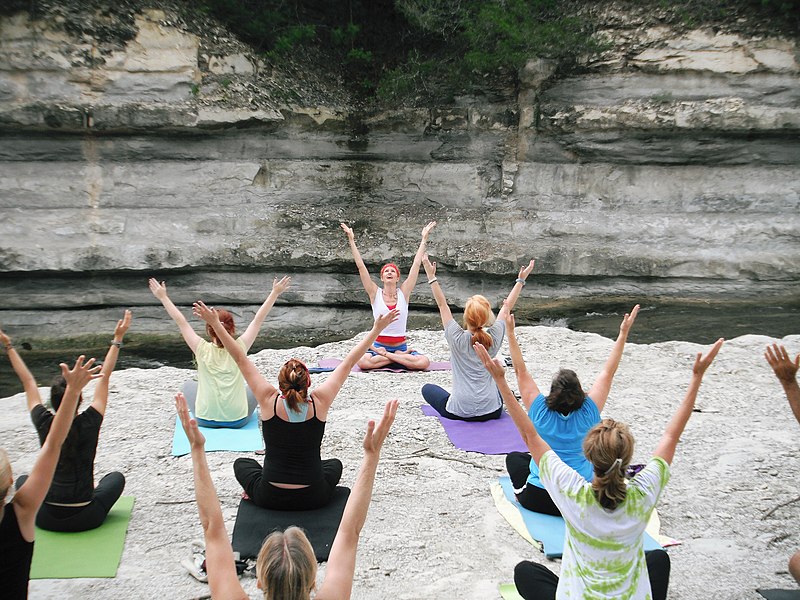
Yoga is an excellent way to calm your mind, stretch your muscles and improve your level of fitness. Some people envision bodies contorted like pretzels when they think about yoga. Yoga is a great way to stretch all the muscles of your body, improve your range of motion and get a good non-aerobic workout. Stretching your muscles releases stored lactic acid from the muscle tissues that causes stiffness, soreness and tension in your muscles. There are different styles of yoga each designed for different outcomes. Power yoga, called ashtanga, is a vigorous style of exercise that will improve your muscle tone. Iyengar style yoga focuses on precise poses that improve strength and endurance. Standing positions can improve the strength in your legs and abdominal muscles as well as improve balance. 
Yoga helps improve your posture. Standing and sitting positions help to strengthen your core and your back muscles. Holding yoga poses strengthens the abdominal and back muscles. Stronger core muscles helps you to maintain good posture throughout the day whether you are sitting, standing or walking. The more you practice yoga poses, the more aware you become of your body and your posture. You are less likely to slump when sitting and to stand up straight because of increased body awareness.
Deep breathing exercises when doing yoga can improve your lung capacity. Deeper breathing increases the oxygen in your blood, which can improve your performance and endurance when doing more strenuous exercise. Deep breathing yoga exercises also helps you to relax by reducing the amount of adrenalin in your body. 

People who suffer from neck, spine, and shoulder injuries should not do yoga or any other stretching exercise without a doctor’s approval. Those who suffer from osteoporosis and pregnant women should also avoid yoga exercises. See your doctor before beginning a yoga program. Don’t try to do yoga on your own. Find a qualified yoga fitness instructor so that you learn the proper way to perform yoga poses and stretches. 

Save Money & Get Fit

Photo Credit: LocalFitness.com.au

Gym memberships can be expensive. Exercise equipment can cost a lot of money. You don’t have to break the bank to get fit. You don’t have to let the cost of a gym membership or the cost of exercise machines be a stumbling block to your fitness. There are plenty of low-cost and free ways to get fit. Turn every day activities into a workout. Take a brisk walk before work and after work. Use the stairs instead of the elevator. Walk or bicycle to work. Play a game of one-on-one basketball with your child after work and school. Every day activities, such as mowing the lawn, vacuuming the carpet and gardening are excellent free ways to get some exercise. There are many low-cost options to getting fit, too.
If you really want a treadmill, you don’t have to shell out a couple thousand dollars. Shop around to find the best buy. Consider buying used and reconditioned equipment. Gyms sometimes sell older equipment when they upgrade or replace equipment. Sporting goods and fitness equipment stores often sell used equipment at a huge discount. Check online for used equipment, too. Dumbbells, free weights and exercise bands are inexpensive when bought new but are a real deal when you can find them used. Fitness balls and jump ropes are also inexpensive. 
Fitness videos can be rented from video stores,  rented online or viewed on the Internet via podcasts. You can also find fitness videos at department stores. Choose a video that fits with your current level of fitness and is endorsed by a certified fitness trainer.