Nutrition Before, During & After Exercise

Photo Credit: Evan-Amos CC0 1.0 PD
Athletes who train every day and the weekend walker and everyone in between needs hydration and nutrition to stay energized and get the most from their workout. Fueling your body before and during a workout can give you that extra edge. Eating the right things after a workout provides the nutrients and trace elements your body needs to repair and recover. Should you eat some of energy bars, chug a sports drink between exercises or can you get all the nutrition and energy you need from a balanced diet? 
Before exercise, the best foods for strength, endurance and energy will contain carbohydrates and protein. Carbohydrates fuel your body and protein is necessary to repair and maintain muscle. Carbohydrates and protein are found in lean meats, whole grain breads, pasta, rice, many fruits and vegetables. A good pre-exercise meal will be low in fat, low in fiber but contain a moderate amount of carbohydrates and protein. Too much fiber will fill you up and make you feel a little sluggish. Drink a large glass of water with your pre-workout meal and drink a second glass of water just before you start to exercise. A sports drink that contains electrolytes and trace nutrients is a good idea if you plan to exercise for 1 hour or longer. 

During your workout it’s a good idea to have a light snack between exercises or during a break in the action if you are playing a sport. Eat a few slices of apple, orange or some grapes to replenish your body’s supply of natural sugars and antioxidants. Refuel your muscles with some carbohydrates available in low-fat cheese slices and whole grain crackers. A handful of granola, some dried fruit or a cup of fruit juice are also good choices to re-energize your body. 

After your workout, you need to replenish the nutrients your body needs to repair and recover. Your muscles need protein to repair and grow, as well as complex carbs to refuel your muscles for the next workout. Lean meats, eggs, whole grain pasta and breads, low-fat dairy  foods, beans and rice are good sources of protein. 
Muscles need protein for recovery and growth, and the best time to deliver protein appears to be right after exercise. Providing high-quality protein after exercise gives your muscles the fuel and the building blocks needed for both repair and for growth. A protein shake can also replenish your body’s store of protein. Remember to drink plenty of water before, during and after exercise to stay hydrated. 

Dump the Saddlebags

Photo Credit: Bill Branson, National Cancer Institute PD
Saddlebags are those pouches of fat that accumulate on the outer thighs. Women are particularly susceptible to fat deposits on the thighs. The best ways to dump the saddlebags are to eat nutritious, low-fat foods and exercise. Cardiovascular exercises, such as swimming, running, brisk walking or jogging and bicycling, help burn fat. There are also some exercises that you can do right at home to help burn away the saddlebags. When you exercise to get rid of hip and thigh fat, you can lose weight overall while building muscle. 
Do some step-ups on a low step stool or a step  aerobics stool. Stand in front of the stool with your arms relaxed at your side. Step up onto the stool leading with your right foot and then bring your left foot up beside your right foot. Step down onto the floor with your right foot and follow with your left. Repeat 10 to 15 times and then switch to leading with your left foot. Add some extra calorie burning to your step-ups by holding a 5 pound dumbbell in each hand. If you don’t have a set of dumbbells, hold a 1/2 gallon container of water in each hand. Use a container with a sturdy handle. 
Side leg raises work the muscles of your thighs, buttocks and abdomen. Hold the back of a sturdy chair and stand up straight. Place your feet about hip-width apart. Drop your shoulders and stretch your spine upward. Lift your right leg upward in front of your body. Keep your leg as straight as you can and then stretch your right leg out to the right of your body. Hold this position for 2 to 3 seconds and then slowly return your leg back to the floor. Do 15 repetitions with each leg. 
Lie on your left side with your left leg on top of your right leg. Rest your left forearm on the floor to support your upper body and place your right hand on the floor in front of your torso. Squeeze your abdominal muscles and lift your right leg straight up toward the ceiling. Keep your upper body straight. Hold your leg up for 5 seconds and return to the start position. Repeat 20 times on each side. 
Squats are great for the abs, hips and thighs. Stand up straight with your feet flat on the floor, about hip-width apart. Place your hands comfortably on your hips. Bend your knees to lower your body to a sitting position. Keep your back straight to avoid bending forward. Push your body back upright using your legs. Repeat this exercise 10 to 15 times. 

Improve Your Push-Ups

Photo Credit: Super Ralf CC-BY-SA-3.0

The basic push-up is a great exercise to strengthen the shoulders, arms and back. Military physical tests include push-ups as a measure of fitness and strength. The basic push-up is performed with the body weight supported by the palms and the toes with the body in a stiff, straight line from head to heel. Keep your elbows under your shoulders. Lower your upper chest toward the floor, stopping about 1 to 2 inches from the floor and then push back up from the floor using your arms. Once you are strong enough to perform 75 to 100 push-ups, try some variations to improve the effectiveness of your push-up workout. 
In the start position, place one ankle over the other so that your body weight is resting on the toes of one foot. Perform 50 repetitions and then switch your feet so that your weight is now resting on the toes of the other foot. Repeat 50 more repetitions. 
The torso rotation push-up is a strenuous upper body workout. From the start position for the basic push-up, rotate your upper body to the left as you push up and lift your left arm upward over your head. Your upper body should form a “T” shape so that the front of your body is facing left. Bring your arm back to the floor as you rotate your torso back to the start position. Repeat on the right side.
The plank-style push-up will increase your core strength and stability, as well as workout your arms and chest. Place your forearms on the floor instead of your palms. Hold your body straight for about 10 seconds and then lower your body just a few inches. Push back up and hold for another 10 seconds. 
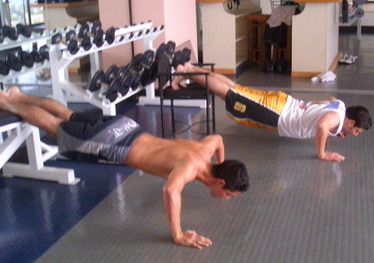
Elevate your feet on a bench for a powerful push-up workout. Use a low bench or foot stool in the beginning and move up to a regular height bench once you can do 50 to 75 elevated push-ups. Keep your palms under your shoulders for stability.

Overcoming Gym-Phobia

Photo Credit: Irepkabl PD

The Centers for Disease Control declared obesity is a national epidemic. Many factors contribute to obesity, including unhealthy diet and a sedentary lifestyle. Diet and exercise fads seem to be on the increase, perhaps to take financial advantage by selling lose-weight-quick programs and pills. Turn on late night television and you will probably see a few infomercials featuring diet pills or the latest fat-busting exercise DVD. Losing weight can be difficult. Some people need guidance and support to succeed. A gym is a place where those who need some help can meet others who are supportive. Staff and personal trainers can offer instruction to prevent injury and motivation to keep you going. Home exercise programs are a fantastic way to lose weight and get fit, but they don’t work for everyone. It’s too easy to put off getting started or lose motivation to exercise at home when the television and sofa beckon. Some people may avoid joining a gym because they are embarrassed about their physical appearance or feel like they won’t fit in. If you are anxious or reluctant to join a gym because you’ve never been to one, there are some things you can do to prepare for your first trip to the gym. 
Define your fitness goals and discover what motivates you to achieve your goals. Do you want to lose 15 pounds or even 30 pounds? Do you want to get a flatter stomach or firmer arms? Maybe you are motivated to lose weight and get fit because there is an important event coming up, like a wedding or family reunion. Perhaps you are motivated to get fit before your 20 year class reunion. Whatever your motivation to get started, the important thing is you are motivated. Once you get started exercising and eating a healthier diet, you will look better and feel better.
Avoid setting yourself up for failure. You may not be able to just walk into a gym and start exercising. People who have not exercised in years should prepare for the gym by building up their endurance. Walking is a great way to build endurance. Make a commitment to walk 10 minutes every day for one week. Walk for 20 minutes every day for the next week. By the third week, you should be able to walk for 30 minutes and more confident that you can do 20 to 30 minutes of exercising on a gym treadmill or elliptical machine. After your first successful treadmill or elliptical workout, you will come away from the gym feeling confident and motivated. 
Many gyms offer trial periods. Take advantage of the trial period to find a gym that works for you. A good gym will provide an orientation program designed to not only familiarize you with the gym equipment and policies, but also inquire about your current level of fitness, health issues and goals. A personal trainer at a gym offers personal instruction and can help you develop a realistic plan so that you meet and even exceed your fitness goals. 

Worst Foods for Belly Fat

Photo Credit: Brittany Carlson PD US Army
We all know that excess body fat can be a threat to our health. Excess fat around your waist can be a bigger threat to your health than fat anywhere else on your body. Belly fat has been associated with heart disease, type 2 diabetes and stroke. Some people have a tendency to put on belly fat due to their genes, but poor eating habits and lifestyle choices often lead to extra fat around the midsection. High-fat foods alone are not to blame for belly fat. Foods high in fat are not helpful, but eating foods high in calories and low in nutrition are more of a threat than high-fat foods alone. The best way to prevent or to get rid of excess belly fat is to reduce the amount of food you eat and eat healthier foods. Eat a nutritious diet that includes plenty of fresh fruits and vegetables, whole grains and incorporate exercise into your daily routine. 
Alcohol is a major contributor to belly fat. Alcohol has almost as many calories per serving than most high-fat foods. Drinking alcohol can also leave you feeling more hungry than normal. Also, your liver is too busy ridding your body of the alcohol to burn fat calories, so you end up storing calories as fat. This is the reason many people develop what is commonly called “beer belly.” Drink moderately and avoid eating when you drink. 
Foods that contain trans fats, especially hydrogenated oils, add fat to your waistline. Trans fats are found in cookies, crackers, fried foods, margarine, shortening and processed foods. Packaged and convenience foods, such as cake, biscuit and pancake mixes are usually high in trans fats. Condensed canned soup and dried noodle soups are also high in trans fats. Frozen foods, including frozen fish sticks, pizza, pot pies and frozen pies and cakes are high in trans fats, too. Watch out for excess trans fats in baked goods. Donuts, cakes, breads and cookies found at your supermarket bakery are usually prepared using shortening or margarine and processed flour, all of which are high in trans fats. Baked foods that are prepared using whole grain flour and butter are lower in trans fat, 
Fast food is one of the worst options for trans fats. Burgers, French fries and sauces on sandwiches offered by fast food restaurants are high in trans fats and calories. Many people also overeat fast food, which leads to even more calories and fat in your diet. The occasional fast food treat is probably okay, but when eaten frequently, fast food adds to belly fat and overall weight gain. Choose low-calorie or reduced fat options when available. 

Soft drinks can really pack on the belly fat because most contain high-calorie sweeteners. Many soft drink manufacturers have replaced refined sugar with high-fructose corn syrup for sweetness. High-fructose corn syrup is high in calories. Limit the amount of soda in your diet or choose sugar-free sodas. Try drinking some green tea instead of soda. Green tea, when combined with exercise and healthy food choices, can help you reduce belly fat and lose weight. 
Keep your waist trim and avoid the health risks of excess belly fat by eating a diet low in trans-fats, high in fiber and rich in nutrients. Choose brown rice over white rice. Select fresh foods instead of frozen treats. Drink less soda and alcohol. Combine healthy foods with exercise and the belly fat should soon start to melt away.

Don’t Regain Lost Weight

Photo Credit: FitnessFreakLA CC-BY-SA-3.0
You’ve worked hard to lose excess weight, but you may be worried about regaining the lost weight. Many people will lose weight only to regain the lost weight or even gain more weight than they lost. It can be discouraging to work so hard only to be back at the starting line after a few months. There are some things you can do to maintain your weight and avoid regaining lost weight. 
Never skip meals. Skipping meals can cause you to feel more hungry at meal time. If you are very hungry at meal time, there is a chance you will overeat. Skipping meals also causes your metabolism to slow down. A slower metabolism means your body will store food as fat. Keep your metabolism humming along by eating a nutritious, high fiber breakfast that includes whole grains, low-fat dairy and fruits or fruit juice. Eating 5 small meals throughout the day is more effective to keep your metabolism burning calories than eating 3 big meals. Choose raw fruits, vegetables, nuts and grains as snacks between breakfast and lunch and again between lunch and dinner. Granola bars or whole fruits such as peaches, apples or pears can satisfy your hunger and keep your metabolism working. 
Weigh yourself once each week at the same time of day each week. Keep a journal to record your weekly weight. You can use the information to monitor your weight and track trends in weight fluctuations. Start an exercise journal. Write down all your physical activity along with duration and intensity of the exercise. For example, if you walk to work instead of driving or taking the train, write down how long you walked, your pace and the distance walked. Write down the duration and intensity of workouts on exercise equipment, too. Keep a food journal and write down everything you eat every day. After 6 to 8 weeks, compare the information in your weight, exercise and food journal. You should be able to recognize patterns in eating and exercise that correlate with your weight loss or gain.
Continue to eat a variety of healthy foods and get at least 30 minutes of exercise every day. Don’t forget to drink plenty of water to stay hydrated.

No Time or Too Tired to Exercise?

Photo Credit: Aek1982 CC-BY-SA-3.0
Staying with an exercise program is not easy sometimes. It isn’t always easy to find the time or the energy to exercise for a full 30 minutes every day. The biggest obstacles to regular exercise for many people are boredom, a lack of time or feeling too tired after a full day of work. You don’t have to let a busy lifestyle or work interfere with your fitness plans. Make some adjustments to overcome the barriers to your workout routine to get fit and stay fit. 
You may not feel like running or riding a bike for 30 minutes after working 8 to 9 hours every day. You may not believe it, but exercise can actually help you feel more energized when you are tired. Many of us spend hours sitting in front of a desk or working on a computer all day. If your job keeps you seated most of the time, moving your body during breaks and after work can actually help you feel more energized throughout the day. Once you start moving, your brain begins to produce endorphins which are the feel good hormones that relieve pain and improve your mood.

Boredom is another obstacle to exercising every day. The same routine day after day can become monotonous. If you are bored with your routine, it’s time to change it! Try something new. Try something that you’ve never done before. Join a sports team, take a line dance class, start yoga classes or learn to skate. Sometimes working out with a group of people can help relieve boredom and you might even make some new friends.  

Finding time to exercise doesn’t have to be a barrier to exercise. You can get the recommended 30 minutes of exercise every day by breaking it up into 10 minute sessions throughout the day. You can also wake early and exercise before your morning shower and breakfast. Walk or ride a bicycle to and from work. Walk during your lunch break. Invite the kids to go for a bicycle ride before dinner or play a game of basketball or softball with the kids after school.

Weight-Loss for Your Wedding Day

Photo Credit: Milaniko PD

June is wedding month! Many people plan to get married during the month of June because the weather is mostly mild and sunny. Every bride and groom wants to look their best on the big day. If you’ve put off trying to lose some weight until the last minute, there is still time to lose a few pounds before the final fitting of your dress or tuxedo. Avoid extreme diets and diet pills to lose a few pounds. Focus on exercise and a low-calorie, nutritious diet to get in shape for your wedding day. 
It’s easy to become distracted by all the last-minute wedding plans or to find time to exercise. If you haven’t been physically active or you have exercised only sporadically, try walking for about 30  minutes every day. Walk for 15 minutes in the morning before work or the start of your day. Walk for another 15 minutes in the evening after work or before dinner. Walk farther or faster every day until you can power walk for the full 15 minutes twice each day. Ride a stationary bicycle or use a treadmill if you can’t get outdoors to walk or when it is raining. Make a commitment to exercise for at least 30 minutes every day.
Tone and sculpt your arms and upper chest so that you look your best in your dress by lifting weights. Use a pair of dumbbells every other day for about 10 minutes to tighten up your arms and chest. Pulling on resistance bands also works well to strengthen, tone and sculpt your arms. Stand on a resistance band and pull it upward with your arm in the same manner, as if you are doing biceps curls with dumbbells. Use two bands to work both arms at the same time or alternate sides. 
Choose high-fiber, low-calorie foods like whole grains and vegetables, to help reduce your calorie intake while still getting the nutrition your body needs. Now is not the time to indulge your sweet tooth. Put those chocolates and cake aside. Choose naturally sweet foods like strawberries, blueberries, watermelon, raspberries, apples and grapes. Fruits contain antioxidants to help repair cell damage and are loaded with nutrients. The natural sugars in berries and fruits will also boost your energy. Reduce the amount of soda in your diet, too. Drink naturally flavored water instead of sugary soda to help reduce calories. Drinking more water will also help keep your body hydrated and improve your appearance. Drinking plenty of water will hydrate your skin. 

Get Moving to Relieve Stress

Photo Credit stuartpilbrow CC-BY-SA-2.0
It is practically impossible to avoid stress, but we can learn to manage stress and reduce the impact of many of the negative effects of stress. Stress often manifests in physical symptoms, such as headaches, insomnia, elevated blood pressure, muscle aches and pains and tiredness. Stress affects your mood and may result in anxiety, inability to focus, feelings of sadness and restlessness. Your behavior may also change due to stress. Some people deal with stress by overeating or not eating enough. Stress can be the driving force behind angry behavior or substance abuse. Any form of exercise can help relieve the effects of stress. You can benefit from the stress relieving effect of exercise whether you are in top shape or completely out of shape.
Regular exercise improves your physical fitness and your mood. Exercise and physical activity stimulates your brain to produce endorphins that improve your mood and relieve aches and pains. After about 30 minutes of exercise, you may discover that you stopped thinking about the things that caused your stress. As you focus on exercising, you are not worrying about tomorrow’s long list of tasks at work, your teen’s growing pains or financial concerns. Regular exercise and a healthy diet can help you feel better physically and emotionally. Your sleep and ability to concentrate will also improve. As you continue to exercise and focus on the movement of your body, you should experience increased ability to focus in other areas of your life.
Any physical activity can help relieve stress and stress-related symptoms like anxiety. Walking, riding a bicycle, lifting weights or simply cleaning your house or working in the yard or garden counts as exercise and helps to relieve stress. Regular exercise improves your self-confidence also. You can lose weight and look and feel more fit.


Pilates to Firm Your Buttocks and Thighs

Photo Credit: Ebullientben CC-BY-SA-3.0

Doing Pilates exercises is a good way to firm up your body and improve your strength and endurance. Pilates exercises focuses on controlled movements and breathing. This type of exercise improves core strength for stability and strength. Pilates exercises can also firm and tone all the muscles of your body including difficult areas like the thighs and buttocks. You need only a mat or carpeted floor to perform many Pilates exercises to firm and tone your lower body and legs. 
The thighs tend to be a problem area, especially for women. Thigh lifts can help firm up the inner thighs that are especially difficult to exercise. To do thigh lifts, lie down on the floor or on an exercise mat on one side. Support your upper body with your elbow and prop your head up with your hand. Keep your elbow under your shoulder and stretch your body out straight. If you lie down on your right side, your left leg will be on top. Bring your left leg in front of your hips and place your foot on the floor. Grasp your left ankle with your free (left) hand. Breathe in and tighten your abdominal muscles, while simultaneously lifting your right leg a few inches off the floor. Hold the position for 5 seconds. Exhale as you lower your right leg back to the floor. Do 10 repetitions and then switch sides.
Do side thigh lifts from the same starting position, except extend your arm above your head and rest your head on your arm. Stretch your body out in a straight line with one leg on top of the other. If you begin on your left side, you place your right hand on the floor in front of your chest for support. Inhale, squeeze your abdominal muscles and the lift both legs off the floor a few inches. Keep your legs together and hold the position for 5 seconds. Exhale and then lower your legs back to the floor. Do 10 repetitions on each side. 

Pelvic curls will help tone your hips, buttocks and thighs. To do pelvic curls, lie on your back and bend your knees. Place your feet flat on the floor with your feet about hip-width apart. Place your palms on the floor on each side of your body for stability. Exhale as you tighten your abdominal muscles and pull your belly button toward your spine. Inhale and slowly lift your pelvis and buttocks off the floor by curling your body upward from the tailbone and lifting with your legs. Keep your feet, shoulders and palms flat on the floor. Hold the position for 5 seconds. Exhale as you roll your body back to the floor. Repeat this exercise 10 times.