Too Much Sugar In Your Diet?

 Photo Credit: Ayelie CC-BY-2.0

If you watch even a couple of hours of television each day, you’ve probably seen the commercials touting high fructose corn syrup as a natural substitute for cane sugar. High-fructose corn syrup has been used to sweeten foods and drinks in the USA for about 40 years. It’s cheaper than processed cane sugar. In the decades since high-fructose corn sugar was introduced to the American diet, obesity rates have skyrocketed. Robert H. Lustig, MD describes obesity as a global public health crisis. High-fructose corn syrup has been linked to a number of diseases including heart and liver disease, hypertension and type 2 diabetes. What can you do to reduce the amount of sugar, including high-fructose corn syrup, that you consume? 

Choose foods and drinks without added sweeteners like high-fructose corn syrup. Fruits and berries are naturally sweet and don’t require additional sweeteners. In addition to containing natural sugars, fruits and berries are loaded with beneficial antioxidants, vitamins and minerals. Skip the granulated sugar on your cold cereal and slice up some strawberries, a banana or add some blueberries to your cereal. Stir in a handful of raspberries or slice up a banana for your low-fat yogurt. Choose whole grain, unsweetened cereals instead of sweetened cereals. Honey is a natural sweetener. Use honey to sweeten your baked foods, hot cereals like oatmeal and tea drinks. 

Read the labels of all the foods and drinks you buy. Processed foods that you would not normally think of as sweet may contain high-fructose corn syrup. Sodas are often sweetened with high-fructose corn syrup. A healthier alternative to high-sugar drinks includes naturally flavored water. Flavored waters are available in a variety of flavors. Flavored water can be carbonated for a fizzy refreshing alternative to soda. 

For more information about high fructose corn sugar, see:

Dumbbell Rowing Exercises

Photo Credit: LocalFitness.com.au
Dumbbells aren’t just for biceps and triceps curls! You can use your dumbbells to help tone and strengthen your back muscles while strengthening your arms and chest. Dumbbell rowing exercises strengthen the muscles of the upper back, shoulder and help improve joint flexibility for a greater range of motion in the shoulder area. If you have a rotator cuff injury, see your doctor before attempting dumbbell rowing exercises. 
A one arm dumbbell rowing exercise is performed by holding a 2 pound or 5 pound dumbbell in your left hand and kneeling on a bench with your right knee. Support your upper body by placing your right palm on the bench in front of  your knee. Plant your left foot firmly on the floor. Hold the dumbbell in an over-hand grasp with your palm pointed toward your body. Keep your arm close to your body and pull your elbow up and back. Hold for 2 seconds and then lower the dumbbell back down. Try to keep your back straight during this exercise and don’t forget to breathe. Exhale on the lift and inhale on the lowering of the dumbbell. Do 20 repetitions on each side. 

Inverted dumbbell rows are performed lying on an elevated exercise bench. Lie across the bench so that your body weight is supported by your lower abdomen and your hips. Hold a dumbbell in each hand with your palms facing each other. Squeeze your abdominal muscles and lift both dumbbells toward your chest. Keep your arms close to your body and don’t allow your elbows to flare out to the sides. Keep your back straight during this exercise. Lower the dumbbells back toward the floor, but don’t allow them to touch the floor. Repeat this exercise for 20 repetitions. 

Strength Training for Strong Muscles

Photo Credit: www.localfitness.com.au
Strength training improves your muscle tone and supports bone health. People who engage in regular strength training, especially isometric strength training exercises, can improve bone density and prevent their risk of diseases like osteoporosis. Strong muscles help to stabilize the joints to prevent injury and increases endurance. You can perform strength training exercises with free weights, dumbbells and barbells, weight machines or your own body weight. For most people, 30 minutes of weight training three times each week is enough to build strong muscle, maintain lean muscle mass and stay strong. Don’t stop your flexibility and aerobic exercise, though. You still need to get a good cardio workout every day. 
Most people think about barbells, dumbbells and weight machines when they hear the words strength training. Working out with weights is one way to build muscle strength. If you have never lifted weights or used a weight machine before, join a gym that provides professional fitness trainers to oversee and instruct your weight lifting exercises. Proper form is essential to safely lift weights and avoid injury. Don’t try to lift 150 pounds on your first effort. Start slowly and gradually build up to more weight. As your muscles increase in strength, increase the number of repetitions or add a few pounds of extra weight. Strength train all your muscles using a weight machine. Many weight machines can train your legs, back, arms and core. 
Resistance bands are an inexpensive and easy way to increase muscle strength. Resistance bands are available in a variety of resistances from easy to stretch to very difficult to pull. You can use resistance bands at home using a band mount or a door mount. Do seek the advice and help of a qualified fitness trainer the first time you use resistance bands. Like lifting free weights or using a weight machine, form is critical to avoid injury and build muscle. 
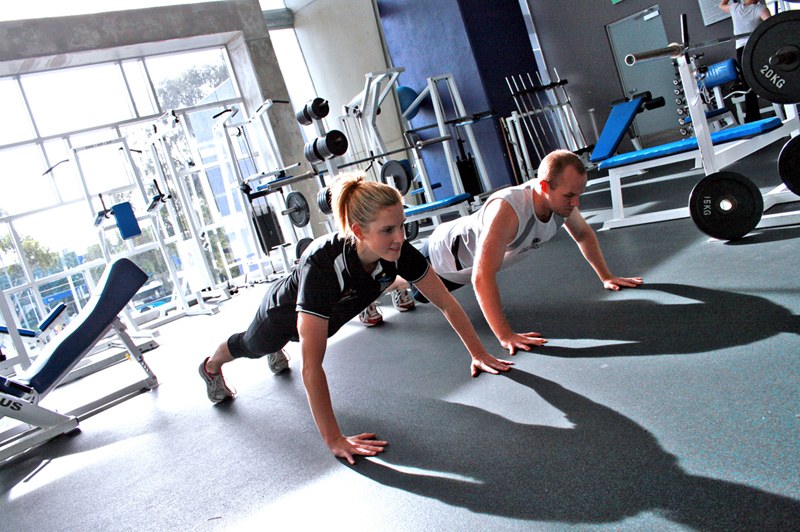
The easiest way to strength train is to use your own body weight. You need no equipment to perform push-ups, pull-ups, crunches, squats, planks and lunges. Body weight exercises can be done at home or in the gym. Start your body weight strength training by doing 10 repetitions of each: push-ups, crunches, squats and lunges. Gradually increase the number of repetitions as your muscles grow stronger. As with all other forms of exercise, proper form is important to avoid injury and ensure the effectiveness of the exercise. A fitness trainer can help you develop a body weight strength training program just for you. 

Prevent Exercise Injury & Illness

Photo Credit: www.localfitness.com.au
Exercise can’t hurt you, can it? If you don’t do it right or you overdo it, yes it can hurt you. Exercise injury can be painful and delay reaching your fitness goals. Always keep safety in mind when exercising. Before trying a new exercise, make sure you know how to perform the exercise to avoid injury. If an exercise move hurts, then you are doing it wrong. Exercise should not cause pain. A fitness trainer can instruct you about how to do exercises the correct way so that you avoid injury and pain. 

Start your exercise routine slowly and work up to a more strenuous level of exercise. Warm up before exercise and stretch your muscles before you begin. Warming up will prepare your muscles and joints for exercise, which can help reduce the risk of a sprain or torn muscle. Stop exercising immediately if you feel pain. Muscle soreness is common following intense exercise of trying a new exercise, but pain during exercise or soreness that does not subside in a couple of days after exercise may indicate an injury. Overuse injuries result from doing too much exercise for one or two muscle groups. Tennis elbow, for example, results from over-using the muscles in the arm, which can lead to inflammation and soreness. Spot training too frequently can lead to over-use injury. Train a different muscle group every day if you are lifting weights. Alternate running with swimming or bicycling to help avoid over-use injury. 
Remember to drink plenty of water to avoid dehydration. Dehydration occurs when you lose more water by sweating than you drink. Avoid strenuous exercise outdoors when the weather is hot. Strenuous exercise outdoors during how weather can increase your risk of dehydration, heat exhaustion and heat stroke. Cold weather outdoor exercise has it risks as well. You can experience exercise-induced asthma, even if you’ve never had asthma before. Vigorous exercise outdoors during cold weather can cause a bout of exercise-induced asthma. The symptoms include shortness of breath, wheezing, coughing and tightness in the chest. Symptoms begin within a few minutes after exercise and can last for up to 30 minutes. 

Your Diet Shouldn’t Take A Vacation

Photo Credit: Jbird905 CC-BY-SA-3.0
Ah, summer vacation! It’s that time of year when families, couples and individuals load up the car or board a plane to anywhere for some much deserved rest, relaxation and fun. We leave work and worries behind for a week or just for a weekend. Vacation doesn’t mean you should let  your diet take a vacation, too. It’s okay to splurge a little and enjoy restaurants and fine dining or the occasional sweet, fruity cocktail. You will want to try out the local dishes that you normally don’t get in your home town. Hotel room services can be very tempting for breakfast or an after dinner snack. You can watch what you eat and still enjoy your vacation dining experiences. Remember to eat in moderation and to stay active during your vacation. 
If you are staying in a hotel, try to eat in your room once each day, but don’t order room service. Bring some breakfast foods that travel well, such as instant oatmeal, whole grain cereal or cereal bars and some dried fruits. Find a local grocery store and bring some fresh fruits, whole grain crackers and small portions of low-fat cheeses to your room for a mid-morning or late afternoon snack. 
Watch your portions when ordering food in restaurants. Order vegetables and fruits with every meal. A side salad with a low-fat salad dressing or no salad dressing is a great way to start your meal. Drink plenty of water throughout the day, and especially right before eating a meal. Water helps you feel fuller so you avoid over-eating and it helps facilitate digestion. Watch out for the condiments, however. Salad dressing, ketchup and barbecue sauces can be very high in calories, fats, sugar and sodium. When given a choice between ordering from the menu or hitting the all-you-can-eat buffet, order from the menu. It’s easy to over-eat when there are so many tasty dishes to choose from. If you do select the buffet, start with salad with low-fat dressing and water. Select steamed or grilled vegetables and avoid the cream sauces and the butter. Choose lean meats or seafood, if available. 

Summer Exercise: Tips to Stay Cool

Photo Credit: Bibikoff CC-BY-2.0

North America is in the midst of a heat wave! Temperatures across much of the USA have topped 100 degrees Fahrenheit for several days. How can you stay cool and exercise outdoors? When the weather is sweltering, you have to take extra precautions to avoid dehydration and overheating. Your body sweats to help keep you cool, but when the temperature and humidity are high, your sweat will not evaporate. This can lead to high body temperature and even heat illnesses. Heat-related illness can be life-threatening, so you must take steps to stay cool when exercising outdoors on hot, humid days when the temperature is 80 degrees or above. 
Exercise in the early morning or evening hours. The temperature will soar once the sun is shining brightly in the sky and won’t drop until after sunset. Midday is the hottest time of the day, so avoid strenuous activity outdoors during this time. 
Drink plenty of water! During hot weather, drink at least 2 eight ounce glasses of water every hour. Consider drinking a sports drink with added minerals and electrolytes to replace salts and minerals lost  from sweating. Wear loose-fitting clothes so that your skin can “breathe” and wear a hat with a brim to protect your face from the sun. Be sure to use sunscreen to protect exposed skin. 
Consider working out indoors. If you normally run outdoors for 60 minutes, ride a stationary bicycle or jog on a treadmill indoors instead of running outdoors. Go swimming at an indoor pool for 30 minutes instead of running to get a great full body aerobic workout. Heat exhaustion and heat stroke can be deadly. Take some precautions and stay hydrated to avoid heat-related illness. 

Workout With A Friend

Photo Credit:  www.localfitness.com.au
Working out with a partner can be fun and motivating. You can workout with a spouse, a friend, a co-worker, your children or your neighbor. Play a game of one-on-one basketball, tennis, racquetball or table tennis. Walk together or ride bikes as a team. Try some of these easy-to-do, effective exercises with a partner.
Throw a medicine ball back and forth. A medicine ball is a weighted ball that can give your arms, chest and abs a great workout. Stand about 10 feet apart facing each other. Plant your feet solidly on the ground about hip width apart. Hold the medicine ball at chest height and toss the ball to your partner. The catching partner should also be braced with feet planted solidly on the ground. The catcher should keep their hands at chest height to catch the ball. Toss the ball back and forth 10 times or more. Try different throwing forms, overhand, underhand and straight from the chest tosses. 
You and a partner can get a good workout pulling on some resistance bands. Stand facing each other. One partner loop a resistance band around his or her back and the other partner grasps the handles of the band. The partner holding the bands can perform some biceps or triceps curls while the other partner braces his or her entire body to resist the pull of the partner. Do 10 repetitions and then switch places. 
Do some exercise ball squats with your partner. Stand back-to-back with your partner. Place an exercise ball between you and your partner. Slowly lower your body toward the ground in a sitting position. Hold the position for 5 seconds and then slowly stand up straight again. Repeat the exercise ball squat 10 times. 

Summer Treats: Tomatoes & Peppers

Photo Credit: Evan-Amos PD
Cool, sweet bell peppers and juicy tomatoes are a couple of the delicious vegetables and fruits that are versatile. They can be eaten raw in salads, stir-fried with other vegetables or added to soups and stews. A couple of tomatoes, a bell pepper and cucumber combined in a juicer makes a refreshing, healthy vegetable drink. Stuffed peppers or tomatoes with whole grain pasta, shallots and topped with low-fat mozzarella cheese for a healthy, low-fat lunch. Peppers and cherry tomatoes are a delicious addition to grilled foods. There are many health benefits to eating bell peppers and tomatoes. 

Bell peppers and tomatoes are rich in antioxidants that help repair cell damage from free radicals. Antioxidants help protect your cells from some forms of cancer, help keep blood pressure at a healthy level and are good for your overall cardiovascular health. Tomatoes and bell peppers are low-calorie,  high fiber foods, so they are a great addition to your daily diet of fruits and vegetables.

Both tomatoes and bell peppers are loaded with vitamin A, vitamin C and lycopene. Lycopene may help protect against cancer, such as prostate cancer. Lycopene also helps keep LDL cholesterol low. Beta carotene is an antioxidant that has been associated with a healthy immune system. Bell peppers are a good source of beta carotene. Add some fresh summer tomatoes and bell peppers to your diet and start enjoying the flavor and the health benefits of these great summer foods. 

Slimmer Summer Hips

Photo Credit: Nicu Buculei CC-BY-SA-3.0

Summer means short skirts, short pants and skimpy swimsuits. It’s never too late to get started on a fitness program. Add some thigh-trimming exercises to your regular workout and healthy, low-fat diet. Walking, swimming, bicycling, jogging and running are great ways to burn calories and trim down overall. Walking, stair climbing and bicycling are especially good aerobic exercises for burning fat and for toning and trimming the hips and thighs. In addition to your regular workout routine, add a couple of easy-to-do exercises that target the muscles of your hips and thighs. 
Strength training is an excellent way to tone and firm the muscles of the hips. Women are sometimes reluctant to strength train because they are concerned their muscles will get too big. Bulking up big muscles requires a high-calorie, high carbohydrate and protein diet combined with heavy weight lifting.  It is unlikely that a woman eating a nutritious, low-fat diet will “bulk-up.” Strength training for the legs, hips and thighs will firm the muscles and give you a toned, strong appearance without the rippling, bulging bumps of huge muscles under your skin. 
The step-up exercise works the front and back of the thighs. The back of the thighs can be a trouble spot for many women. Use a step aerobic stool or stand in front of some steps or a staircase. Stand close to the stool or stairs. Hold the stair rail or use chair for stability. Hold on to the chair and stand up straight. Step up onto the stair with your right foot. Push your body upright using your right foot and bring your left foot beside your right. Step back down from the stair on your right foot. Bring your left foot back beside your right foot. Once you get the rhythm it’s step up, step down, step up, step down leading with the same foot. Do 20 repetitions leading with the right foot and then 20 step-ups leading with your left foot. 
The side leg raise works your hips and your thighs. Lie on the floor on your side with your legs straight out in front of your body. Keep your legs close together and one foot on top of the other. Lean on your elbow and support your head with the bottom hand and place the top hand on the floor in front of your belly for balance. Point the toes of your top leg and slowly lift your leg straight up toward the ceiling as high as possible without causing pain. Hold the stretch for 5 seconds and then slowly lower your leg back on top of your other leg. Repeat this exercise 10 times on each side. 

Easy Weight-Loss Diet Plan

Most everyone has heard of the four basic food groups. We’ve learned that we should eat a variety of foods from each group every day. How can we be sure we are eating the right foods in the right amount? The old food pyramid has been replaced by the food plate. The food plate is an easy-to-understand option to determine whether you are choosing the right combination of foods.  At least half of your plate should be fruits and vegetables. One quarter of your plate should be grains and the final portion of your food should consist of proteins. Your protein should consist of lean meats with all the fat trimmed off prior to cooking, beans, eggs or poultry. Your whole grain choices can include brown rice, wheat, barley, quinoa or whole grain pasta side dishes. Try to avoid over-cooking your vegetables to preserve the flavor as well as the vitamins and micro-nutrients. Try steamed, grilled and raw vegetables instead of boiling. The fruit portion of your plate should consist of fresh fruits and fruit desserts made from fresh whole fruits. Low-fat yogurt with fresh berries is a delicious, nutritious dessert option. Drink water and low-fat or skim milk with your meals to get the extra vitamins and calcium for healthy bones.

Combine your healthy diet with regular exercise and enough sleep and you are on your way to a leaner, healthier you!