Don’t Make Excuses! Exercise!


It can be difficult to overcome excuses not to exercise. You know you should get moving. You know that people who exercise regularly are healthier and less likely to develop diseases, such as diabetes and cardiovascular disease. You have also heard that people who exercise are usually happier and sleep better than people who rarely or never exercise. You need at least 150 minutes of aerobic exercise each week. Walking, jogging, riding a bicycle or even doing work around the house, such as mowing the lawn, are good ways to exercise. What’s your excuse for not exercising? Here are some tips about overcoming excuses so you can get moving and get fitter.

You may say that you don’t have time to exercise. A busy lifestyle with work, kids, social commitments and duties does not have to prevent you from exercising regularly. A few minor adjustments to your lifestyle can help provide ample time to workout. Three days each week, trade your television time for exercise time. Instead of spending an hour in front of the television, workout for 30 minutes or go for a brisk walk before or after your favorite television program. You don’t have to exercise for 30 straight minutes. Break up your workout into three 10 minute sessions throughout the day. Ride a bicycle to work or walk if you can. Park your car a couple of blocks from work and walk. Take the stairs instead of the elevator.

You may put off exercising because you think it’s boring to trudge along on a treadmill or pedal a stationary bike for 30 minutes. Exercise does not have to be boring. Do the kinds of activities you like to do or try something new. Music lovers can take a dance class, such as salsa or ballroom dancing. Take tennis lessons or join a dance aerobics group. Start a walking group with your best friends or co-workers. Exercise doesn’t have to be boring. Working out with a group is a great way to spend time with old friends or make new friends.

You probably feel tired after a long day at work. You may be tempted to put up your feet and zone out in front of the television for a couple of hours instead of exercising. Exercise will actually help you feel stronger and more energized. Exercise increases your heart rate and your respiration to move more oxygen through your body. Your brain will release hormones called endorphins, which will help improve your mood. You will feel better physically and emotionally after a good workout.

How a Personal Trainer Can Help You Lose Weight

Photo Credit: www.localfitness.com.au
You might have a little trouble staying motivated or sticking to your workout routine. If so, you might need a personal trainer. Your personal trainer will motivate you and won’t let you quit. Personal trainers develop workouts to help you firm, tone and lose weight. They can teach you the most effective way to exercise for weight loss and help you stick to your routine. Your personal trainer focuses on your specific fitness and weight loss goals to develop a unique workout to help you achieve those goals.
Sometimes a deficit can be a good thing. If you’re trying to lose weight, you need to create a calorie deficit. This means you consume fewer calories than you burn. Your body is burning calories around the clock. Extra calories are stored as fat. To get rid of this fat, eat fewer calories and exercise. Don’t compromise nutrition when cutting calories. Cut back on portions and trade empty calories for nutrient-rich foods. For example, cookies have a lot of calories but little or no nutritional value. Snack on fresh or dried fruit instead. A personal trainer can help you stay on track to control your caloric intake.
Sometimes it can be hard to stay motivated on your own. That’s where your personal trainer comes in handy. A personal trainer can not only design a workout just for you, she can keep you motivated when you want to quit. Your personal trainer can help you set realistic goals that you can attain. No, you aren’t going to lose 10 pounds in 5 days, but you can make steady progress toward your weight-loss goal with the help of a personal trainer.
Cardio is the most effective ways to lose weight and get in shape. Your personal trainer will push you to do cardio exercises 3 to 5 times each week, so prepare yourself. Cardio isn’t just running or jogging. It’s any exercises that elevates your heart rate, respiration and gets you sweating. You’ll improve your heart health, lung efficiency and reduce your risk of chronic disease, such as heart disease and diabetes. Expect your personal trainer to throw some strength training at you, too. Strength training helps you retain muscle mass while you are losing weight.
A personal trainer may expect you to put in some time on the various cardio and strength machines in the gym. You can burn as much as 200 calories per hour working out on a treadmill. An elliptical machine is also a great fat-burner plus it’s a low-impact workout so it’s easier on your joints than a treadmill. Riding a stationary bike can help you lose weight, but the rowing machine can burn up to 50 percent more fat because you are using your upper and lower body at the same time. Your personal trainer will help you design a gym machine workout that fits your weight-loss goals.


Over 50? It’s Not Too Late to Get Fit!

Photo Credit: Shustov CC-BY-3.0
If you’re over 50 and you want to get started on the path to fitness and better health, there is good news. It’s never too late to get fit! Don’t let anyone tell you that it’s impossible to lose the middle-age spread that has widened your hips and given you a belly pooch. You can slim down and firm up flabby muscles. First, see your doctor for a complete physical. Take precautions to accommodate any limitations or illness, such as osteoporosis or diabetes. Consult a fitness expert or hire a personal trainer and GET MOVING!
The first step to fitness and a trimmer body is to exercise. If you’ve been sedentary most of your life or exercised only sporadically, start slow. Walking is a great way to get fit and lose weight. Start by walking around your block 1 time every morning or evening for 7 days. Start the next week with a walk around the block 2 times. Gradually increase the pace and distance you walk each day until you can walk at a brisk pace for a full 30 minutes.
Change your diet. Put away the soda, sugar and fatty foods. Replace sugary sodas with flavored water or a sugar free variety of your favorite food. Switch to low-fat or skim milk. Replace junk food snacks with fruits and nuts. Drink plenty of water, too.
Add strength training to your weekly fitness routine. Try to do some bodyweight exercises 2 to 3 days each week. Push-ups, sit-ups, crunches and squats are challenging functional exercises that use your own weight against the force of gravity to increase muscle mass and improve your endurance.


Exercise For Your Mind & Body

Photo Credit: Scott Meltzer PD

Regular exercise, combined with a healthy, nutritious diet, can help keep your body  strong, lean and fit. Did you know that exercise is also good for your mental health? Exercise and a fit body helps improve your self-esteem, your confidence and can help you feel more in control of your life. People who exercise on a regular basis are less prone to suffer from anxiety, depression and they handle stress better than people who do not exercise regularly. Sometimes it’s difficult to get up and start exercising when you feel anxious or depressed., but you will feel better almost as soon as you start exercising. During exercise, the brain releases endorphins that help reduce pain and promote a feeling of well-being. Depression is a serious illness that affects millions of people. Exercise alone is not a quick-fix for depression, but it can help you deal with your symptoms. Once you get your depression symptoms under control, exercise may help prevent depression symptoms from returning. Follow your doctor’s advice about medication, lifestyle changes and exercise. How can you get started with exercise if you are or have been depressed or feeling anxious? It’s easier than you think.
Begin slowly. If you have been sedentary for years and rarely exercised, see your doctor for a physical checkup before beginning an exercise regimen. Once your doctor clears you for exercise, gradually increase your physical activity until you can do 150 minutes of moderate exercise each week. Forget trying to run a marathon after your first week. Set realistic goals and build on your increasing strength and endurance. Start by walking 10 to 15 minutes every other day and increase by a few minutes every week until you can walk at a brisk pace for 30 minutes. You can walk outdoors in your neighborhood, in a park or at the gym on a treadmill. It doesn’t matter where you walk, just as long as you do it. As you begin to get more fit, lose weight and get stronger, you will start to feel better both physically and mentally. 

For more information about exercise and depression, see:

Trouble Reaching Your Goals?


Photo Credit: www.localfitness.com.au


Everyone has one of those days when they feel like they just can’t reach a fitness goal no matter what they do. It may feel like the whole world is against you. Everywhere you turn you encounter a new obstacle to achieving your exercise and diet goals. Sometimes we create the obstacles by setting unrealistic goals or procrastinating. There are some steps you can take to help you overcome real and imagined stumbling blocks to fitness.
A common obstacle to reaching our fitness goals is setting unrealistic goals. It is not uncommon for beginners to set the bar too high. You may expect to lose 50 pounds in one month or get ripped in a week. Goals like this are not only unrealistic, they can be damaging physically and psychologically. Don’t give up if you fail to achieve a washboard stomach and a firm butt after two weeks of exercise. Develop a realistic fitness plan that includes regular exercise and a low-fat, nutrient rich diet. For most people, it takes about 2 months to start to see results. The longer you exercise, the easier it gets and the results will show in a firmer body, fat loss and greater endurance. A personal fitness trainer and nutritionist can help you set goals and design a fitness program to fit your lifestyle.
People may put exercise on the back burner when they are stressed. You may think that it’s okay to put off exercising for a few days while you work on that important presentation for work or finish a report before a the deadline. Putting off exercise because you are under pressure to complete work or other tasks is self-defeating and can lead to more stress. Exercise actually helps to alleviate the stress of every day life and work. When you exercise, your brain produces endorphins that help you feel more relaxed. If you are really under a tight deadline to complete a task, even a few minutes of exercise is better than no exercise at all.
Sometimes events happen that actually do interfere with exercise. The gym may be closed due to a power outage, the pool is closed for cleaning or you are asked to work overtime. You can either forget today’s workout or you can adapt. If you are stuck at work, take a 10 minute break and do some exercise in your office, walk or jog around the building for 10 minutes and do some stretching exercises at your work station. Instead of swimming, maybe you can jog in the park for 30 minutes. If you can’t workout at work, do some exercises before bedtime.
Most importantly, be your own cheerleader. Don’t put yourself down or call yourself a failure. Put the bathroom scale in the closet and stay on a steady course of exercise and healthy eating. In time you will reach your goals, feel healthier and look good, too.

Get Lean With Cardio

Photo Credit: Meagan E. Klein USN PD
A cardiovascular workout, or just cardio, is the best way to burn fat, strengthen muscle and lose weight. Cardio is any exercises that increases your heart and breathing rates. Your metabolism will kick in and burn calories while strengthening muscle. Most people are familiar with running and jogging for cardiovascular exercise, but any exercise that gets your heart pumping and your body sweating is a cardio workout. Brisk walking, swimming, bicycling, step aerobics and aerobic dance classes burn fat and strengthen the entire body. Cardiovascular workouts help reduce the risk of heart disease and improve overall heart and lung function. Your bones are also strengthened by cardio workouts. Cardio will help lower your bad cholesterol levels and increase muscle mass. Make sure to check with your doctor and get moving today! 
Running and jogging are the best way to burn calories and lose fat. It doesn’t matter if you run outdoors in a park, around the block or on a treadmill. If you get your heart pumping, your lungs working harder and your body sweating, you are doing aerobic cardiovascular exercise that burns fat. Get at least 20 minutes to 30 minutes of cardiovascular exercise every day. If you are a beginner, start with 5 minutes to 10 minutes and gradually increase the cardio exercise time to about 50 minutes to 60 minutes as you grow stronger and more fit. Running and jogging put a lot of stress on the joints of your feet and legs. Make sure you wear shoes with support and adequate cushioning to protect and support your feet. When running or jogging outdoors, select a route with an even surface without obstacles. Many city parks have walking-running paths. If you are obese or have not exercised in years, start slowly by walking for about 10 minutes every day. 

Did you play jump rope with your friends as a kid? Jumping rope is a powerful cardiovascular workout that can burn more than 300 calories in half an hour! Wear some supportive shoes and start jumping rope. If you are a beginner, try to jump rope for 5 minutes at a time until you build up your strength. Gradually add 5 minutes of jumping every day until you can jump rope steadily for a full 30 minutes. 

Get Rid of Back Fat

Photo Credit: Krestavilis PD
Fat can be deposited anywhere on your body. For many people, especially women, fat deposits on the back are a problem. Wearing a bra can cause back fat to bulge above and below the bra. A successful weight loss plan must include a low-fat, low-sugar, nutritious diet combined with regular exercise. It is almost impossible to “spot” train your body to lose fat in only one place, like the belly or the back. However, you can and should focus on exercises that burn fat while working specific muscle groups for a more lean and toned body. Start by being more active generally. Walk more, ride a bicycle, take the stairs instead of the elevator and adopt a healthier diet. Then try some exercises that target the muscles of the back to help reduce fat on your back.
Lower back extensions stretch the muscles of your lower back and help to strengthen your back muscles for better posture and balance. Lie on the floor on your stomach. Stretch your body out straight. Place your hands on the floor palms down beside your hips. Breathe in and lift your chest off the floor. Keep your face pointed toward the floor during the exercise. Lift your chest as high as possible and hold the position for 5 seconds. Relax and lower your chest back to the floor. Do 10 repetitions of this exercise. When you feel stronger, try lifting your legs and chest at the same time. 

The bridge exercise will stretch all the muscles of your back, your abdomen and your thighs. Lie on your back with your knees bent. Keep your feet flat on the floor and place your palms on the floor beside your hips. Breathe in and squeeze your abdominal muscles. Lift your hips toward the ceiling as far as you can. Keep your shoulders and hands on the floor. Hold the position for 5 seconds and then breathe out as your lower your body back to the floor. Do 10 repetitions. 

Still Trying To Lose Belly Fat? Try An Exercise Ball

Photo Credit:  LocalFitness.com.au
It can be difficult to lose stubborn belly fat. There are no reliable and safe quick fixes. Diet pills won’t burn away belly fat and fad diets are dangerous. To get rid of belly fat, you have to eat a healthy, low-fat diet and exercise. Sometimes even the most dedicated person can reach a plateau in the battle against belly fat and just can’t seem to lose those last couple of inches. Try an exercise ball. An exercise ball, also called a fitness ball, may help you tight up your abdominal muscles and lose those last couple of inches of belly fat. Continue to exercise regularly, eat a nutritious low-fat diet and drink plenty of water. 
Exercise ball crunches can help you burn belly fat because you are not only doing crunches, you have to balance on the ball which works your obliques, hips, thighs and lower leg muscles. To do crunches on an exercise ball, sit on the ball with  your feet planted firmly on the floor. Place your feet about hip-width apart on the floor and sit up straight. Cross your arms over your chest. Inhale and squeeze your abdominal muscles. Slowly lean backwards until you feel the pull in your abdominal muscles. Hold the position for a couple of seconds and then exhale as you slowly return to the upright position. Do 10 repetitions if you are a beginner and slowly increase the number of repetitions by adding 5 repetitions every other day. 
The exercise ball lift is an easy-to-do exercise that will really work your abdominal muscles and burn belly fat. Lie on your back and place the exercise ball between your ankles. Place your hands on either side of your body, palms down for stability. Squeeze the ball with your ankles and inhale. Tighten up your abs and slowly lift the ball using your legs. Lift the ball as high as you can and hold it for 3 to 5 seconds. Exhale and lower the ball back to the floor. Do 10 to 15 repetitions. Add 5 repetitions each week until you can perform 25 to 30 repetitions. Add some extra fat burning power to your ball lift by adding an ab crunch to the lift. Cross your hands over your chest and lift your upper body toward your knees as your lift the ball with your ankles. Hold the crunch and lift for 5 seconds and the roll your upper body back to the floor slowly as you lower your legs. 

Cool Down & Get In Shape With Water Aerobics

Photo Credit: Jorge Royan CC-BY-SA-3.0

Many people enjoy a refreshing swim or just splashing around in a pool on hot summer days. Swimming or just playing in a pool is a good aerobic workout. Water aerobic exercises are a safe alternative to regular aerobic exercise for some people. Those who have joint problems, such as arthritis, are overweight, pregnant and most older people, can benefit from water aerobics. Water aerobic exercises are extremely low impact. The water provides resistance, so just walking back and forth across a swimming pool is a good workout. Gyms and community centers often provide water aerobics classes complete with weights, floats and other exercise equipment, as well as trained fitness experts to help you get the greatest, safest benefit from your workout. 
Some of the benefits of water aerobics include improved endurance. The water resistance forces you to work your muscles without the danger of injury associated with weight bearing or high-impact exercises. Simply walking in the pool or swimming will improve your core strength as you engage your abdominal muscles to move against the resistance of the water. The water supports the weight of your body, which makes water aerobics a good exercise for pregnant women. You will stay cool during your workout, too.
Even though water aerobics is generally safe for most everyone, be sure to take some common sense precautions before beginning a water aerobics fitness program. Be sure to see your doctor for a complete physical checkup and tell your doctor that you want to start water aerobics. Make sure that there is a trained and certified lifeguard on duty at the pool where you will be exercising. Remember to drink plenty of water before and after your workout. Stretch your muscles before entering the pool to prepare for exercise. Be very careful walking around in bare feet on the wet area around the pool. Don’t forget the sunblock if you exercise in an outdoor pool. 

Improve Your Push-Ups

Photo Credit: Super Ralf CC-BY-SA-3.0

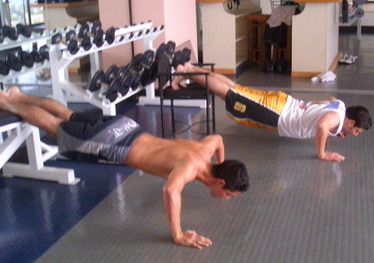
The basic push-up is a great exercise to strengthen the shoulders, arms and back. Military physical tests include push-ups as a measure of fitness and strength. The basic push-up is performed with the body weight supported by the palms and the toes with the body in a stiff, straight line from head to heel. Keep your elbows under your shoulders. Lower your upper chest toward the floor, stopping about 1 to 2 inches from the floor and then push back up from the floor using your arms. Once you are strong enough to perform 75 to 100 push-ups, try some variations to improve the effectiveness of your push-up workout. 
In the start position, place one ankle over the other so that your body weight is resting on the toes of one foot. Perform 50 repetitions and then switch your feet so that your weight is now resting on the toes of the other foot. Repeat 50 more repetitions. 
The torso rotation push-up is a strenuous upper body workout. From the start position for the basic push-up, rotate your upper body to the left as you push up and lift your left arm upward over your head. Your upper body should form a “T” shape so that the front of your body is facing left. Bring your arm back to the floor as you rotate your torso back to the start position. Repeat on the right side.
The plank-style push-up will increase your core strength and stability, as well as workout your arms and chest. Place your forearms on the floor instead of your palms. Hold your body straight for about 10 seconds and then lower your body just a few inches. Push back up and hold for another 10 seconds. 
Elevate your feet on a bench for a powerful push-up workout. Use a low bench or foot stool in the beginning and move up to a regular height bench once you can do 50 to 75 elevated push-ups. Keep your palms under your shoulders for stability.